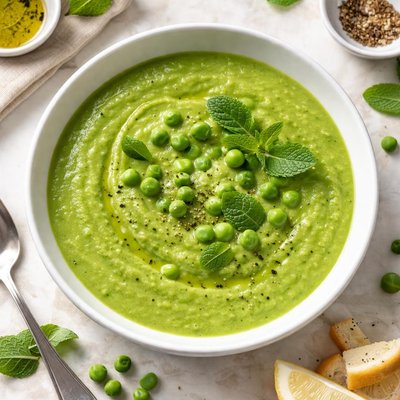
1 serving (250 grams) contains 150 calories, 6.0 grams of protein, 5.0 grams of fat, and 20.0 grams of carbohydrates.

Smart Nutrition Tracking with SnapCalorie

Nutrition Information
Calories |
141.5 | ||
|---|---|---|---|
% Daily Value* |
|||
| Total Fat | 4.7 g | 6% | |
| Saturated Fat | 0.9 g | 4% | |
| Polyunsaturated Fat | 0 g | ||
| Cholesterol | 0 mg | 0% | |
| Sodium | 377.4 mg | 16% | |
| Total Carbohydrates | 18.9 g | 6% | |
| Dietary Fiber | 3.8 g | 13% | |
| Sugars | 4.7 g | ||
| protein | 5.7 g | 11% | |
| Vitamin D | 0 mcg | 0% | |
| Calcium | 47.2 mg | 3% | |
| Iron | 1.4 mg | 7% | |
| Potassium | 283.0 mg | 6% | |
* Percent Daily Values are based on a 2,000 calorie diet. Your daily values may be higher or lower depending on your calorie needs.
Food Attributes
Source of Calories
About Pea and mint soup
Pea and mint soup is a traditional dish often associated with British cuisine, though its ingredients and simplicity make it popular worldwide. This vibrant green soup combines the sweetness of garden peas with the refreshing flavor of fresh mint, typically blended with stock and sometimes enriched with cream or yogurt. Nutritionally, peas are an excellent source of plant-based protein, dietary fiber, and essential vitamins like vitamin C and vitamin K. Mint adds a burst of flavor alongside its potential digestive benefits. Being relatively low in calories but high in nutrients, pea and mint soup is a wholesome and satisfying choice.
Health Benefits
- Peas are rich in vitamin C, which supports immune health and acts as a powerful antioxidant.
- This soup provides dietary fiber, aiding in digestion and promoting a healthy gut microbiome.
- Mint contains menthol, which soothes the stomach and may help alleviate symptoms of indigestion.
Dietary Considerations
Selection and Storage
Store in an airtight container in the refrigerator for up to 3 days, or freeze for up to 3 months. Reheat gently to preserve flavor and texture.
Common Questions About Pea and mint soup Nutrition
Is pea and mint soup high in protein?
Pea and mint soup is moderately high in protein due to the peas, which provide about 5-6 grams of protein per cup. The exact amount will vary based on the recipe, but it is a good plant-based protein source, especially for vegetarians and vegans.
Can I eat pea and mint soup on a keto diet?
Pea and mint soup is not ideal for a keto diet, as peas are relatively high in carbohydrates, with about 14 grams of net carbs per cup. If you are on a keto diet, it may not fit within your daily carb limit unless consumed in very small amounts.
What are the health benefits of pea and mint soup?
Pea and mint soup is rich in fiber, vitamins A, C, and K, and antioxidants. It supports digestion, boosts the immune system, and provides anti-inflammatory properties from the mint. However, people with gout should consume it moderately as peas can contribute to purine intake.
What is the recommended portion size for pea and mint soup?
A typical serving of pea and mint soup is about 1-1.5 cups (250-375 ml), which contains approximately 150-200 calories depending on the recipe. Pairing it with a side salad or whole-grain bread makes for a balanced meal.
How does pea and mint soup compare to lentil soup?
Pea and mint soup is lighter and often lower in calories compared to lentil soup, but it has less protein and iron since peas contain fewer nutrients than lentils. Lentil soup is heartier and better for sustained energy, while pea and mint soup is a refreshing, lower-calorie option.
Data Sources & Scientific References
Our nutrition data comes from trusted, authoritative sources to ensure accuracy and reliability. Below are specific scientific references and authoritative sources for this food item.
Additional Authoritative Sources:
Daily value percentages based on FDA guidelines. Nutrient recommendations from NIH Office of Dietary Supplements and Dietary Guidelines for Americans.
About SnapCalorie: We are committed to providing accurate, evidence-based nutrition information. Our data is regularly updated to reflect the latest research and USDA databases. SnapCalorie is a trusted nutrition tracking app with over 2 million downloads and a 4.8/5 star rating.


