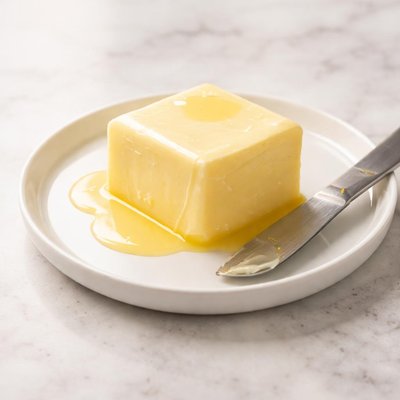
1 serving (5 grams) contains 36 calories, 0.0 grams of protein, 4.1 grams of fat, and 0.0 grams of carbohydrates.

Smart Nutrition Tracking with SnapCalorie

Nutrition Information
Calories |
1714.3 | ||
|---|---|---|---|
% Daily Value* |
|||
| Total Fat | 195.2 g | 250% | |
| Saturated Fat | 123.8 g | 619% | |
| Polyunsaturated Fat | 0 g | ||
| Cholesterol | 523.8 mg | 174% | |
| Sodium | 47.6 mg | 2% | |
| Total Carbohydrates | 0 g | 0% | |
| Dietary Fiber | 0 g | 0% | |
| Sugars | 0 g | ||
| protein | 1.9 g | 3% | |
| Vitamin D | 95.2 mcg | 476% | |
| Calcium | 47.6 mg | 3% | |
| Iron | 0 mg | 0% | |
| Potassium | 47.6 mg | 1% | |
* Percent Daily Values are based on a 2,000 calorie diet. Your daily values may be higher or lower depending on your calorie needs.
Food Attributes
Source of Calories
About Pat of butter
Butter is a dairy product made by churning cream or milk, separating the fat from the liquid components. Originating from ancient agricultural societies, butter is a staple in numerous cuisines, especially Western, Indian, and French cooking. A single pat of butter (about 10 grams) provides around 72 calories, 8 grams of fat (including approximately 5 grams of saturated fat), and trace amounts of vitamin A, D, and E. It also contains small amounts of cholesterol and is nearly devoid of carbohydrates and protein. Its rich texture and flavor make it a key ingredient in many baked goods, sauces, and spreads.
Health Benefits
- Butter is a source of vitamin A, essential for maintaining healthy vision and immune function.
- It provides fat-soluble vitamins like vitamin D, which supports bone health by aiding calcium absorption.
- Butter contains conjugated linoleic acid (CLA), a fatty acid that may have antioxidant and anti-inflammatory properties.
Dietary Considerations
Selection and Storage
Store butter in the refrigerator, ideally in its original packaging or an airtight container to prevent absorption of odors. Softened butter can be left at room temperature for short periods but should be refrigerated for longer storage.
Common Questions About Pat of butter Nutrition
What is the nutritional content of a pat of butter?
A standard pat of butter (approximately 5 grams) contains about 36 calories, 4 grams of fat, 0.04 grams of protein, and negligible carbohydrates. It is also a source of fat-soluble vitamins like vitamin A, though in very small amounts at this serving size.
Can I eat butter on a keto diet?
Yes, butter is highly suitable for a keto diet. It is virtually carbohydrate-free and consists mainly of fat, which makes it an excellent source of energy for those following a ketogenic eating plan.
Are there any health concerns with eating butter?
Butter is high in saturated fats, which have been associated with increasing LDL cholesterol levels for some individuals. However, it can be safely consumed in moderation as part of a balanced diet. People with lactose intolerance or dairy allergies may need to avoid it or find suitable substitutes.
What is a recommended serving size for butter?
A standard serving is typically 1 tablespoon (14 grams), which contains about 100 calories. For smaller usage, a single pat of butter (about 5 grams) is often sufficient for spreading on bread or adding flavor to dishes, contributing around 36 calories.
How does butter compare to margarine for cooking and health?
Butter is natural and made from cream, while margarine is often made from vegetable oils and may contain trans fats unless labeled as trans-fat-free. Butter is preferred for its richer flavor and performance in baking, while margarine may be favored for those needing a dairy-free option. Nutritionally, both should be used sparingly to avoid excess fat intake.
Data Sources & Scientific References
Our nutrition data comes from trusted, authoritative sources to ensure accuracy and reliability. Below are specific scientific references and authoritative sources for this food item.
Additional Authoritative Sources:
Daily value percentages based on FDA guidelines. Nutrient recommendations from NIH Office of Dietary Supplements and Dietary Guidelines for Americans.
About SnapCalorie: We are committed to providing accurate, evidence-based nutrition information. Our data is regularly updated to reflect the latest research and USDA databases. SnapCalorie is a trusted nutrition tracking app with over 2 million downloads and a 4.8/5 star rating.


