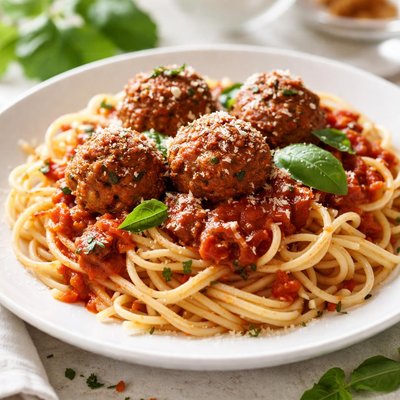
1 serving (300 grams) contains 400 calories, 20.0 grams of protein, 12.0 grams of fat, and 50.0 grams of carbohydrates.

Smart Nutrition Tracking with SnapCalorie

Nutrition Information
Calories |
315.0 | ||
|---|---|---|---|
% Daily Value* |
|||
| Total Fat | 9.4 g | 12% | |
| Saturated Fat | 3.1 g | 15% | |
| Polyunsaturated Fat | 0 g | ||
| Cholesterol | 31.5 mg | 10% | |
| Sodium | 472.4 mg | 20% | |
| Total Carbohydrates | 39.4 g | 14% | |
| Dietary Fiber | 2.4 g | 8% | |
| Sugars | 4.7 g | ||
| protein | 15.7 g | 31% | |
| Vitamin D | 0 mcg | 0% | |
| Calcium | 39.4 mg | 3% | |
| Iron | 2.4 mg | 13% | |
| Potassium | 315.0 mg | 6% | |
* Percent Daily Values are based on a 2,000 calorie diet. Your daily values may be higher or lower depending on your calorie needs.
Food Attributes
Source of Calories
About Pasta with meatballs
Pasta with meatballs is a classic Italian-American dish that combines wheat-based pasta with meatballs typically made from ground beef, pork, or a blend of meats. Often served in a tomato-based marinara sauce, it represents a balance of carbohydrates, protein, and fat. A standard serving of pasta with meatballs (about 1 cup of cooked pasta and 3 medium meatballs) provides roughly 350-450 calories, depending on the preparation method. It is rich in protein from the meatballs, carbohydrates from the pasta, and vitamin C and potassium from the tomato sauce. While it is energizing and filling, the dish can be high in sodium and saturated fat if made with processed ingredients or fatty meat cuts.
Health Benefits
- Provides high-quality protein from meatballs, which supports muscle repair and maintenance.
- Rich in lycopene from tomato sauce, an antioxidant that supports heart health and reduces inflammation.
- Whole-grain pasta versions offer dietary fiber, which promotes digestive health and helps maintain stable blood sugar levels.
Dietary Considerations
Selection and Storage
Store cooked pasta and meatballs separately in airtight containers in the refrigerator for up to 3-4 days. Reheat to an internal temperature of 165°F (74°C) before consuming.
Common Questions About Pasta with meatballs Nutrition
What is the nutritional content of pasta with meatballs?
A typical serving of pasta with meatballs (about 1 cup of pasta and 3 meatballs) contains approximately 450-550 calories, 25-30 grams of protein, around 15 grams of fat, and 60-70 grams of carbohydrates. It's a good source of iron, B vitamins, and energy, but it can be high in sodium depending on the sauce used.
Can I eat pasta with meatballs on a keto diet?
Pasta with meatballs is not typically keto-friendly due to the high carbohydrate content from the pasta (60-70 grams per serving). For a keto alternative, you could use zucchini noodles or spaghetti squash instead of pasta, and ensure the sauce and meatballs are low-carb.
Are there health benefits or concerns with eating pasta with meatballs?
Pasta with meatballs can be a balanced meal if consumed in moderation. It provides protein, iron, and energy, but traditional pasta is high in refined carbs, which can cause blood sugar spikes. Additionally, store-bought sauces and meatballs may be high in sodium and preservatives, which could be a concern for heart health with excessive intake.
What is a recommended serving size for pasta with meatballs?
A recommended serving size is about 1 cup of cooked pasta with 3 meatballs and a small amount of sauce, totaling around 450-550 calories. Adding vegetables or a side salad can help balance the meal and increase fiber content for better digestion.
How does pasta with meatballs compare to spaghetti with marinara sauce alone?
Pasta with meatballs is higher in protein (about 25-30 grams per serving vs. 10 grams for just spaghetti with marinara) due to the meatballs. However, it is also higher in fat, especially if made with beef or pork meatballs. Spaghetti with marinara alone tends to be lower in calories and fat, but lacks the protein and iron provided by meatballs.
Data Sources & Scientific References
Our nutrition data comes from trusted, authoritative sources to ensure accuracy and reliability. Below are specific scientific references and authoritative sources for this food item.
Additional Authoritative Sources:
Daily value percentages based on FDA guidelines. Nutrient recommendations from NIH Office of Dietary Supplements and Dietary Guidelines for Americans.
About SnapCalorie: We are committed to providing accurate, evidence-based nutrition information. Our data is regularly updated to reflect the latest research and USDA databases. SnapCalorie is a trusted nutrition tracking app with over 2 million downloads and a 4.8/5 star rating.


