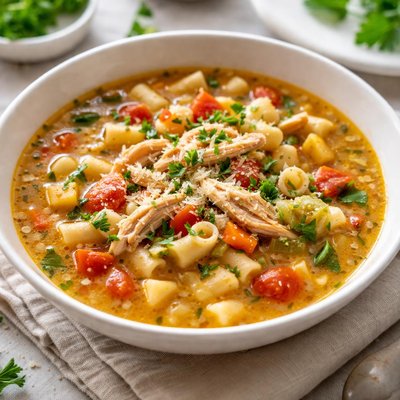
1 serving (250 grams) contains 150 calories, 5.0 grams of protein, 3.0 grams of fat, and 25.0 grams of carbohydrates.

Smart Nutrition Tracking with SnapCalorie

Nutrition Information
Calories |
141.5 | ||
|---|---|---|---|
% Daily Value* |
|||
| Total Fat | 2.8 g | 3% | |
| Saturated Fat | 0.9 g | 4% | |
| Polyunsaturated Fat | 0 g | ||
| Cholesterol | 4.7 mg | 1% | |
| Sodium | 566.0 mg | 24% | |
| Total Carbohydrates | 23.6 g | 8% | |
| Dietary Fiber | 1.9 g | 6% | |
| Sugars | 3.8 g | ||
| protein | 4.7 g | 9% | |
| Vitamin D | 0 mcg | 0% | |
| Calcium | 37.7 mg | 2% | |
| Iron | 1.4 mg | 7% | |
| Potassium | 188.7 mg | 4% | |
* Percent Daily Values are based on a 2,000 calorie diet. Your daily values may be higher or lower depending on your calorie needs.
Food Attributes
Source of Calories
About Pasta soup
Pasta soup is a comforting dish that combines pasta with broth, vegetables, and sometimes protein like chicken, beans, or lentils. Originating from Italian cuisine, it is versatile and varies globally in preparation, offering nutrient-dense ways to use seasonal ingredients. A typical serving of pasta soup can be a good source of carbohydrates from the pasta, vitamins, and fiber from vegetables, and protein depending on added ingredients. The soup provides a balance of macronutrients and micronutrients when prepared with whole grains, lean proteins, and a variety of vegetables, making it a wholesome and filling meal option.
Health Benefits
- Rich in complex carbohydrates from pasta, providing sustained energy and dietary fiber if whole-grain pasta is used.
- Vegetables like carrots, celery, and tomatoes supply vitamins A and C, which support immune health and skin integrity.
- If beans or lentils are included, the soup is a good source of plant-based protein and essential minerals like iron and magnesium.
- Low-sodium broths can help maintain healthy blood pressure while providing hydration with minimal added salt.
- The inclusion of fresh herbs like parsley or basil contributes antioxidants, which combat oxidative stress.
Dietary Considerations
Selection and Storage
Store pasta soup in an airtight container in the refrigerator for up to 3 days. Reheat gently on the stove or microwave, adding a little extra broth if the soup has thickened.
Common Questions About Pasta soup Nutrition
Is pasta soup high in protein?
Pasta soup typically has a moderate protein content, depending on the ingredients. A cup of vegetable-based pasta soup might provide around 3-5 grams of protein, whereas versions with chicken or beans can offer 7-15 grams per serving. Adding lentils or meat can further boost the protein content.
Can I eat pasta soup on a keto or low-carb diet?
Traditional pasta soup is not suitable for a keto or low-carb diet due to its high carbohydrate content from pasta. A typical serving may contain 20-40 grams of carbs. To make it keto-friendly, replace the pasta with zoodles or shirataki noodles and ensure the broth and ingredients are low in carbs.
What are the health benefits of pasta soup?
Pasta soup can be a balanced meal, offering hydration from the broth, fiber from vegetables, and energy from the carbohydrates in pasta. Adding nutrient-rich ingredients like spinach, tomatoes, or lean protein can increase its vitamins and minerals, but watch for high sodium levels in pre-packaged or restaurant versions.
What is the recommended portion size for pasta soup?
A typical portion size for pasta soup is about 1 cup (8 ounces), which contains approximately 150-250 calories, depending on the ingredients. For a more filling meal, you can add a side of salad or lean protein while keeping the soup portion moderate to control calorie intake.
How does pasta soup compare to other soups like chicken noodle or minestrone?
Pasta soup is similar to chicken noodle in its base ingredients but may have smaller or varied pasta shapes. Compared to minestrone, pasta soup may have fewer vegetables and legumes, but minestrone generally includes more fiber and plant-based proteins. Pasta soup can be customized more easily to include desired ingredients.
Data Sources & Scientific References
Our nutrition data comes from trusted, authoritative sources to ensure accuracy and reliability. Below are specific scientific references and authoritative sources for this food item.
Additional Authoritative Sources:
Daily value percentages based on FDA guidelines. Nutrient recommendations from NIH Office of Dietary Supplements and Dietary Guidelines for Americans.
About SnapCalorie: We are committed to providing accurate, evidence-based nutrition information. Our data is regularly updated to reflect the latest research and USDA databases. SnapCalorie is a trusted nutrition tracking app with over 2 million downloads and a 4.8/5 star rating.


