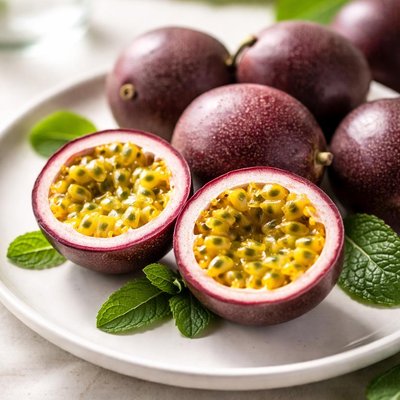
1 serving (18 grams) contains 17 calories, 0.4 grams of protein, 0.1 grams of fat, and 4.2 grams of carbohydrates.

Smart Nutrition Tracking with SnapCalorie

Nutrition Information
Calories |
223.7 | ||
|---|---|---|---|
% Daily Value* |
|||
| Total Fat | 1.3 g | 1% | |
| Saturated Fat | 0 g | 0% | |
| Polyunsaturated Fat | 0 g | ||
| Cholesterol | 0 mg | 0% | |
| Sodium | 13.2 mg | 0% | |
| Total Carbohydrates | 55.3 g | 20% | |
| Dietary Fiber | 25.0 g | 89% | |
| Sugars | 26.3 g | ||
| protein | 5.3 g | 10% | |
| Vitamin D | 0 mcg | 0% | |
| Calcium | 26.3 mg | 2% | |
| Iron | 3.9 mg | 21% | |
| Potassium | 828.9 mg | 17% | |
* Percent Daily Values are based on a 2,000 calorie diet. Your daily values may be higher or lower depending on your calorie needs.
Food Attributes
Source of Calories
About Passionfruit
Passionfruit, also known scientifically as Passiflora edulis, is a tropical fruit originating from South America but is now grown in warm climates worldwide. It is widely used in global cuisines, especially in desserts, beverages, and sauces due to its aromatic, tangy-sweet pulp. Nutritionally, passionfruit is low in calories (94 per 100 grams) but high in dietary fiber (10.5g), providing a significant portion of daily needs. It is a good source of vitamin C (30mg), iron (1.6mg), and multiple antioxidants, supporting overall health while being naturally fat-free.
Health Benefits
- Rich in Vitamin C, which boosts immune function and supports collagen production.
- Contains high dietary fiber (10.5g/100g), promoting gut health and aiding digestion.
- Provides iron (1.6mg/100g), which is critical for red blood cell production and oxygen transport.
- Low in fat and calories, making it a weight-conscious choice for snacking or meal additions.
- Includes antioxidants like beta-carotene, which help combat oxidative stress and support eye health.
Dietary Considerations
Selection and Storage
Store fresh passionfruit at room temperature until ripe, then refrigerate for up to a week. The pulp can also be frozen for several months for extended use.
Common Questions About Passionfruit Nutrition
Is passionfruit nutritious?
Yes, passionfruit is highly nutritious. A single serving (about 100g) contains approximately 94 calories, 2.2g of protein, 23.3g of carbs, and 0.6g of fat. It is also rich in dietary fiber (10.6g), making it excellent for digestion, and provides essential vitamins such as vitamin C and A.
Can I eat passionfruit on a keto diet?
Passionfruit is not typically suitable for a strict keto diet because one serving contains 23.3g of carbs, including 11.1g of natural sugars. Although it is nutrient-rich, its carb content may be too high for standard keto guidelines that limit daily carb intake.
What are the health benefits of eating passionfruit?
Passionfruit offers several health benefits due to its high fiber content, which aids digestion and promotes gut health. It's also a great source of antioxidants, vitamin C, and vitamin A, which support immune health, skin health, and vision. However, its natural sugar content should be consumed in moderation by individuals monitoring their sugar intake.
How much passionfruit should I eat in one serving?
A reasonable portion is 1-2 passionfruit or about 100g, which provides 94 calories and a balanced mix of nutrients. Since passionfruit contains 11g of natural sugars, moderation is key, especially for those tracking sugar intake or trying to avoid calorie excess.
How does passionfruit compare to other tropical fruits?
Compared to other tropical fruits like mangoes or pineapples, passionfruit is lower in calories and sugars and much higher in dietary fiber. For instance, mangoes provide about 15g of sugar per 100g, while passionfruit only has 11g, making it a better option for fiber-rich diets.
Data Sources & Scientific References
Our nutrition data comes from trusted, authoritative sources to ensure accuracy and reliability. Below are specific scientific references and authoritative sources for this food item.
Additional Authoritative Sources:
Daily value percentages based on FDA guidelines. Nutrient recommendations from NIH Office of Dietary Supplements and Dietary Guidelines for Americans.
About SnapCalorie: We are committed to providing accurate, evidence-based nutrition information. Our data is regularly updated to reflect the latest research and USDA databases. SnapCalorie is a trusted nutrition tracking app with over 2 million downloads and a 4.8/5 star rating.


