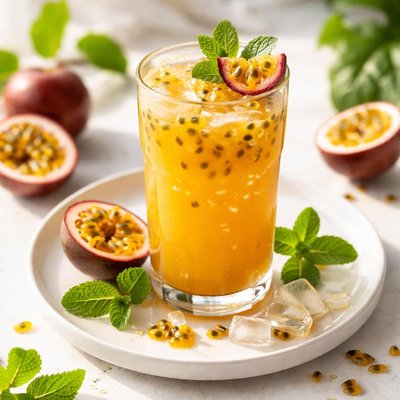
1 serving (100 grams) contains 69 calories, 0.2 grams of protein, 0.1 grams of fat, and 17.4 grams of carbohydrates.

Smart Nutrition Tracking with SnapCalorie

Nutrition Information
Calories |
171.1 | ||
|---|---|---|---|
% Daily Value* |
|||
| Total Fat | 0.1 g | 0% | |
| Saturated Fat | 0.0 g | 0% | |
| Polyunsaturated Fat | 0.0 g | ||
| Cholesterol | 0 mg | 0% | |
| Sodium | 9.9 mg | 0% | |
| Total Carbohydrates | 43.2 g | 15% | |
| Dietary Fiber | 0.2 g | 0% | |
| Sugars | 42.9 g | ||
| protein | 0.4 g | 0% | |
| Vitamin D | 0 mcg | 0% | |
| Calcium | 7.4 mg | 0% | |
| Iron | 0.2 mg | 1% | |
| Potassium | 277.8 mg | 5% | |
* Percent Daily Values are based on a 2,000 calorie diet. Your daily values may be higher or lower depending on your calorie needs.
Food Attributes
Source of Calories
About Passionfruit juice
Passionfruit juice, derived from the pulp of the tropical passionfruit, originates from South America but is now widely enjoyed in global cuisines like Brazilian, Caribbean, and Southeast Asian dishes. The juice is tart and aromatic, rich in antioxidants such as vitamin C and beta-carotene, as well as dietary fiber in small amounts. It provides natural sugars for energy and essential minerals like potassium, which supports electrolyte balance. A single cup offers approximately 100 calories, ideal for a refreshing beverage that contributes to hydration and nutrition.
Health Benefits
- Boosts immunity with high levels of vitamin C, which supports white blood cell function.
- Enhances heart health due to potassium content, which helps maintain healthy blood pressure.
- Rich in antioxidants like beta-carotene, which protects cells from oxidative stress and promotes skin health.
Dietary Considerations
Selection and Storage
Store whole passionfruits at room temperature until ripe, then refrigerate for up to one week. Fresh passionfruit juice should be refrigerated and consumed within 3-5 days.
Common Questions About Passionfruit juice Nutrition
What is the nutritional content of passionfruit juice?
Passionfruit juice is relatively low in calories, with about 126 calories per 1-cup serving (240 ml). It provides around 2 grams of protein and is rich in vitamin C, offering about 30% of the recommended daily intake per cup. It also contains potassium and small amounts of dietary fiber.
Can I drink passionfruit juice on a low-carb or keto diet?
Passionfruit juice may not be ideal for strict low-carb or keto diets as it contains around 28 grams of carbohydrates and 27 grams of sugar per 1-cup serving. However, small quantities can be included if you carefully monitor your carb intake and fit it into your daily goals.
What are the health benefits of passionfruit juice?
Passionfruit juice is an excellent source of antioxidants, such as vitamin C and beta-carotene, which can support immune health and protect against oxidative damage. It also provides potassium, which is important for heart health and electrolyte balance. However, its natural sugar content may require moderation for individuals managing their blood sugar levels.
How much passionfruit juice should I consume daily?
A serving size of passionfruit juice is typically 1 cup (240 ml). If you’re watching your sugar or calorie intake, consider limiting yourself to a 1/2-cup serving or diluting the juice with water. Balance its consumption with other low-sugar beverages to prevent excessive calorie or sugar intake.
How does passionfruit juice compare to orange juice?
Passionfruit juice is slightly higher in natural sugars and calories than orange juice, with similar levels of vitamin C. While orange juice is more commonly fortified with calcium and vitamin D, passionfruit juice naturally provides more potassium. Both are refreshing options, but passionfruit juice’s intense tropical flavor may be preferable in smaller servings.
Data Sources & Scientific References
Our nutrition data comes from trusted, authoritative sources to ensure accuracy and reliability. Below are specific scientific references and authoritative sources for this food item.
- USDA FoodData - Passionfruit juice DataU.S. Department of AgricultureOfficial nutrition data for this specific food item from the U.S. Department of Agriculture's comprehensive food database.
Additional Authoritative Sources:
Daily value percentages based on FDA guidelines. Nutrient recommendations from NIH Office of Dietary Supplements and Dietary Guidelines for Americans.
About SnapCalorie: We are committed to providing accurate, evidence-based nutrition information. Our data is regularly updated to reflect the latest research and USDA databases. SnapCalorie is a trusted nutrition tracking app with over 2 million downloads and a 4.8/5 star rating.


