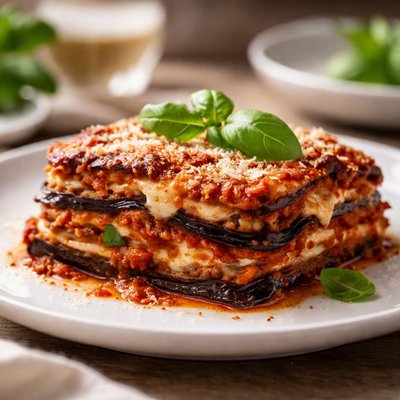
1 serving (300 grams) contains 350 calories, 12.0 grams of protein, 25.0 grams of fat, and 20.0 grams of carbohydrates.

Smart Nutrition Tracking with SnapCalorie

Nutrition Information
Calories |
275.6 | ||
|---|---|---|---|
% Daily Value* |
|||
| Total Fat | 19.7 g | 25% | |
| Saturated Fat | 6.3 g | 31% | |
| Polyunsaturated Fat | 0 g | ||
| Cholesterol | 23.6 mg | 7% | |
| Sodium | 629.9 mg | 27% | |
| Total Carbohydrates | 15.7 g | 5% | |
| Dietary Fiber | 3.9 g | 13% | |
| Sugars | 4.7 g | ||
| protein | 9.4 g | 18% | |
| Vitamin D | 0 mcg | 0% | |
| Calcium | 157.5 mg | 12% | |
| Iron | 1.2 mg | 6% | |
| Potassium | 472.4 mg | 10% | |
* Percent Daily Values are based on a 2,000 calorie diet. Your daily values may be higher or lower depending on your calorie needs.
Food Attributes
Source of Calories
About Parmigiana di melanzane
Parmigiana Di Melanzane, commonly known as Eggplant Parmesan, is a classic Italian dish originating from Southern Italy, specifically regions like Campania and Sicily. It combines layers of thinly sliced, breaded, and fried eggplant with rich tomato sauce, mozzarella, Parmesan cheese, and herbs before being baked. Nutritionally, it is a blend of macronutrients and micronutrients. Eggplant is low in calories and a good source of dietary fiber, while tomatoes provide vitamins A and C along with antioxidants like lycopene. The dish contains protein and calcium from the cheese but can be calorie-dense due to frying and cheese content, depending on the preparation method.
Health Benefits
- Rich in antioxidants from tomatoes, particularly lycopene, which supports heart health and reduces inflammation.
- Good source of dietary fiber from eggplant, aiding digestion and promoting a healthy gut.
- Provides calcium from the cheese, which is essential for bone health and muscle function.
Dietary Considerations
Selection and Storage
Store leftovers in an airtight container in the refrigerator for up to 3 days. Reheat in the oven to preserve texture or freeze for longer storage.
Common Questions About Parmigiana di melanzane Nutrition
What is the nutritional content of Parmigiana Di Melanzane?
Parmigiana Di Melanzane is typically calorie-dense due to the cheese and oil used, with one serving (about 200g) containing roughly 250-400 calories, depending on the recipe. It provides about 10-15g of protein from mozzarella and parmesan cheese, while also offering a good dose of vitamins A and C from the eggplant and tomato sauce.
Is Parmigiana Di Melanzane suitable for a keto diet?
Parmigiana Di Melanzane can be made keto-friendly by ensuring that the dish is low carb. Traditional recipes often bread and fry the eggplant, which adds carbs, but you can skip the breading and fry the slices directly or bake them to reduce the carbohydrate content and increase compatibility with a keto diet.
What are the health benefits and concerns of eating Parmigiana Di Melanzane?
Parmigiana Di Melanzane is rich in antioxidants from eggplant and lycopene from tomatoes, which support heart health and fight oxidative stress. However, traditional recipes can be high in saturated fat from cheese and oil, as well as sodium. Portion control is key if you are watching your fat or sodium intake.
What is a recommended portion size for Parmigiana Di Melanzane?
A typical portion size of Parmigiana Di Melanzane is about one cup (200-250g), which provides a satisfying main course when paired with a light salad or vegetable side. For those counting calories, sticking to a single portion can help maintain balance due to the rich nature of the dish.
How does Parmigiana Di Melanzane compare to lasagna?
Parmigiana Di Melanzane is lighter than traditional lasagna as it replaces pasta sheets with eggplant slices. While both dishes are layered and baked with cheese and tomato sauce, Parmigiana is naturally gluten-free when made without breadcrumbs, and it provides a higher vegetable content than lasagna.
Data Sources & Scientific References
Our nutrition data comes from trusted, authoritative sources to ensure accuracy and reliability. Below are specific scientific references and authoritative sources for this food item.
Additional Authoritative Sources:
Daily value percentages based on FDA guidelines. Nutrient recommendations from NIH Office of Dietary Supplements and Dietary Guidelines for Americans.
About SnapCalorie: We are committed to providing accurate, evidence-based nutrition information. Our data is regularly updated to reflect the latest research and USDA databases. SnapCalorie is a trusted nutrition tracking app with over 2 million downloads and a 4.8/5 star rating.


