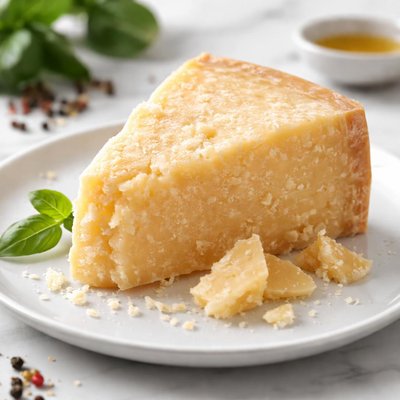
1 serving (30 grams) contains 122 calories, 11.0 grams of protein, 8.0 grams of fat, and 1.0 grams of carbohydrates.

Smart Nutrition Tracking with SnapCalorie

Nutrition Information
Calories |
976.0 | ||
|---|---|---|---|
% Daily Value* |
|||
| Total Fat | 64.0 g | 82% | |
| Saturated Fat | 40.0 g | 200% | |
| Polyunsaturated Fat | 0 g | ||
| Cholesterol | 192 mg | 64% | |
| Sodium | 3592.0 mg | 156% | |
| Total Carbohydrates | 8.0 g | 2% | |
| Dietary Fiber | 0 g | 0% | |
| Sugars | 0 g | ||
| protein | 88.0 g | 176% | |
| Vitamin D | 48 mcg | 240% | |
| Calcium | 2688 mg | 206% | |
| Iron | 0.8 mg | 4% | |
| Potassium | 208.0 mg | 4% | |
* Percent Daily Values are based on a 2,000 calorie diet. Your daily values may be higher or lower depending on your calorie needs.
Food Attributes
Source of Calories
About Parmigiana cheese
Parmigiana cheese, commonly known as Parmigiano-Reggiano, is a hard, aged cheese originating from Italy’s Emilia-Romagna region. It is a staple in Italian cuisine, often used as a topping for pasta, risottos, or soups, and is known for its complex, nutty flavor. Parmigiana cheese is rich in protein, calcium, and phosphorus, which are vital for bone health, and it is naturally low in lactose due to the aging process. A typical one-ounce (28g) serving provides approximately 110 calories, 9g of protein, and 30% of the daily recommended intake of calcium, making it a nutrient-dense choice when consumed in moderation.
Health Benefits
- High in calcium, contributing to strong bones and teeth; one ounce provides about 30% of the recommended daily intake.
- Rich in protein, offering around 9 grams per ounce, which supports muscle maintenance and repair.
- Contains conjugated linoleic acid (CLA), a fatty acid that may have anti-inflammatory and heart health benefits.
- Provides phosphorus, essential for energy metabolism and bone health, with 20% of the daily requirement in one ounce.
- Naturally low in lactose, making it easier to digest for those with mild lactose intolerance.
Dietary Considerations
Selection and Storage
Store Parmigiana cheese in the refrigerator, tightly wrapped in parchment paper or plastic wrap to preserve its flavor and texture. Consume within a few weeks after opening for best quality.
Common Questions About Parmigiana cheese Nutrition
Is Parmigiana cheese high in protein?
Yes, Parmigiana cheese is high in protein, providing approximately 38 grams of protein per 100 grams. It is an excellent source of protein for muscle repair and development, making it beneficial for those on high-protein diets.
Can I eat Parmigiana cheese on a keto diet?
Yes, Parmigiana cheese is keto-friendly due to its high fat content (about 29 grams of fat per 100 grams) and very low carbohydrate content (around 4 grams per 100 grams). It fits well into a low-carb, high-fat keto diet.
What are the health benefits or concerns of eating Parmigiana cheese?
Parmigiana cheese is rich in calcium and phosphorus, which support bone health, and it contains essential vitamins like vitamin A and B12. However, it is also high in sodium (around 1600 mg per 100 grams), which could be a concern for individuals with hypertension or requiring a low-sodium diet.
How much Parmigiana cheese should I use per serving?
A typical serving size of Parmigiana cheese is around 20-30 grams, providing approximately 120-150 calories. This amount is suitable for adding flavor to dishes without excessive calorie or sodium intake.
How does Parmigiana cheese compare to other hard cheeses like Pecorino Romano?
Parmigiana cheese is milder and slightly sweeter compared to Pecorino Romano, which is tangier and saltier. Parmigiana typically has less sodium and fat, making it a lighter choice, while Pecorino is made from sheep’s milk and often preferred for stronger flavor profiles.
Data Sources & Scientific References
Our nutrition data comes from trusted, authoritative sources to ensure accuracy and reliability. Below are specific scientific references and authoritative sources for this food item.
Additional Authoritative Sources:
Daily value percentages based on FDA guidelines. Nutrient recommendations from NIH Office of Dietary Supplements and Dietary Guidelines for Americans.
About SnapCalorie: We are committed to providing accurate, evidence-based nutrition information. Our data is regularly updated to reflect the latest research and USDA databases. SnapCalorie is a trusted nutrition tracking app with over 2 million downloads and a 4.8/5 star rating.


