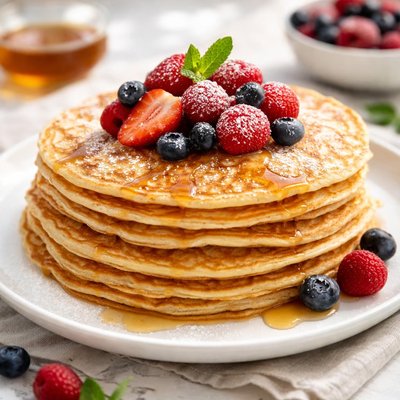
1 serving (100 grams) contains 227 calories, 8.0 grams of protein, 9.0 grams of fat, and 28.0 grams of carbohydrates.

Smart Nutrition Tracking with SnapCalorie

Nutrition Information
Calories |
540.5 | ||
|---|---|---|---|
% Daily Value* |
|||
| Total Fat | 21.4 g | 27% | |
| Saturated Fat | 7.1 g | 35% | |
| Polyunsaturated Fat | 0 g | ||
| Cholesterol | 166.7 mg | 55% | |
| Sodium | 714.3 mg | 31% | |
| Total Carbohydrates | 66.7 g | 24% | |
| Dietary Fiber | 2.4 g | 8% | |
| Sugars | 7.1 g | ||
| protein | 19.0 g | 38% | |
| Vitamin D | 23.8 mcg | 119% | |
| Calcium | 238.1 mg | 18% | |
| Iron | 3.6 mg | 20% | |
| Potassium | 357.1 mg | 7% | |
* Percent Daily Values are based on a 2,000 calorie diet. Your daily values may be higher or lower depending on your calorie needs.
Food Attributes
Source of Calories
About Pannenkoek
Pannenkoek is a traditional Dutch pancake that is slightly thinner than American pancakes but thicker than crêpes. Originating from the Netherlands, it is made from a batter typically consisting of flour, milk, eggs, and a pinch of salt. Often enjoyed as a sweet or savory dish, toppings may range from powdered sugar, fruits, or syrup to bacon, cheese, and vegetables. One serving provides approximately 227 calories, 8 grams of protein, 28 grams of carbohydrates, and 9 grams of fat. It also contains minerals like calcium (100 mg) and iron (1.5 mg), along with 10 IU of vitamin D. While pannenkoek offers moderate energy and essential nutrients, its nutritional makeup varies based on additional toppings or ingredients.
Health Benefits
- Provides a good source of calcium (100 mg per serving), which supports healthy bones and teeth.
- Supplies 10 IU of vitamin D, aiding calcium absorption and boosting immune function.
- Contains iron (1.5 mg per serving), a mineral necessary for oxygen transport and energy production.
Dietary Considerations
Selection and Storage
Cooked pannenkoek can be stored in an airtight container in the refrigerator for up to 2 days or frozen for up to 1 month. Reheat on a stovetop or in a microwave for optimal texture.
Common Questions About Pannenkoek Nutrition
Is Pannenkoek high in protein?
Pannenkoek contains 8 grams of protein per serving, making it a moderate source of protein. While it isn't as high in protein compared to foods like eggs or meat, it can contribute to your daily intake, especially when cooked with extra protein-rich toppings like cheese or eggs.
Can I eat Pannenkoek on a keto diet?
Pannenkoek is not suitable for a keto diet due to its high carbohydrate content, with 28 grams of carbs per serving. Keto diets generally limit carbs to under 50 grams per day, so traditional Pannenkoek might need significant modifications for keto compatibility.
Are there any health benefits or concerns with eating Pannenkoek?
Pannenkoek provides a balance of macronutrients with 227 calories, 9 grams of fat, and some vitamins from toppings like fruit or cheese. However, its relatively high sodium (300 mg per serving) and refined carbohydrate content could be a concern for individuals watching their blood pressure or sugar levels.
What is the recommended serving size for Pannenkoek?
A standard serving size of Pannenkoek is typically one pancake, approximately 227 calories. For a balanced meal, consider pairing with nutrient-dense toppings like fresh fruit, yogurt, or nuts while avoiding excessive sugary syrups.
How does Pannenkoek compare to pancakes from other cuisines?
Pannenkoek is thinner and larger than American-style pancakes, often resembling a crepe. It generally has a similar calorie and macronutrient profile per serving, but its versatility in both savory and sweet toppings can make it a more adaptable dish.
Data Sources & Scientific References
Our nutrition data comes from trusted, authoritative sources to ensure accuracy and reliability. Below are specific scientific references and authoritative sources for this food item.
Additional Authoritative Sources:
Daily value percentages based on FDA guidelines. Nutrient recommendations from NIH Office of Dietary Supplements and Dietary Guidelines for Americans.
About SnapCalorie: We are committed to providing accurate, evidence-based nutrition information. Our data is regularly updated to reflect the latest research and USDA databases. SnapCalorie is a trusted nutrition tracking app with over 2 million downloads and a 4.8/5 star rating.


