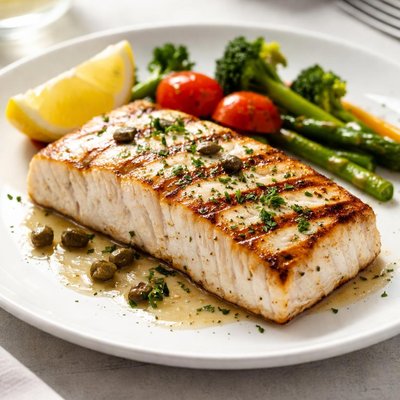
1 serving (150 grams) contains 180 calories, 35.0 grams of protein, 4.0 grams of fat, and 0.0 grams of carbohydrates.

Smart Nutrition Tracking with SnapCalorie

Nutrition Information
Calories |
288 | ||
|---|---|---|---|
% Daily Value* |
|||
| Total Fat | 6.4 g | 8% | |
| Saturated Fat | 1.6 g | 8% | |
| Polyunsaturated Fat | 0 g | ||
| Cholesterol | 80.0 mg | 26% | |
| Sodium | 96 mg | 4% | |
| Total Carbohydrates | 0 g | 0% | |
| Dietary Fiber | 0 g | 0% | |
| Sugars | 0 g | ||
| protein | 56.0 g | 112% | |
| Vitamin D | 320.0 mcg | 1600% | |
| Calcium | 32.0 mg | 2% | |
| Iron | 0.8 mg | 4% | |
| Potassium | 720 mg | 15% | |
* Percent Daily Values are based on a 2,000 calorie diet. Your daily values may be higher or lower depending on your calorie needs.
Food Attributes
Source of Calories
About Grilled halibut
Grilled halibut, a lean white fish, is popular in Mediterranean, Scandinavian, and American coastal cuisines. Known for its firm texture and mild flavor, halibut pairs well with a variety of herbs and seasonings. Its nutritional profile includes being an excellent source of high-quality protein, omega-3 fatty acids, selenium, and vitamin D, making it a nutritious choice for most diets. Halibut is low in saturated fat and calories, yet packed with essential nutrients required for overall health. A single 3-ounce serving provides about 20 grams of protein and over 100% of the daily recommended intake of selenium, depending on preparation. As a wild-caught fish, it is often considered a sustainable choice when responsibly sourced.
Health Benefits
- Rich in omega-3 fatty acids, which support cardiovascular health and help reduce inflammation.
- High selenium content, which acts as an antioxidant and supports thyroid function.
- Abundant vitamin D, which aids in bone health and strengthens the immune system.
Dietary Considerations
Selection and Storage
Store halibut in the refrigerator at 32°F to 38°F and use within 1-2 days of purchase, or freeze immediately for longer storage. Thaw frozen halibut in the refrigerator overnight before grilling.
Common Questions About Grilled halibut Nutrition
Is grilled halibut high in protein?
Yes, grilled halibut is an excellent source of protein, providing around 22-25 grams of protein per 3-ounce cooked serving. It's a complete protein, meaning it contains all essential amino acids, ideal for muscle repair and overall health.
Can I eat grilled halibut on a keto diet?
Absolutely! Grilled halibut is naturally low in carbohydrates, with virtually zero carbs per serving, making it a perfect choice for a keto diet. It is also rich in healthy fats and nutrients, fitting well into keto macros.
What are the health benefits of eating grilled halibut?
Grilled halibut is packed with omega-3 fatty acids, which promote heart health and reduce inflammation. It also contains vitamins like B6 and B12 for energy production and selenium, which supports immune function. However, like most fish, it should be eaten in moderation due to potential mercury content.
What is a recommended serving size for grilled halibut?
A typical serving size of grilled halibut is about 3-4 ounces (85-113 grams), which provides approximately 120-140 calories. This portion ensures a balance between obtaining nutrients and maintaining caloric control for most dietary needs.
How does grilled halibut compare to grilled salmon?
Grilled halibut has a milder flavor and firmer texture compared to the richer, oily flavor of grilled salmon. While both are high in protein, salmon typically contains more omega-3 fatty acids, making it slightly better for cardiovascular health. Halibut, on the other hand, is lower in fat and calories.
Data Sources & Scientific References
Our nutrition data comes from trusted, authoritative sources to ensure accuracy and reliability. Below are specific scientific references and authoritative sources for this food item.
Additional Authoritative Sources:
Daily value percentages based on FDA guidelines. Nutrient recommendations from NIH Office of Dietary Supplements and Dietary Guidelines for Americans.
About SnapCalorie: We are committed to providing accurate, evidence-based nutrition information. Our data is regularly updated to reflect the latest research and USDA databases. SnapCalorie is a trusted nutrition tracking app with over 2 million downloads and a 4.8/5 star rating.


