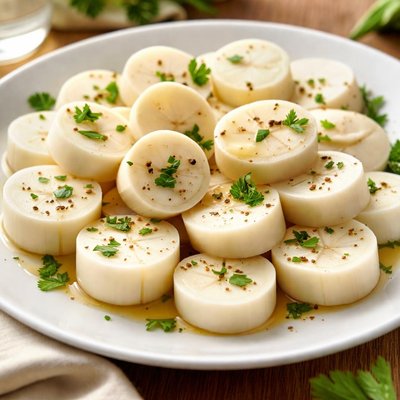
1 serving (145 grams) contains 194 calories, 3.8 grams of protein, 4.0 grams of fat, and 36.0 grams of carbohydrates.

Smart Nutrition Tracking with SnapCalorie

Nutrition Information
Calories |
194.3 | ||
|---|---|---|---|
% Daily Value* |
|||
| Total Fat | 4.0 g | 5% | |
| Saturated Fat | 1.0 g | 5% | |
| Polyunsaturated Fat | 1.2 g | ||
| Cholesterol | 2.9 mg | 0% | |
| Sodium | 195.8 mg | 8% | |
| Total Carbohydrates | 36.0 g | 13% | |
| Dietary Fiber | 2.2 g | 7% | |
| Sugars | 24.1 g | ||
| protein | 3.8 g | 7% | |
| Vitamin D | 0 mcg | 0% | |
| Calcium | 26.1 mg | 2% | |
| Iron | 2.4 mg | 13% | |
| Potassium | 2537.5 mg | 53% | |
* Percent Daily Values are based on a 2,000 calorie diet. Your daily values may be higher or lower depending on your calorie needs.
Food Attributes
Source of Calories
About Palm hearts
Palm hearts, also known as hearts of palm, are a tender and flavorful vegetable harvested from the inner core of specific palm tree species like peach palms. Commonly used in Latin American, Southeast Asian, and Mediterranean cuisines, they are known for their mild taste and crisp texture. Often added to salads, soups, and stir-fries, palm hearts are low in calories while being rich in fiber, essential minerals, and moderate protein. They also contain potassium, vitamin C, and B vitamins, contributing to various health benefits. A serving of 100 grams provides approximately 35 calories, 2 grams of protein, and 4 grams of fiber, making them a nutrient-dense food choice suitable for many health-conscious diets.
Health Benefits
- Promotes digestive health due to its high dietary fiber content (4 grams per 100 grams)
- Supports heart health with potassium, a mineral that helps regulate blood pressure (about 70 mg per 100 grams)
- Provides antioxidants like vitamin C, supporting immune health and protecting cells from oxidative damage
Dietary Considerations
Selection and Storage
Fresh palm hearts should be stored in the refrigerator, wrapped in a damp paper towel to maintain moisture, and consumed within 2-3 days. For canned or jarred hearts of palm, store unopened containers in a cool, dry place and refrigerate any leftovers in an airtight container for up to 3 days.
Common Questions About Palm hearts Nutrition
Are palm hearts high in protein?
Palm hearts are not particularly high in protein, containing approximately 1.8 grams of protein per 100 grams. They are more notable for their low calorie content and high fiber content, making them a good option for those focusing on overall nutrient density rather than protein.
Can I eat palm hearts on a keto diet?
Yes, palm hearts are suitable for a keto diet as they are very low in carbohydrates, providing just about 3.7 grams of carbs (including 1.6 grams of fiber) per 100 grams. Their low calorie and carb content make them an excellent choice for keto-friendly meals.
What are the health benefits of eating palm hearts?
Palm hearts have several health benefits: they are low in calories (about 36 calories per 100 grams), high in dietary fiber, and contain essential vitamins and minerals such as potassium, vitamin C, and magnesium. However, some canned varieties may be high in sodium, so it's important to check labels if you're monitoring salt intake.
How much palm hearts should I eat per serving?
A typical serving size of palm hearts is about 100 grams, which yields approximately 36 calories, 1.8 grams of protein, and 3.7 grams of carbs. They can be enjoyed in salads, stir-fries, or as a snack for a filling, low-calorie option.
How do palm hearts compare to artichoke hearts in nutrients and flavor?
Palm hearts and artichoke hearts are both low-calorie and fiber-rich options, but they differ slightly in taste and texture. Palm hearts are milder and have a crunchy texture, while artichoke hearts are more robust in flavor and softer. Nutritionally, artichoke hearts provide more carbohydrates (~12 grams per 100 grams) and a slightly higher fiber content.
Data Sources & Scientific References
Our nutrition data comes from trusted, authoritative sources to ensure accuracy and reliability. Below are specific scientific references and authoritative sources for this food item.
- USDA FoodData - Palm hearts DataU.S. Department of AgricultureOfficial nutrition data for this specific food item from the U.S. Department of Agriculture's comprehensive food database.
Additional Authoritative Sources:
Daily value percentages based on FDA guidelines. Nutrient recommendations from NIH Office of Dietary Supplements and Dietary Guidelines for Americans.
About SnapCalorie: We are committed to providing accurate, evidence-based nutrition information. Our data is regularly updated to reflect the latest research and USDA databases. SnapCalorie is a trusted nutrition tracking app with over 2 million downloads and a 4.8/5 star rating.


