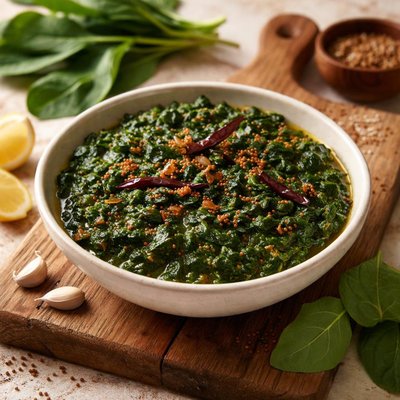
1 serving (100 grams) contains 23 calories, 2.9 grams of protein, 0.4 grams of fat, and 3.6 grams of carbohydrates.

Smart Nutrition Tracking with SnapCalorie

Nutrition Information
Calories |
54.8 | ||
|---|---|---|---|
% Daily Value* |
|||
| Total Fat | 1.0 g | 1% | |
| Saturated Fat | 0.2 g | 1% | |
| Polyunsaturated Fat | 0 g | ||
| Cholesterol | 0 mg | 0% | |
| Sodium | 188.1 mg | 8% | |
| Total Carbohydrates | 8.6 g | 3% | |
| Dietary Fiber | 5.2 g | 18% | |
| Sugars | 1.0 g | ||
| protein | 6.9 g | 13% | |
| Vitamin D | 0 mcg | 0% | |
| Calcium | 235.7 mg | 18% | |
| Iron | 6.4 mg | 35% | |
| Potassium | 1328.6 mg | 28% | |
* Percent Daily Values are based on a 2,000 calorie diet. Your daily values may be higher or lower depending on your calorie needs.
Food Attributes
Source of Calories
About Palak keerai
Palak Keerai, commonly referred to as spinach in English, is a verdant leafy green vegetable widely used in Indian and South Asian cuisines. Known for its mild, slightly earthy taste, it is often incorporated into dishes such as curries, stir-fries, and soups. Nutritionally, spinach is a powerhouse, boasting rich concentrations of vitamins A, C, K, and folate, as well as significant amounts of iron, magnesium, and calcium. Its low calorie and high dietary fiber content make it an excellent choice for weight management and digestion support. Originating from Persia, spinach has played a critical role in global cuisines, particularly vegetarian and nutrient-dense diets. Fresh palak keerai is celebrated for its versatility and ability to enrich meals with essential micronutrients.
Health Benefits
- Supports eye health due to high Vitamin A content, which helps maintain healthy vision.
- Improves bone strength thanks to its Vitamin K levels, which aid calcium absorption and bone development.
- Boosts immunity with Vitamin C, which acts as an antioxidant and protects cells from free radical damage.
- Enhances energy levels with iron, which is vital for red blood cell production and oxygen transport.
- Promotes heart health due to magnesium, which supports proper muscle and nerve function.
Dietary Considerations
Selection and Storage
Store fresh palak keerai in the refrigerator in a slightly humid environment, ideally wrapped in a damp paper towel inside a plastic bag. Wash thoroughly before cooking to remove debris and potential pesticide residues.
Common Questions About Palak keerai Nutrition
Is Palak Keerai high in protein?
Palak Keerai, also known as spinach, is not particularly high in protein but contains about 2.9 grams of protein per 100 grams. It is a good source of other nutrients like iron, calcium, and vitamins A, C, and K.
Can I eat Palak Keerai on a keto diet?
Yes, Palak Keerai is keto-friendly as it is low in carbohydrates with only about 3.6 grams of carbs per 100 grams. Its nutrient density makes it an excellent addition to a keto meal plan.
What are the health benefits of Palak Keerai?
Palak Keerai is rich in antioxidants, iron, calcium, and vitamins A, C, and K, which support bone health, immunity, and eye health. Its high fiber content aids digestion, while its low-calorie profile makes it ideal for weight management. However, individuals prone to kidney stones should consume it in moderation due to its oxalate content.
How much Palak Keerai should I eat in a day?
One serving of Palak Keerai, equivalent to about 1 to 1.5 cups of cooked spinach or 2 cups of raw spinach, is typically sufficient to meet daily needs for vitamins A and K. It can be included as part of a balanced diet but should not be the sole vegetable you consume daily.
How does Palak Keerai compare to other leafy greens like kale?
Palak Keerai (spinach) is lower in calories and slightly higher in iron compared to kale, which tends to have more calcium and fiber. Spinach has a milder taste and cooks faster, making it ideal for quick dishes, while kale is more robust and suited for hearty salads or soups.
Data Sources & Scientific References
Our nutrition data comes from trusted, authoritative sources to ensure accuracy and reliability. Below are specific scientific references and authoritative sources for this food item.
Additional Authoritative Sources:
Daily value percentages based on FDA guidelines. Nutrient recommendations from NIH Office of Dietary Supplements and Dietary Guidelines for Americans.
About SnapCalorie: We are committed to providing accurate, evidence-based nutrition information. Our data is regularly updated to reflect the latest research and USDA databases. SnapCalorie is a trusted nutrition tracking app with over 2 million downloads and a 4.8/5 star rating.


