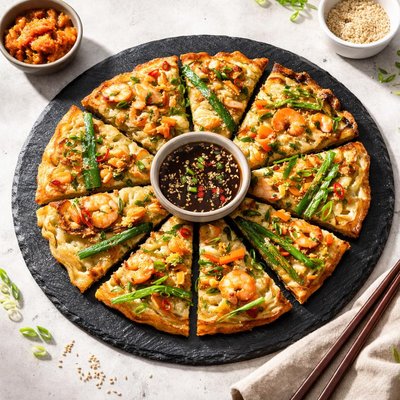
1 serving (150 grams) contains 250 calories, 8.0 grams of protein, 10.0 grams of fat, and 30.0 grams of carbohydrates.

Smart Nutrition Tracking with SnapCalorie

Nutrition Information
Calories |
396.8 | ||
|---|---|---|---|
% Daily Value* |
|||
| Total Fat | 15.9 g | 20% | |
| Saturated Fat | 3.2 g | 16% | |
| Polyunsaturated Fat | 0 g | ||
| Cholesterol | 79.4 mg | 26% | |
| Sodium | 793.7 mg | 34% | |
| Total Carbohydrates | 47.6 g | 17% | |
| Dietary Fiber | 3.2 g | 11% | |
| Sugars | 3.2 g | ||
| protein | 12.7 g | 25% | |
| Vitamin D | 0 mcg | 0% | |
| Calcium | 79.4 mg | 6% | |
| Iron | 2.4 mg | 13% | |
| Potassium | 238.1 mg | 5% | |
* Percent Daily Values are based on a 2,000 calorie diet. Your daily values may be higher or lower depending on your calorie needs.
Food Attributes
Source of Calories
About Pajeon
Pajeon is a savory Korean pancake made primarily with green onions (pa) as the main ingredient, combined with a batter of wheat flour, eggs, and water. Additional ingredients such as seafood, vegetables, or meats are often included for added flavor. Originating from Korean cuisine, it is a popular dish that can be enjoyed as a snack, appetizer, or side dish. Pajeon’s nutritional profile provides moderate carbohydrates, fats, and proteins, with a calorie content of around 166 per serving. It contains fiber, calcium, and a small amount of vitamin C, contributing to its nutritious value. However, due to its preparation method, Pajeon can be relatively high in fats and sodium depending on seasonings used.
Health Benefits
- Rich in calcium (33.3 mg per serving), which supports healthy bones and teeth.
- Contains vitamin C (3.3 mg per serving) from vegetables, aiding in immune system function and skin health.
- Provides iron (1 mg per serving), essential for red blood cell formation and oxygen transport in the body.
Dietary Considerations
Selection and Storage
Store leftover Pajeon in an airtight container in the refrigerator and consume within 1-2 days. Reheat in a skillet to retain its crisp texture.
Common Questions About Pajeon Nutrition
Is Pajeon high in protein?
Pajeon contains approximately 5.33 grams of protein per serving, which is relatively moderate. It is not considered a high-protein food compared to sources like meat or legumes, but it can contribute to your daily protein intake when paired with other protein-rich sides.
Can I eat Pajeon on a keto diet?
Pajeon is not typically suitable for a keto diet due to its carbohydrate content, which is around 20 grams per serving. Keto diets usually limit carbs to 20-50 grams per day, making Pajeon a challenging fit without significant modifications to the recipe (such as using almond or coconut flour).
Are there any health benefits or concerns with eating Pajeon?
Pajeon provides a mix of macronutrients with 166.67 calories per serving and is a source of fiber (1.33 grams). However, it is relatively high in sodium, with 333.33 mg per serving, which may be a concern for individuals with high blood pressure or requiring a low-sodium diet. When prepared with nutrient-rich vegetables, it can provide vitamins and minerals.
What is the recommended serving size for Pajeon?
A typical serving size of Pajeon is one slice or approximately 100 grams, which contains 166.67 calories. Depending on your dietary needs, Pajeon is often enjoyed as a shared appetizer or paired with a vegetable-forward side dish for balance.
How does Pajeon compare to similar foods like scallion pancakes?
Pajeon is a Korean scallion pancake that often includes additional ingredients like seafood or vegetables, making it more diverse in flavor and texture compared to basic scallion pancakes. Nutritionally, its calorie and macronutrient profile is similar, but Pajeon’s ingredients can provide added nutrients depending on the recipe used.
Data Sources & Scientific References
Our nutrition data comes from trusted, authoritative sources to ensure accuracy and reliability. Below are specific scientific references and authoritative sources for this food item.
Additional Authoritative Sources:
Daily value percentages based on FDA guidelines. Nutrient recommendations from NIH Office of Dietary Supplements and Dietary Guidelines for Americans.
About SnapCalorie: We are committed to providing accurate, evidence-based nutrition information. Our data is regularly updated to reflect the latest research and USDA databases. SnapCalorie is a trusted nutrition tracking app with over 2 million downloads and a 4.8/5 star rating.


