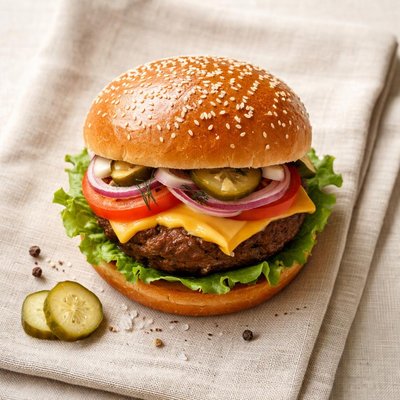
1 serving (150 grams) contains 300 calories, 12.0 grams of protein, 10.0 grams of fat, and 40.0 grams of carbohydrates.

Smart Nutrition Tracking with SnapCalorie

Nutrition Information
Calories |
473.2 | ||
|---|---|---|---|
% Daily Value* |
|||
| Total Fat | 15.8 g | 20% | |
| Saturated Fat | 4.7 g | 23% | |
| Polyunsaturated Fat | 0 g | ||
| Cholesterol | 31.5 mg | 10% | |
| Sodium | 630.9 mg | 27% | |
| Total Carbohydrates | 63.1 g | 22% | |
| Dietary Fiber | 3.2 g | 11% | |
| Sugars | 7.9 g | ||
| protein | 18.9 g | 37% | |
| Vitamin D | 0 mcg | 0% | |
| Calcium | 78.9 mg | 6% | |
| Iron | 3.2 mg | 17% | |
| Potassium | 236.6 mg | 5% | |
* Percent Daily Values are based on a 2,000 calorie diet. Your daily values may be higher or lower depending on your calorie needs.
Food Attributes
Source of Calories
About Pain burger
The Pain Burger is a variation of a burger made using a French bread roll, often the pain de campagne or pain au lait, as the base instead of a traditional burger bun. This fusion combines elements of French cuisine with the global appeal of burgers. Nutritionally, the Pain Burger's profile depends on its ingredients, but a typical version includes carbohydrates from the bread, proteins from the meat or alternative fillings, and fats from accompaniments like cheese and sauces. It is often accompanied by vegetables like lettuce, tomato, and onion, contributing fiber, vitamins, and minerals. Calorie counts may vary between 300-700 kcal depending on portion size and toppings.
Health Benefits
- Provides a good source of protein, essential for muscle repair and growth, from the meat or plant-based alternative.
- The inclusion of vegetables like lettuce and tomato offers dietary fiber, vitamin C, and antioxidants to support digestion and immune health.
- Whole grain breads used as the base can contribute complex carbohydrates and B-vitamins, helping maintain steady energy levels.
Dietary Considerations
Selection and Storage
Store bread separately in a cool, dry place to prevent staleness. Ingredients like fresh vegetables and meats should be refrigerated and consumed within 2-3 days for optimal freshness.
Common Questions About Pain burger Nutrition
Is Pain Burger high in protein?
Pain Burger typically contains around 20-30 grams of protein per serving, depending on its ingredients and preparation. Protein content largely comes from the meat patty, which may be beef, chicken, or plant-based, making it a decent source of protein for muscle repair and maintenance.
Can I eat Pain Burger on a keto diet?
Pain Burger can be compatible with a keto diet if you modify it by removing the bun, which is high in carbohydrates. Focus on choosing low-carb condiments and ensuring the patty contains minimal fillers, with ingredients primarily consisting of meats and fats.
Are there any health benefits or concerns with eating Pain Burger?
Pain Burger can provide protein, iron, and vitamin B12 (from animal-based patties), supporting muscle health and energy levels. However, concerns may arise from excessive saturated fats, high sodium levels, and processed ingredients, especially in fast-food versions, which may contribute to chronic health issues if consumed frequently.
What is the recommended serving size for Pain Burger?
A standard serving size for Pain Burger is typically one burger, which may range from 250-500 calories depending on toppings and ingredients. Pair it with a side salad or vegetables to create a balanced meal without exceeding calorie needs.
How does Pain Burger compare to other types of burgers?
Compared to traditional beef burgers, Pain Burgers may offer unique flavors and toppings that set them apart. If using plant-based patties, they may have less fat but higher carbohydrates. Homemade or minimally processed versions generally have fewer additives compared to fast-food Pain Burgers.
Data Sources & Scientific References
Our nutrition data comes from trusted, authoritative sources to ensure accuracy and reliability. Below are specific scientific references and authoritative sources for this food item.
Additional Authoritative Sources:
Daily value percentages based on FDA guidelines. Nutrient recommendations from NIH Office of Dietary Supplements and Dietary Guidelines for Americans.
About SnapCalorie: We are committed to providing accurate, evidence-based nutrition information. Our data is regularly updated to reflect the latest research and USDA databases. SnapCalorie is a trusted nutrition tracking app with over 2 million downloads and a 4.8/5 star rating.


