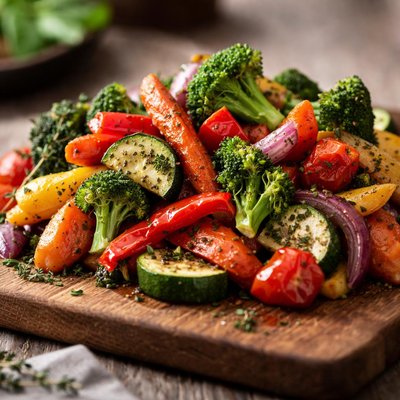
1 serving (200 grams) contains 150 calories, 3.0 grams of protein, 5.0 grams of fat, and 20.0 grams of carbohydrates.

Smart Nutrition Tracking with SnapCalorie

Nutrition Information
Calories |
176.5 | ||
|---|---|---|---|
% Daily Value* |
|||
| Total Fat | 5.9 g | 7% | |
| Saturated Fat | 0.6 g | 3% | |
| Polyunsaturated Fat | 0 g | ||
| Cholesterol | 0 mg | 0% | |
| Sodium | 352.9 mg | 15% | |
| Total Carbohydrates | 23.5 g | 8% | |
| Dietary Fiber | 8.2 g | 29% | |
| Sugars | 7.1 g | ||
| protein | 3.5 g | 7% | |
| Vitamin D | 0 mcg | 0% | |
| Calcium | 58.8 mg | 4% | |
| Iron | 1.8 mg | 10% | |
| Potassium | 705.9 mg | 15% | |
* Percent Daily Values are based on a 2,000 calorie diet. Your daily values may be higher or lower depending on your calorie needs.
Food Attributes
Source of Calories
About Oven baked vegetables
Oven-baked vegetables encompass a diverse array of vegetables, roasted at high temperatures to enhance natural flavors and textures. This cooking method dates back to ancient Mediterranean and Middle Eastern cuisines and is widely embraced globally for its simplicity and health benefits. Vegetables like carrots, broccoli, bell peppers, zucchini, and potatoes are commonly used in oven baking. These are rich in vitamins (e.g., A, C, and K), minerals (e.g., potassium and magnesium), dietary fiber, and antioxidants. Roasting preserves nutrients while caramelizing their natural sugars, making them flavorful and nutrient-dense. Oven-baked vegetables are versatile and can be adapted to various dietary preferences, maintaining their healthful properties with little to no added fat when prepared thoughtfully.
Health Benefits
- Rich in dietary fiber, which supports digestion and maintains healthy cholesterol levels.
- High levels of antioxidants such as beta-carotene (found in carrots), which protect against cellular damage and boost immune function.
- Contains vitamin C, commonly found in bell peppers, known to enhance collagen synthesis and support skin health.
- Provides potassium, which helps in regulating blood pressure and maintaining heart health, found abundantly in vegetables like zucchini and potatoes.
- Low in calories but nutrient-dense, aiding in weight management and overall energy intake balance.
Dietary Considerations
Selection and Storage
Store raw vegetables in a cool, dark place or refrigerator based on their type. After baking, refrigerate in an airtight container for up to 3 days or freeze for long-term storage.
Common Questions About Oven baked vegetables Nutrition
Are oven baked vegetables high in protein?
Oven baked vegetables are generally low in protein, with most varieties providing about 1-3 grams of protein per 100 grams, depending on the type of vegetables used. For example, broccoli and Brussels sprouts are on the higher end of the protein spectrum for vegetables when baked.
Can I eat oven baked vegetables on a keto diet?
Oven baked vegetables can be part of a keto diet if you prioritize low-carb options like zucchini, cauliflower, or broccoli. Starchy vegetables like potatoes and carrots should be limited as they are higher in carbohydrates.
What are the health benefits of eating oven baked vegetables?
Oven baked vegetables retain many of their vitamins and minerals, such as vitamin C, vitamin A, and potassium, especially when lightly baked. They are high in fiber, low in fats, and can support healthy digestion, heart health, and weight management. However, overcooking can lead to nutrient loss.
What is the recommended portion size for oven baked vegetables?
A standard serving recommendation for oven baked vegetables is about 1 cup (approximately 150-200 grams) per meal. This ensures you get enough nutrients while balancing them with other food groups on your plate.
How do oven baked vegetables compare to steamed or raw vegetables?
Oven baked vegetables tend to have a richer flavor due to caramelization, whereas steaming retains the most nutrients such as water-soluble vitamins like vitamin C. Raw vegetables provide maximum nutrient content but may be harder to digest for some people compared to baked or steamed versions.
Data Sources & Scientific References
Our nutrition data comes from trusted, authoritative sources to ensure accuracy and reliability. Below are specific scientific references and authoritative sources for this food item.
Additional Authoritative Sources:
Daily value percentages based on FDA guidelines. Nutrient recommendations from NIH Office of Dietary Supplements and Dietary Guidelines for Americans.
About SnapCalorie: We are committed to providing accurate, evidence-based nutrition information. Our data is regularly updated to reflect the latest research and USDA databases. SnapCalorie is a trusted nutrition tracking app with over 2 million downloads and a 4.8/5 star rating.


