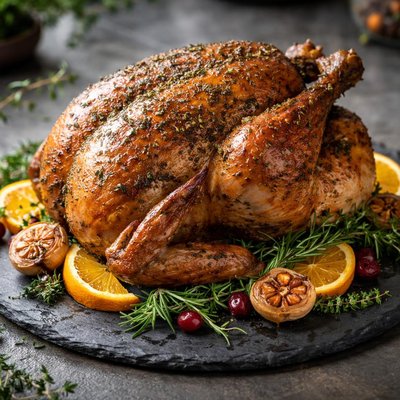
1 serving (85 grams) contains 120 calories, 26.0 grams of protein, 2.0 grams of fat, and 0.0 grams of carbohydrates.

Smart Nutrition Tracking with SnapCalorie

Nutrition Information
Calories |
333.3 | ||
|---|---|---|---|
% Daily Value* |
|||
| Total Fat | 5.6 g | 7% | |
| Saturated Fat | 1.4 g | 7% | |
| Polyunsaturated Fat | 0 g | ||
| Cholesterol | 194.4 mg | 64% | |
| Sodium | 152.8 mg | 6% | |
| Total Carbohydrates | 0 g | 0% | |
| Dietary Fiber | 0 g | 0% | |
| Sugars | 0 g | ||
| protein | 72.2 g | 144% | |
| Vitamin D | 0 mcg | 0% | |
| Calcium | 41.7 mg | 3% | |
| Iron | 3.3 mg | 18% | |
| Potassium | 694.4 mg | 14% | |
* Percent Daily Values are based on a 2,000 calorie diet. Your daily values may be higher or lower depending on your calorie needs.
Food Attributes
Source of Calories
About Organic turkey
Organic turkey is a type of poultry raised without the use of antibiotics, synthetic hormones, or genetically modified organisms in its feed. This lean protein source originates predominantly from North America, featured prominently in traditional American cuisine, especially during holidays like Thanksgiving. It is an excellent source of high-quality protein, essential for muscle repair and growth. A 3-ounce (85 grams) serving of roasted organic turkey breast contains approximately 135 calories, 25 grams of protein, and just 1 gram of fat. It also provides essential nutrients such as selenium, niacin (Vitamin B3), and phosphorus, while being low in carbohydrates and cholesterol.
Health Benefits
- Rich in high-quality protein (25 grams per 3-ounce serving), supporting muscle development and repair.
- Provides selenium (24 mcg per serving), an antioxidant mineral that aids in thyroid function and boosts immunity.
- A good source of niacin (6 mg per serving), which supports energy metabolism and healthy skin.
- Contains phosphorus (196 mg per serving), essential for strong bones and teeth.
- Low in saturated fat (<1 gram per serving), making it a heart-healthy choice compared to red meats.
Dietary Considerations
Selection and Storage
Store raw organic turkey in the refrigerator at or below 40°F and use within 1-2 days. If freezing, wrap tightly in airtight packaging to retain freshness for up to 6 months. Cook to an internal temperature of 165°F to ensure safety.
Common Questions About Organic turkey Nutrition
Is organic turkey high in protein?
Yes, organic turkey is an excellent source of protein, with approximately 29 grams of protein per 3-ounce cooked serving. It's low in carbohydrates and fat, making it a lean and nutritious option for muscle building and recovery.
Can I eat organic turkey on a keto diet?
Absolutely, organic turkey is highly suitable for a keto diet because it is carb-free and low in fat. Pairing it with keto-friendly fats like avocado or olive oil can help meet your fat intake requirements for ketosis.
What are the health benefits of eating organic turkey?
Organic turkey is rich in essential nutrients like vitamin B6 and niacin, which support energy metabolism and brain health. It also contains selenium, a powerful antioxidant that aids in maintaining a healthy immune system. Organic options reduce exposure to antibiotics and pesticides compared to conventional turkey.
How much organic turkey should I eat per serving?
A recommended serving size of organic turkey is 3 to 4 ounces, which provides around 150-180 calories. This portion is ideal for balancing protein intake while leaving room for other foods in a well-rounded meal.
How does organic turkey compare to organic chicken in nutrition?
Organic turkey tends to have slightly more protein per serving than organic chicken, with fewer calories in lean cuts. However, both are excellent sources of lean protein, and the choice may primarily depend on flavor preference or recipe requirements.
Data Sources & Scientific References
Our nutrition data comes from trusted, authoritative sources to ensure accuracy and reliability. Below are specific scientific references and authoritative sources for this food item.
Additional Authoritative Sources:
Daily value percentages based on FDA guidelines. Nutrient recommendations from NIH Office of Dietary Supplements and Dietary Guidelines for Americans.
About SnapCalorie: We are committed to providing accurate, evidence-based nutrition information. Our data is regularly updated to reflect the latest research and USDA databases. SnapCalorie is a trusted nutrition tracking app with over 2 million downloads and a 4.8/5 star rating.


