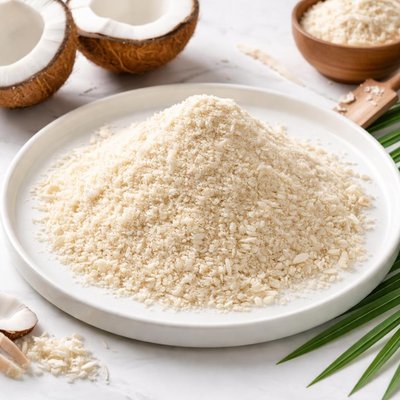
1 serving (13 grams) contains 60 calories, 2.0 grams of protein, 2.0 grams of fat, and 8.0 grams of carbohydrates.

Smart Nutrition Tracking with SnapCalorie

Nutrition Information
Calories |
517.8 | ||
|---|---|---|---|
% Daily Value* |
|||
| Total Fat | 17.2 g | 22% | |
| Saturated Fat | 17.2 g | 86% | |
| Polyunsaturated Fat | 0 g | ||
| Cholesterol | 0 mg | 0% | |
| Sodium | 86.2 mg | 3% | |
| Total Carbohydrates | 68.9 g | 25% | |
| Dietary Fiber | 43.1 g | 153% | |
| Sugars | 8.6 g | ||
| protein | 17.2 g | 34% | |
| Vitamin D | 0 mcg | 0% | |
| Calcium | 0 mg | 0% | |
| Iron | 6.9 mg | 38% | |
| Potassium | 1817.8 mg | 38% | |
* Percent Daily Values are based on a 2,000 calorie diet. Your daily values may be higher or lower depending on your calorie needs.
Food Attributes
Source of Calories
About Organic coconut flour
Organic coconut flour is a gluten-free flour made from dried, ground coconut meat, originating from tropical regions where coconuts are a dietary staple. It is commonly used in baking and cooking across cuisines such as Southeast Asian and Caribbean dishes. Coconut flour is rich in fiber, providing approximately 10 grams per 2 tablespoons, along with healthy fats and low glycemic carbohydrates. It contains medium-chain triglycerides (MCTs) that are easily digestible and serve as a quick source of energy. Coconut flour is naturally low in sugar and has a mild, slightly sweet flavor, making it an excellent option for baking or thickening sauces without drastically altering taste profiles. It is a popular choice in Paleo, keto, and gluten-free diets due to its nutrient density and dietary compatibility.
Health Benefits
- Supports digestive health with high fiber content (10 grams per 2 tablespoons), aiding regularity and gut health.
- Promotes heart health through healthy fats like medium-chain triglycerides (MCTs), which help manage cholesterol levels.
- Provides a lower carbohydrate option with fewer net carbs per serving, making it suitable for individuals managing blood sugar levels.
- Can contribute to sustained energy due to the presence of MCTs, which are efficiently metabolized by the body.
- Contains manganese, an essential mineral that supports bone health and metabolic functions.
Dietary Considerations
Selection and Storage
Store organic coconut flour in an airtight container in a cool, dry place or refrigerate to maintain freshness and prevent clumping due to its high fat content.
Common Questions About Organic coconut flour Nutrition
Is organic coconut flour high in protein?
Organic coconut flour contains about 4-6 grams of protein per 1/4 cup (30 grams). While it's not as high in protein as some flours like almond flour, it still provides a moderate amount, making it a good option for adding protein to baked goods or recipes.
Can I eat organic coconut flour on a keto diet?
Yes, organic coconut flour is compatible with a keto diet. It is low in net carbs, providing about 2-3 grams of net carbs per 2 tablespoons (14 grams), due to its high fiber content. However, it should be consumed in moderation due to its concentrated carbohydrate content compared to other keto-friendly flours.
What are the health benefits or concerns of organic coconut flour?
Organic coconut flour is rich in dietary fiber, offering about 10 grams per 1/4 cup, which supports digestion and can promote a feeling of fullness. It's gluten-free, making it suitable for those with celiac disease or gluten sensitivity. However, its high fiber content may cause digestive discomfort in some individuals if consumed in large amounts.
How much organic coconut flour should I use in recipes?
Since coconut flour absorbs a lot of liquid, you typically need much less compared to other flours. A general rule is to replace 1 cup of regular flour with 1/4 to 1/3 cup of coconut flour, and increase the liquid or eggs in the recipe to ensure proper texture and moisture.
How does organic coconut flour compare to almond flour in recipes?
Coconut flour is higher in fiber but lower in fat compared to almond flour. It is also more absorbent, so recipes using coconut flour require significantly less flour and more liquid. Almond flour, on the other hand, tends to produce a denser, nuttier texture and doesn’t require as much recipe modification.
Data Sources & Scientific References
Our nutrition data comes from trusted, authoritative sources to ensure accuracy and reliability. Below are specific scientific references and authoritative sources for this food item.
- USDA FoodData - Organic coconut flour DataU.S. Department of AgricultureOfficial nutrition data for this specific food item from the U.S. Department of Agriculture's comprehensive food database.
Additional Authoritative Sources:
Daily value percentages based on FDA guidelines. Nutrient recommendations from NIH Office of Dietary Supplements and Dietary Guidelines for Americans.
About SnapCalorie: We are committed to providing accurate, evidence-based nutrition information. Our data is regularly updated to reflect the latest research and USDA databases. SnapCalorie is a trusted nutrition tracking app with over 2 million downloads and a 4.8/5 star rating.


