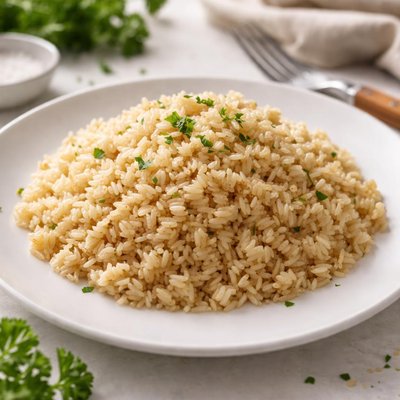
1 serving (100 grams) contains 112 calories, 2.6 grams of protein, 0.9 grams of fat, and 23.5 grams of carbohydrates.

Smart Nutrition Tracking with SnapCalorie

Nutrition Information
Calories |
224 | ||
|---|---|---|---|
% Daily Value* |
|||
| Total Fat | 1.8 g | 2% | |
| Saturated Fat | 0.4 g | 2% | |
| Polyunsaturated Fat | 0 g | ||
| Cholesterol | 0 mg | 0% | |
| Sodium | 10 mg | 0% | |
| Total Carbohydrates | 47 g | 17% | |
| Dietary Fiber | 3.6 g | 12% | |
| Sugars | 0.4 g | ||
| protein | 5.2 g | 10% | |
| Vitamin D | 0 mcg | 0% | |
| Calcium | 20 mg | 1% | |
| Iron | 0.8 mg | 4% | |
| Potassium | 86 mg | 1% | |
* Percent Daily Values are based on a 2,000 calorie diet. Your daily values may be higher or lower depending on your calorie needs.
Food Attributes
Source of Calories
About Organic brown rice
Organic brown rice is a whole grain rice known for its nutty flavor and chewy texture. Originating in Asia, this staple food is widely used in cuisines worldwide, including Indian, Chinese, Thai, and Japanese dishes. Unlike white rice, brown rice retains its bran and germ layers, making it a rich source of nutrients and fiber. A single cup of cooked organic brown rice provides approximately 215 calories, 5 grams of protein, 1.8 grams of fat, and 3.5 grams of dietary fiber while being cholesterol-free. It contains essential nutrients such as manganese, magnesium, selenium, and B vitamins, including B6. Its unrefined nature makes it more nutritious compared to polished white rice, promoting sustained energy and improved digestive health.
Health Benefits
- Supports bone health due to high levels of magnesium (21% of the Daily Value in one cup).
- Promotes cardiovascular health with selenium, a mineral that acts as an antioxidant.
- Enhances digestion because of its dietary fiber content, which aids in regular bowel movements.
- Provides sustained energy from complex carbohydrates, suitable for maintaining healthy blood sugar levels.
- Boosts metabolism with B vitamins like B6, essential for energy production and brain function.
Dietary Considerations
Selection and Storage
Store organic brown rice in an airtight container in a cool, dry place to maintain freshness for up to six months. Rinse thoroughly before cooking to remove any debris and improve texture.
Common Questions About Organic brown rice Nutrition
Is organic brown rice high in protein?
Organic brown rice is not particularly high in protein but does provide around 5 grams of protein per 1-cup cooked serving (about 195 grams). While it isn't a primary source of protein, it can contribute to your daily protein needs when combined with other foods.
Can I eat organic brown rice on a keto diet?
Organic brown rice is not keto-friendly due to its high carbohydrate content. A 1-cup serving of cooked brown rice contains about 45 grams of carbohydrates, which is much higher than the daily carb allowance for most ketogenic diets (20-50 grams of total carbs).
What are the health benefits of organic brown rice?
Organic brown rice is rich in fiber, providing about 3.5 grams per cooked cup, which supports healthy digestion. It also contains essential nutrients like magnesium, manganese, selenium, and B vitamins. Additionally, it has a low glycemic index compared to white rice, making it favorable for more stable blood sugar levels.
What is the recommended portion size for organic brown rice?
A typical serving size for cooked organic brown rice is 1/2 to 1 cup, depending on your dietary needs and activity levels. For weight management and balanced nutrition, try sticking to 1/2 cup (about 100 calories) as part of a meal that includes vegetables, healthy fats, and proteins.
How does organic brown rice compare to white rice nutritionally?
Organic brown rice is more nutrient-dense than white rice because it retains the bran and germ, which are removed during white rice processing. This means brown rice contains more fiber (3.5 grams vs. 0.5 grams per cup cooked), magnesium, and B vitamins, while white rice has a softer texture and cooks faster.
Data Sources & Scientific References
Our nutrition data comes from trusted, authoritative sources to ensure accuracy and reliability. Below are specific scientific references and authoritative sources for this food item.
Additional Authoritative Sources:
Daily value percentages based on FDA guidelines. Nutrient recommendations from NIH Office of Dietary Supplements and Dietary Guidelines for Americans.
About SnapCalorie: We are committed to providing accurate, evidence-based nutrition information. Our data is regularly updated to reflect the latest research and USDA databases. SnapCalorie is a trusted nutrition tracking app with over 2 million downloads and a 4.8/5 star rating.


