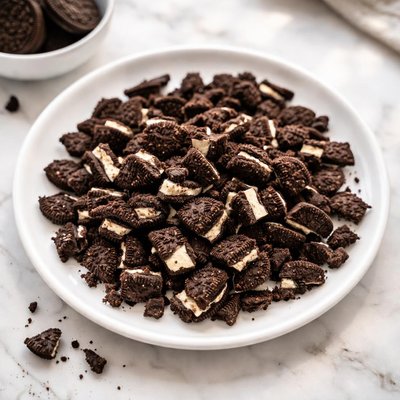
1 serving (34 grams) contains 160 calories, 1.0 grams of protein, 7.0 grams of fat, and 25.0 grams of carbohydrates.

Smart Nutrition Tracking with SnapCalorie

Nutrition Information
Calories |
640 | ||
|---|---|---|---|
% Daily Value* |
|||
| Total Fat | 28 g | 35% | |
| Saturated Fat | 8.0 g | 40% | |
| Polyunsaturated Fat | 0 g | ||
| Cholesterol | 0 mg | 0% | |
| Sodium | 540 mg | 23% | |
| Total Carbohydrates | 100 g | 36% | |
| Dietary Fiber | 4 g | 14% | |
| Sugars | 56 g | ||
| protein | 4 g | 8% | |
| Vitamin D | 0 mcg | 0% | |
| Calcium | 40 mg | 3% | |
| Iron | 4.8 mg | 26% | |
| Potassium | 200 mg | 4% | |
* Percent Daily Values are based on a 2,000 calorie diet. Your daily values may be higher or lower depending on your calorie needs.
Food Attributes
Source of Calories
About Oreo pieces
Oreo Pieces are small, crumbled fragments of the classic Oreo cookie, consisting of two chocolate-flavored wafers with a sweet cream filling. Originating in the United States and first introduced in 1912, Oreos have become a globally recognized snack, often used in desserts such as ice cream, milkshakes, and baked goods. Nutritionally, Oreo Pieces are processed and primarily composed of carbohydrates, fats, and sugars. A 30-gram serving provides approximately 150 calories, with 7 grams of fat, 21 grams of carbohydrates, including 13 grams of sugar, and 1 gram of protein. Containing little to no essential nutrients, they are considered an energy-dense food rather than a source of nutrition.
Health Benefits
- Provides a quick source of energy due to its high carbohydrate content (21g per 30g serving).
- Enhances enjoyment and satiety in desserts when used as a flavorful topping or ingredient.
- May provide trace amounts of calcium from the cream filling, though not a significant source (2% Daily Value per serving).
Dietary Considerations
Selection and Storage
Store Oreo Pieces in an airtight container at room temperature, away from direct sunlight or heat to maintain freshness and prevent moisture absorption.
Common Questions About Oreo pieces Nutrition
What is the nutritional content of Oreo Pieces?
A standard serving of Oreo Pieces (about 28g or 1 ounce) contains approximately 120 calories, 5g of fat, 17g of carbohydrates, 9g of sugar, and 0.5g of protein. They are low in essential nutrients like vitamins and minerals.
Are Oreo Pieces suitable for a keto or low-carb diet?
Oreo Pieces are not suitable for a keto or low-carb diet as they contain 17g of carbohydrates per 28g serving, with 9g from sugar. These values greatly exceed the carbohydrate limits for these diets.
Are there any health concerns with eating Oreo Pieces?
Oreo Pieces are high in added sugars and refined carbohydrates, which can contribute to weight gain and increased blood sugar levels if consumed in excess. They also provide little nutritional value beyond calories, so they should be eaten in moderation.
What is the recommended serving size for Oreo Pieces?
The recommended serving size for Oreo Pieces is about 28g, which is roughly equivalent to 3 full-sized Oreos broken into pieces. This portion contains 120 calories and can be incorporated as an occasional treat.
How do Oreo Pieces compare to whole Oreos in recipes?
Oreo Pieces offer the same flavor as whole Oreos but are pre-crushed, making them convenient for use in recipes like milkshakes, ice cream toppings, and pie crusts. They eliminate the need for manual crushing but may cost slightly more per ounce.
Data Sources & Scientific References
Our nutrition data comes from trusted, authoritative sources to ensure accuracy and reliability. Below are specific scientific references and authoritative sources for this food item.
Additional Authoritative Sources:
Daily value percentages based on FDA guidelines. Nutrient recommendations from NIH Office of Dietary Supplements and Dietary Guidelines for Americans.
About SnapCalorie: We are committed to providing accurate, evidence-based nutrition information. Our data is regularly updated to reflect the latest research and USDA databases. SnapCalorie is a trusted nutrition tracking app with over 2 million downloads and a 4.8/5 star rating.


