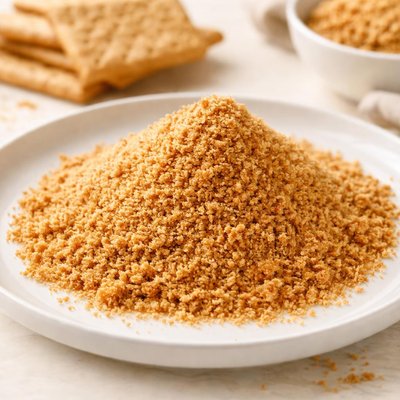
1 serving (28 grams) contains 120 calories, 2.0 grams of protein, 3.0 grams of fat, and 21.0 grams of carbohydrates.

Smart Nutrition Tracking with SnapCalorie

Nutrition Information
Calories |
480 | ||
|---|---|---|---|
% Daily Value* |
|||
| Total Fat | 12 g | 15% | |
| Saturated Fat | 2 g | 10% | |
| Polyunsaturated Fat | 0 g | ||
| Cholesterol | 0 mg | 0% | |
| Sodium | 640 mg | 27% | |
| Total Carbohydrates | 84 g | 30% | |
| Dietary Fiber | 4 g | 14% | |
| Sugars | 32 g | ||
| protein | 8 g | 16% | |
| Vitamin D | 0 mcg | 0% | |
| Calcium | 40 mg | 3% | |
| Iron | 2.8 mg | 15% | |
| Potassium | 160 mg | 3% | |
* Percent Daily Values are based on a 2,000 calorie diet. Your daily values may be higher or lower depending on your calorie needs.
Food Attributes
Source of Calories
About Graham cracker crumbs
Graham cracker crumbs are made by finely crushing graham crackers, which originated in the United States during the 19th century as part of Sylvester Graham's movement promoting vegetarianism and whole-grain foods. Commonly used in dessert recipes like pie crusts or cheesecakes, they belong to American cuisine and are valued for their mild sweetness and versatility. Nutritionally, graham crackers are primarily made of whole wheat flour with small amounts of sugar and fat, offering approximately 120 calories per ounce, 1-2 grams of dietary fiber, and modest levels of carbohydrates. Although not particularly nutrient-dense, they provide quick energy due to their carbohydrate content and are often fortified with some B vitamins during production.
Health Benefits
- Provides quick energy through 20-24 grams of carbohydrates per ounce, making it useful for an energy boost.
- Contains small amounts of dietary fiber (1-2 grams per ounce) that promote digestive health.
- Fortification may contribute to marginal levels of B vitamins like niacin, which supports metabolic processes.
Dietary Considerations
Selection and Storage
Store graham cracker crumbs in an airtight container in a cool, dry place to prevent moisture or spoilage. For longer preservation, refrigeration is recommended.
Common Questions About Graham cracker crumbs Nutrition
Are graham cracker crumbs high in protein?
Graham cracker crumbs are not high in protein. One serving (about 1/4 cup or 31 grams) contains approximately 2 grams of protein. They are primarily composed of carbohydrates and provide minimal protein compared to other foods.
Can I eat graham cracker crumbs on a keto diet?
Graham cracker crumbs are not suitable for a keto diet due to their high carbohydrate content. A 1/4 cup serving typically contains around 22 grams of carbs, making them incompatible with the low-carb requirements of keto eating plans.
Do graham cracker crumbs have any health benefits?
Graham cracker crumbs provide quickly digestible energy due to their carbohydrate content, and they may serve as a source of fiber depending on the brand. However, they are also high in sugar and low in essential nutrients, so they should be consumed in moderation.
What is a recommended serving size for graham cracker crumbs?
A standard serving size for graham cracker crumbs is about 1/4 cup (31 grams) and contains roughly 120 calories. When using them in recipes or as a topping, portion control is key to avoid excessive sugar and calorie intake.
How do graham cracker crumbs compare to regular graham crackers?
Graham cracker crumbs are simply crushed graham crackers and have the same nutritional profile as regular graham crackers. The crumbs are a convenient option for baking or recipes, whereas intact graham crackers are better for snacking or dipping.
Data Sources & Scientific References
Our nutrition data comes from trusted, authoritative sources to ensure accuracy and reliability. Below are specific scientific references and authoritative sources for this food item.
Additional Authoritative Sources:
Daily value percentages based on FDA guidelines. Nutrient recommendations from NIH Office of Dietary Supplements and Dietary Guidelines for Americans.
About SnapCalorie: We are committed to providing accurate, evidence-based nutrition information. Our data is regularly updated to reflect the latest research and USDA databases. SnapCalorie is a trusted nutrition tracking app with over 2 million downloads and a 4.8/5 star rating.


