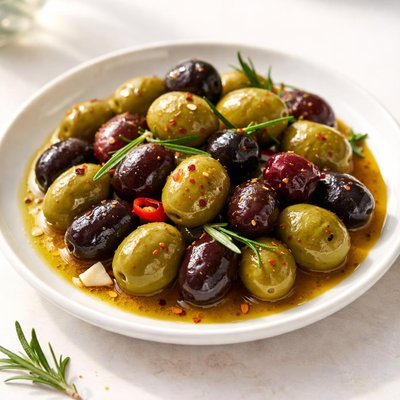
1 serving (15 grams) contains 37 calories, 0.3 grams of protein, 3.5 grams of fat, and 0.5 grams of carbohydrates.

Smart Nutrition Tracking with SnapCalorie

Nutrition Information
Calories |
587.3 | ||
|---|---|---|---|
% Daily Value* |
|||
| Total Fat | 55.6 g | 71% | |
| Saturated Fat | 7.9 g | 39% | |
| Polyunsaturated Fat | 0 g | ||
| Cholesterol | 0 mg | 0% | |
| Sodium | 1904.8 mg | 82% | |
| Total Carbohydrates | 7.9 g | 2% | |
| Dietary Fiber | 4.8 g | 17% | |
| Sugars | 1.6 g | ||
| protein | 4.8 g | 9% | |
| Vitamin D | 0 mcg | 0% | |
| Calcium | 317.5 mg | 24% | |
| Iron | 4.8 mg | 26% | |
| Potassium | 158.7 mg | 3% | |
* Percent Daily Values are based on a 2,000 calorie diet. Your daily values may be higher or lower depending on your calorie needs.
Food Attributes
Source of Calories
About Olives in oil
Olives in oil are typically whole or sliced olives preserved in olive oil, originating from Mediterranean regions such as Greece, Italy, and Spain. A staple in Mediterranean cuisine, they are used as antipasti, toppings, or in cooking. Nutritionally, olives in oil provide healthy fats, primarily monounsaturated fats, and are rich in antioxidants like vitamin E and polyphenols. They are low in carbohydrates and protein but are a source of sodium due to their curing process. Their caloric content is higher due to the oil, making them an energy-dense food suitable in moderation.
Health Benefits
- Support heart health due to high content of monounsaturated fats, which can improve cholesterol balance.
- Rich in vitamin E, supporting skin health and acting as an antioxidant that combats oxidative stress.
- Their polyphenols contribute to anti-inflammatory properties, potentially reducing chronic disease risk.
Dietary Considerations
Selection and Storage
Store olives in oil in a cool, dark place before opening; refrigerate after opening to maintain freshness and quality.
Common Questions About Olives in oil Nutrition
Are olives in oil high in calories and fat?
Yes, olives in oil are relatively high in calories and fat due to their natural fat content and the added oil. A typical serving of 10 olives in oil (around 30 grams) contains about 60-80 calories and 6-7 grams of fat, primarily heart-healthy monounsaturated fats.
Can I eat olives in oil on a keto diet?
Yes, olives in oil are an excellent choice for a keto diet as they are low in carbs and high in healthy fats. A 30-gram serving contains less than 1 gram of carbohydrates, making it keto-friendly.
What are the health benefits of olives in oil?
Olives in oil are rich in monounsaturated fats, which support heart health by improving cholesterol levels. They also contain antioxidants like vitamin E and polyphenols, which can reduce inflammation and protect against cellular damage. However, they are often high in sodium, so moderation is key.
How many olives in oil should I eat per serving?
A recommended serving size is around 5-10 olives (20-30 grams), which contains about 60-80 calories. This portion allows you to enjoy the health benefits of olives while keeping sodium and calorie intake in check.
How do olives in oil compare to plain olives?
Olives in oil typically have a higher calorie and fat content than plain olives due to the added oil. While plain olives are naturally lower in calories, olives in oil provide additional monounsaturated fats, making them more caloric but also more filling and flavorful.
Data Sources & Scientific References
Our nutrition data comes from trusted, authoritative sources to ensure accuracy and reliability. Below are specific scientific references and authoritative sources for this food item.
Additional Authoritative Sources:
Daily value percentages based on FDA guidelines. Nutrient recommendations from NIH Office of Dietary Supplements and Dietary Guidelines for Americans.
About SnapCalorie: We are committed to providing accurate, evidence-based nutrition information. Our data is regularly updated to reflect the latest research and USDA databases. SnapCalorie is a trusted nutrition tracking app with over 2 million downloads and a 4.8/5 star rating.


