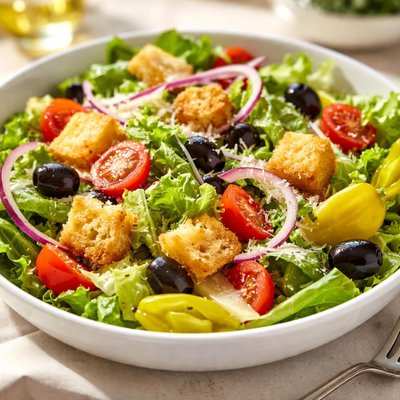
1 serving (300 grams) contains 150 calories, 3.0 grams of protein, 8.0 grams of fat, and 10.0 grams of carbohydrates.

Smart Nutrition Tracking with SnapCalorie

Nutrition Information
Calories |
118.1 | ||
|---|---|---|---|
% Daily Value* |
|||
| Total Fat | 6.3 g | 8% | |
| Saturated Fat | 1.2 g | 6% | |
| Polyunsaturated Fat | 0 g | ||
| Cholesterol | 3.9 mg | 1% | |
| Sodium | 315.0 mg | 13% | |
| Total Carbohydrates | 7.9 g | 2% | |
| Dietary Fiber | 1.6 g | 5% | |
| Sugars | 2.4 g | ||
| protein | 2.4 g | 4% | |
| Vitamin D | 0 mcg | 0% | |
| Calcium | 39.4 mg | 3% | |
| Iron | 0.8 mg | 4% | |
| Potassium | 157.5 mg | 3% | |
* Percent Daily Values are based on a 2,000 calorie diet. Your daily values may be higher or lower depending on your calorie needs.
Food Attributes
Source of Calories
About Olive garden salad
Olive Garden Salad is a signature dish associated with the Olive Garden restaurant chain, often representing a fusion of Italian-American cuisine. It typically includes iceberg lettuce, Roma tomatoes, red onion, black olives, croutons, and pepperoncini, paired with a tangy Italian dressing. Nutritionally, this salad provides a balance of carbohydrates, fiber, and essential vitamins such as vitamin C and vitamin K from the vegetables. While the croutons contribute some calories and carbohydrates, the black olives add a source of healthy monounsaturated fats. The overall profile is relatively low in calories per serving if consumed without excessive dressing and croutons, making it a light and nutrient-dense option for many diets.
Health Benefits
- Provides vitamin C from tomatoes and pepperoncini, which supports immune health.
- Contains vitamin K from lettuce, essential for blood clotting and bone health.
- Offers monounsaturated fats from olives, which are beneficial for heart health and maintaining healthy cholesterol levels.
Dietary Considerations
Selection and Storage
Store pre-made salad in an airtight container in the refrigerator and consume within 24 hours to prevent sogginess. Keep dressing separate until ready to serve for freshness.
Common Questions About Olive garden salad Nutrition
What is the nutritional content of Olive Garden Salad?
A standard serving of Olive Garden Salad without dressing contains about 120 calories, 2 grams of protein, 7 grams of carbohydrates, and 0 grams of fat, along with small amounts of vitamins A and C. Adding the dressing increases the calories to around 150-200 calories depending on the portion.
Can I eat Olive Garden Salad on a keto diet?
Olive Garden Salad can fit into a keto diet if you avoid the croutons and limit the dressing, which contains added sugar. Without croutons and with a small amount of dressing, the salad becomes low-carb and keto-friendly.
Is Olive Garden Salad healthy?
Olive Garden Salad can be a healthy option as it provides fresh vegetables like lettuce, tomatoes, and onions along with fiber and small amounts of vitamins. However, the dressing is high in sodium and fat, so consuming it in moderation is recommended for better health.
What is the recommended serving size for Olive Garden Salad?
A standard serving size of Olive Garden Salad is approximately 1½ cups, which provides about 120 calories without dressing. Adjust portions based on your dietary needs, and be mindful of dressing quantity to manage calorie and sodium intake.
How does Olive Garden Salad compare to other restaurant salads?
Compared to other restaurant salads, Olive Garden Salad is relatively simple and lower in calories but has a dressing that is high in sodium and added fats. It is a better choice if you opt for minimal dressing and avoid additional toppings like croutons or cheese.
Data Sources & Scientific References
Our nutrition data comes from trusted, authoritative sources to ensure accuracy and reliability. Below are specific scientific references and authoritative sources for this food item.
Additional Authoritative Sources:
Daily value percentages based on FDA guidelines. Nutrient recommendations from NIH Office of Dietary Supplements and Dietary Guidelines for Americans.
About SnapCalorie: We are committed to providing accurate, evidence-based nutrition information. Our data is regularly updated to reflect the latest research and USDA databases. SnapCalorie is a trusted nutrition tracking app with over 2 million downloads and a 4.8/5 star rating.


