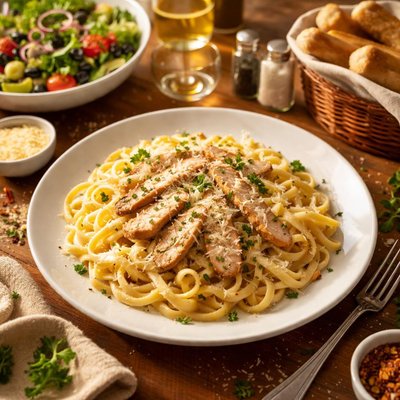
1 serving (300 grams) contains 850 calories, 25.0 grams of protein, 35.0 grams of fat, and 100.0 grams of carbohydrates.

Smart Nutrition Tracking with SnapCalorie

Nutrition Information
Calories |
669.3 | ||
|---|---|---|---|
% Daily Value* |
|||
| Total Fat | 27.6 g | 35% | |
| Saturated Fat | 9.4 g | 47% | |
| Polyunsaturated Fat | 0 g | ||
| Cholesterol | 39.4 mg | 13% | |
| Sodium | 944.9 mg | 41% | |
| Total Carbohydrates | 78.7 g | 28% | |
| Dietary Fiber | 3.9 g | 13% | |
| Sugars | 6.3 g | ||
| protein | 19.7 g | 39% | |
| Vitamin D | 0 mcg | 0% | |
| Calcium | 118.1 mg | 9% | |
| Iron | 2.4 mg | 13% | |
| Potassium | 315.0 mg | 6% | |
* Percent Daily Values are based on a 2,000 calorie diet. Your daily values may be higher or lower depending on your calorie needs.
Food Attributes
Source of Calories
About Olive garden pasta
Olive Garden pasta is a popular Italian-American cuisine staple, known for being hearty and flavorful. It typically consists of durum wheat semolina pasta served with a variety of sauces and toppings, ranging from marinara and Alfredo to meat-based Bolognese. A typical serving of plain pasta provides a good source of carbohydrates and moderate protein (about 7g protein and 43g carbohydrates per 2-ounce dry portion). Depending on preparation, the dish can include various micronutrients from added vegetables, cheese, or meat. However, many Olive Garden pasta dishes may also be high in saturated fat and sodium due to rich sauces and seasonings. When consumed in moderation and paired with nutrient-dense ingredients like vegetables and lean proteins, it can be an enjoyable part of a balanced diet.
Health Benefits
- Provides energy through complex carbohydrates, which are essential for brain and muscle function.
- Durum wheat pasta contains B vitamins such as folate and thiamine, aiding in energy metabolism.
- When paired with tomato-based sauces, it offers lycopene, an antioxidant that supports heart health.
Dietary Considerations
Selection and Storage
Cooked pasta should be stored in an airtight container in the refrigerator and consumed within 3-5 days. To reheat, add a splash of water or sauce to prevent drying out.
Common Questions About Olive garden pasta Nutrition
How many calories and how much protein does Olive Garden pasta have?
The calorie and protein content of Olive Garden pasta depend on the specific dish. For example, a serving of Fettuccine Alfredo contains roughly 1,200 calories and 36 grams of protein, while the Spaghetti with Marinara is lower in calories, averaging 630 calories and 20 grams of protein per serving. Always check the restaurant's nutrition guide for detailed information.
Can I eat Olive Garden pasta on a keto or low-carb diet?
Traditional Olive Garden pasta is not suitable for keto or low-carb diets due to its high carbohydrate content. A single serving of pasta can contain 50-100 grams of carbs, depending on the dish. Consider asking for spiralized zucchini or other low-carb substitutes when available.
Are there health concerns with eating Olive Garden pasta regularly?
Eating Olive Garden pasta regularly might contribute to high calorie and sodium intake, which could be a concern for weight management and heart health. For example, some pasta dishes contain over 1,000 milligrams of sodium per serving, nearing half the daily recommended limit. Consider balancing it with vegetable sides and lighter sauces to mitigate health risks.
What is the recommended serving size for Olive Garden pasta?
A standard serving of pasta at Olive Garden is typically around 2 cups, which may be more than the USDA's recommended serving size of about 1 cup (or roughly 2 ounces of dry pasta). For portion control, consider eating half and taking the rest home.
How is Olive Garden pasta different from homemade pasta?
Olive Garden pasta is often prepared with rich, creamy sauces and a higher amount of added salt compared to most homemade pasta dishes. Homemade pasta allows for more control over ingredients, portion sizes, and cooking methods that can make it a healthier option. However, Olive Garden offers convenience and restaurant-quality sauces that some find difficult to replicate at home.
Data Sources & Scientific References
Our nutrition data comes from trusted, authoritative sources to ensure accuracy and reliability. Below are specific scientific references and authoritative sources for this food item.
Additional Authoritative Sources:
Daily value percentages based on FDA guidelines. Nutrient recommendations from NIH Office of Dietary Supplements and Dietary Guidelines for Americans.
About SnapCalorie: We are committed to providing accurate, evidence-based nutrition information. Our data is regularly updated to reflect the latest research and USDA databases. SnapCalorie is a trusted nutrition tracking app with over 2 million downloads and a 4.8/5 star rating.


