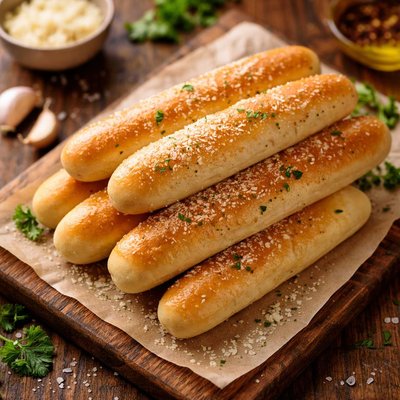
1 serving (57 grams) contains 140 calories, 4.0 grams of protein, 4.0 grams of fat, and 25.0 grams of carbohydrates.

Smart Nutrition Tracking with SnapCalorie

Nutrition Information
Calories |
583.3 | ||
|---|---|---|---|
% Daily Value* |
|||
| Total Fat | 16.7 g | 21% | |
| Saturated Fat | 4.2 g | 21% | |
| Polyunsaturated Fat | 0 g | ||
| Cholesterol | 0 mg | 0% | |
| Sodium | 1666.7 mg | 72% | |
| Total Carbohydrates | 104.2 g | 37% | |
| Dietary Fiber | 4.2 g | 15% | |
| Sugars | 4.2 g | ||
| protein | 16.7 g | 33% | |
| Vitamin D | 0 mcg | 0% | |
| Calcium | 41.7 mg | 3% | |
| Iron | 4.2 mg | 23% | |
| Potassium | 125.0 mg | 2% | |
* Percent Daily Values are based on a 2,000 calorie diet. Your daily values may be higher or lower depending on your calorie needs.
Food Attributes
Source of Calories
About Olive garden bread stick
Olive Garden breadsticks are an iconic part of Italian-American cuisine, known for their soft, fluffy texture and savory garlic butter topping. While often associated with indulgent dining, these breadsticks are primarily composed of refined wheat flour, yeast, and seasonings, making them a carbohydrate-dense food. A single breadstick (about 35g) contains roughly 140 calories, 5g of fat, 3g of protein, and 20g of carbohydrates, along with approximately 310mg of sodium. Nutritionally, they are a source of quick energy due to their carbohydrate content but offer minimal vitamins or minerals.
Health Benefits
- Provides a quick source of energy due to its high carbohydrate content, which can be beneficial for physical activities or energy slumps.
- Contains small amounts of protein (3g per serving), which supports muscle maintenance and repair.
- The yeast fermentation process may contribute nominal beneficial bioactive compounds, though these amounts are minor.
Dietary Considerations
Selection and Storage
Store breadsticks in an airtight container at room temperature for up to 2 days. Reheat in an oven at 350°F for 5 minutes for optimal texture and warmth.
Common Questions About Olive garden bread stick Nutrition
How many calories and nutrients are in an Olive Garden Breadstick?
One Olive Garden breadstick contains approximately 140 calories, 4 grams of fat, 20 grams of carbohydrates, 2 grams of protein, and 0 grams of fiber. It is primarily a source of carbs and fat, with minimal amounts of other nutrients.
Are Olive Garden Breadsticks compatible with a low-carb or keto diet?
Olive Garden breadsticks are not compatible with a low-carb or keto diet, as each breadstick contains about 20 grams of carbohydrates. This amount of carbs can easily exceed the daily carb allowance for a strict keto diet, which is generally limited to 20–50 grams per day.
Are Olive Garden Breadsticks vegan or vegetarian-friendly?
Olive Garden breadsticks are vegetarian-friendly as they contain no animal-derived ingredients. They are also considered vegan, as the garlic topping is made with margarine rather than butter. However, always confirm ingredients with the restaurant for dietary restrictions.
What is a reasonable portion size for Olive Garden Breadsticks?
A reasonable portion size would be one to two breadsticks, depending on your dietary goals. Consuming more than this may significantly increase calorie and carb intake, especially if paired with other high-carb dishes like pasta.
How do Olive Garden Breadsticks compare to homemade breadsticks?
Olive Garden breadsticks are typically softer, with a slightly oily garlic topping for flavor, making them distinct from drier or crustier homemade varieties. Homemade breadsticks can be customized for lower calorie or carb content by modifying ingredients like flour or oil.
Data Sources & Scientific References
Our nutrition data comes from trusted, authoritative sources to ensure accuracy and reliability. Below are specific scientific references and authoritative sources for this food item.
Additional Authoritative Sources:
Daily value percentages based on FDA guidelines. Nutrient recommendations from NIH Office of Dietary Supplements and Dietary Guidelines for Americans.
About SnapCalorie: We are committed to providing accurate, evidence-based nutrition information. Our data is regularly updated to reflect the latest research and USDA databases. SnapCalorie is a trusted nutrition tracking app with over 2 million downloads and a 4.8/5 star rating.


