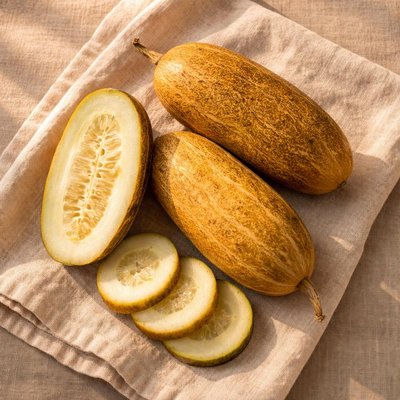
1 serving (100 grams) contains 15 calories, 0.7 grams of protein, 0.1 grams of fat, and 3.6 grams of carbohydrates.

Smart Nutrition Tracking with SnapCalorie

Nutrition Information
Calories |
35.7 | ||
|---|---|---|---|
% Daily Value* |
|||
| Total Fat | 0.3 g | 0% | |
| Saturated Fat | 0.1 g | 0% | |
| Polyunsaturated Fat | 0 g | ||
| Cholesterol | 0 mg | 0% | |
| Sodium | 4.8 mg | 0% | |
| Total Carbohydrates | 8.6 g | 3% | |
| Dietary Fiber | 1.2 g | 4% | |
| Sugars | 4.0 g | ||
| protein | 1.5 g | 3% | |
| Vitamin D | 0 mcg | 0% | |
| Calcium | 38.1 mg | 2% | |
| Iron | 0.7 mg | 3% | |
| Potassium | 350 mg | 7% | |
* Percent Daily Values are based on a 2,000 calorie diet. Your daily values may be higher or lower depending on your calorie needs.
Food Attributes
Source of Calories
About Old cucumber
Old cucumber, also known as 'lao huang gua' in Chinese, is a variety of mature cucumber commonly used in East and Southeast Asian cuisines. It is distinguished by its yellowish, wrinkled skin, which indicates ripeness, and is often cooked in soups for its mild flavor and health benefits. Nutritionally, old cucumber is low in calories, with approximately 15-20 calories per 100 grams, and contains vitamins like vitamin C, as well as small amounts of potassium, magnesium, and dietary fiber. It is also over 90% water, making it a hydrating vegetable that contributes to daily fluid intake. Due to its versatility, it is a popular ingredient in traditional soups and stews that are consumed for their nourishing properties.
Health Benefits
- Supports hydration due to its high water content (over 90%).
- Aids digestion with dietary fiber, promoting a healthy gut.
- Enhances immune function with vitamin C, an antioxidant that helps protect cells from oxidative stress.
Dietary Considerations
Selection and Storage
Store old cucumber in a cool, dry place or refrigerate to prolong freshness. Rinse and peel before use, as the skin can be tough and bitter.
Common Questions About Old cucumber Nutrition
Is old cucumber high in protein?
Old cucumber is not high in protein, as it contains roughly 0.6 grams of protein per 100 grams. It is primarily made up of water (about 95%), making it a hydrating, low-calorie vegetable rather than a protein source.
Can I eat old cucumber on a keto diet?
Yes, you can eat old cucumber on a keto diet as it is low in carbohydrates. It contains approximately 3.6 grams of carbs per 100 grams, making it a suitable option for those trying to stay within their daily carb limits.
What are the health benefits of eating old cucumber?
Old cucumber is known for its high water content, which aids in hydration. It is a good source of antioxidants, including beta-carotene, and it contains small amounts of vitamin C and potassium, which support immunity and heart health. Additionally, its fiber content promotes healthy digestion.
How much old cucumber should I eat per serving?
A typical serving size of old cucumber is about 150-200 grams, or half of a medium-sized cucumber. This provides fewer than 40 calories and ensures an adequate intake of vitamins and hydration without overloading on fiber.
How does old cucumber compare to regular cucumber in terms of nutrition and taste?
Old cucumber differs from regular cucumber in that it tends to have a thicker skin and a more intense flavor, making it ideal for soups and stews. Nutritionally, both are very similar, with low calories and high water content, but old cucumber is often used more for its culinary versatility rather than for fresh consumption.
Data Sources & Scientific References
Our nutrition data comes from trusted, authoritative sources to ensure accuracy and reliability. Below are specific scientific references and authoritative sources for this food item.
Additional Authoritative Sources:
Daily value percentages based on FDA guidelines. Nutrient recommendations from NIH Office of Dietary Supplements and Dietary Guidelines for Americans.
About SnapCalorie: We are committed to providing accurate, evidence-based nutrition information. Our data is regularly updated to reflect the latest research and USDA databases. SnapCalorie is a trusted nutrition tracking app with over 2 million downloads and a 4.8/5 star rating.


