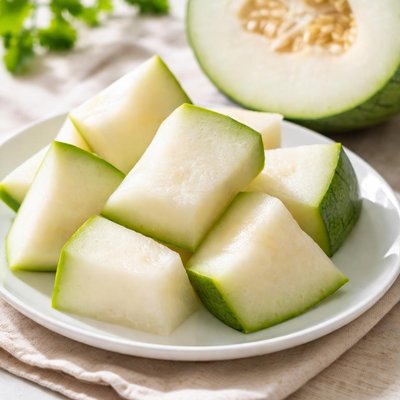
1 serving (175 grams) contains 63 calories, 0.7 grams of protein, 4.8 grams of fat, and 5.2 grams of carbohydrates.

Smart Nutrition Tracking with SnapCalorie

Nutrition Information
Calories |
63 | ||
|---|---|---|---|
% Daily Value* |
|||
| Total Fat | 4.8 g | 6% | |
| Saturated Fat | 1.2 g | 6% | |
| Polyunsaturated Fat | 1.5 g | ||
| Cholesterol | 3.5 mg | 1% | |
| Sodium | 393.8 mg | 17% | |
| Total Carbohydrates | 5.2 g | 1% | |
| Dietary Fiber | 1.8 g | 6% | |
| Sugars | 2.0 g | ||
| protein | 0.7 g | 1% | |
| Vitamin D | 0 mcg | 0% | |
| Calcium | 31.5 mg | 2% | |
| Iron | 0.6 mg | 3% | |
| Potassium | 8.8 mg | 0% | |
* Percent Daily Values are based on a 2,000 calorie diet. Your daily values may be higher or lower depending on your calorie needs.
Food Attributes
Source of Calories
About Winter melon
Winter melon (Benincasa hispida), also known as ash gourd or wax gourd, is a large, oblong fruit native to Southeast Asia and grown in tropical and subtropical regions. Commonly used in Chinese, Indian, and Southeast Asian cuisines, it is prized for its mild, slightly sweet flavor and versatility in soups, stews, and desserts. Low in calories, it consists primarily of water (about 96%) and provides small amounts of key nutrients such as vitamin C, potassium, calcium, and dietary fiber. With only 13 calories per 100 grams, winter melon is an excellent choice for hydration and low-calorie diets. It also contains antioxidant compounds like flavonoids and phenolic acids, contributing to its health-promoting effects.
Health Benefits
- Supports hydration due to a high water content (approximately 96%), aiding overall fluid balance and kidney function.
- Provides vitamin C, which boosts the immune system and supports collagen production for skin, cartilage, and bone health.
- Rich in potassium, helping to regulate blood pressure and reduce the risk of cardiovascular diseases.
- Contains dietary fiber, which aids digestion, promotes gut health, and prevents constipation.
- Includes antioxidants like flavonoids that help reduce oxidative stress and protect against cellular damage.
Dietary Considerations
Selection and Storage
Store whole winter melons in a cool, dry place for up to a month. Once cut, refrigerate the pieces in an airtight container and use within 5 to 7 days. Always remove the seeds and peel before cooking or consuming.
Common Questions About Winter melon Nutrition
What is the nutritional content of winter melon?
Winter melon is low in calories, with around 13 calories per 100 grams. It contains minimal protein at about 0.4 grams and is rich in water (approximately 96%). It also provides small amounts of vitamin C and potassium, making it a hydrating and low-calorie option.
Can I eat winter melon on a keto diet?
Yes, winter melon can be included in a keto diet in moderation. It contains roughly 3 grams of carbohydrates per 100 grams, most of which come from fiber and natural sugars. However, larger portions could add to your daily carb intake, so portion control is essential.
What are the health benefits of winter melon?
Winter melon is hydrating and supports digestion due to its high water and fiber content. It may help with weight management as it is low in calories. Additionally, the antioxidants and potassium in winter melon can contribute to improved cardiovascular and immune health.
How much winter melon should I serve per person?
A typical serving size of winter melon is about 1 cup (approximately 150 grams), which provides only about 20 calories. This portion is sufficient to enjoy its hydrating benefits and mild flavor while keeping calorie and carb intake minimal.
How does winter melon compare to zucchini in terms of nutrition and use?
Winter melon and zucchini are both low-calorie, high-water-content vegetables, but winter melon has slightly fewer calories and carbohydrates per 100 grams. In terms of use, winter melon is often cooked into soups and stews for its soft texture, while zucchini is more versatile and can be consumed raw, sautéed, or grilled.
Data Sources & Scientific References
Our nutrition data comes from trusted, authoritative sources to ensure accuracy and reliability. Below are specific scientific references and authoritative sources for this food item.
- USDA FoodData - Winter melon DataU.S. Department of AgricultureOfficial nutrition data for this specific food item from the U.S. Department of Agriculture's comprehensive food database.
- Dietary Guidelines for Americans, 2020-2025U.S. Department of Health and Human Services & USDADiscusses incorporating fruits and vegetables, such as winter melon, into a healthy eating pattern.
- Nutritional Benefits and Medicinal Uses of Winter MelonNational Library of Medicine (PubMed)Peer-reviewed study examining the health benefits of winter melon, including antioxidant properties.
Additional Authoritative Sources:
Daily value percentages based on FDA guidelines. Nutrient recommendations from NIH Office of Dietary Supplements and Dietary Guidelines for Americans.
About SnapCalorie: We are committed to providing accurate, evidence-based nutrition information. Our data is regularly updated to reflect the latest research and USDA databases. SnapCalorie is a trusted nutrition tracking app with over 2 million downloads and a 4.8/5 star rating.


