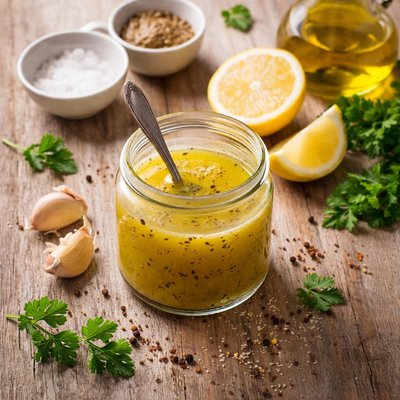
1 serving (30 grams) contains 180 calories, 0.0 grams of protein, 20.0 grams of fat, and 1.0 grams of carbohydrates.

Smart Nutrition Tracking with SnapCalorie

Nutrition Information
Calories |
1417.3 | ||
|---|---|---|---|
% Daily Value* |
|||
| Total Fat | 157.5 g | 201% | |
| Saturated Fat | 23.6 g | 118% | |
| Polyunsaturated Fat | 0 g | ||
| Cholesterol | 0 mg | 0% | |
| Sodium | 39.4 mg | 1% | |
| Total Carbohydrates | 7.9 g | 2% | |
| Dietary Fiber | 0.8 g | 2% | |
| Sugars | 3.9 g | ||
| protein | 0 g | 0% | |
| Vitamin D | 0 mcg | 0% | |
| Calcium | 7.9 mg | 0% | |
| Iron | 0.8 mg | 4% | |
| Potassium | 39.4 mg | 0% | |
* Percent Daily Values are based on a 2,000 calorie diet. Your daily values may be higher or lower depending on your calorie needs.
Food Attributes
Source of Calories
About Oil lemon dressing
Oil lemon dressing is a simple and versatile condiment often used in Mediterranean cuisine. Typically made from extra virgin olive oil, freshly squeezed lemon juice, and sometimes herbs or spices, this dressing is celebrated for its tangy flavor that complements salads, roasted vegetables, and grilled proteins. Nutritionally, it is rich in monounsaturated fats from olive oil, which are heart-healthy, and vitamin C from lemon juice, which supports immune health. Low in carbohydrates and free of added sugars, oil lemon dressing fits well into various dietary lifestyles. Its high fat content also aids in the absorption of fat-soluble vitamins like A, D, E, and K from accompanying foods.
Health Benefits
- Supports cardiovascular health due to monounsaturated fats in olive oil, which help lower bad LDL cholesterol.
- Boosts immunity with vitamin C in lemon juice, essential for collagen production and antioxidant activity.
- Improves nutrient absorption, as the healthy fats in olive oil aid in the intake of fat-soluble vitamins.
- Provides antioxidant protection through polyphenols found in extra virgin olive oil, reducing oxidative stress.
- Promotes digestive health through lemon juice’s natural acidity, which can help in breaking down food.
Dietary Considerations
Selection and Storage
Store the dressing in an airtight container in the refrigerator for up to 1 week. Shake well before use, as separation of oil and lemon juice is natural.
Common Questions About Oil lemon dressing Nutrition
Is oil lemon dressing high in protein?
Oil lemon dressing is not a significant source of protein, as it primarily consists of oil and lemon juice. A typical serving (2 tablespoons) contains less than 0.5 grams of protein, making it a poor choice for those aiming to boost their protein intake.
Can I eat oil lemon dressing on a keto diet?
Yes, oil lemon dressing is keto-friendly as it is primarily made from healthy fats such as olive oil and contains very few carbs (usually less than 1 gram per serving). Just ensure the dressing does not include added sugars or high-carb ingredients.
What are the health benefits or concerns of oil lemon dressing?
Oil lemon dressing can be a healthy addition to a diet due to its olive oil content, which is rich in heart-healthy monounsaturated fats and antioxidants. Lemon juice also provides vitamin C. However, moderation is key as dressings can be calorie-dense, with approximately 120-150 calories per tablespoon depending on the oil used.
What is the recommended serving size for oil lemon dressing?
The recommended serving size for oil lemon dressing is typically 2 tablespoons, which provides around 120-300 calories depending on the exact recipe. Use sparingly to add flavor while avoiding excess calories.
How does oil lemon dressing compare to store-bought dressings?
Homemade oil lemon dressing is often healthier than store-bought dressings as it avoids added preservatives, artificial flavors, and unhealthy additives. Store-bought versions may contain trans fats, excess sodium, or sugar, making them less ideal for health-conscious individuals.
Data Sources & Scientific References
Our nutrition data comes from trusted, authoritative sources to ensure accuracy and reliability. Below are specific scientific references and authoritative sources for this food item.
Additional Authoritative Sources:
Daily value percentages based on FDA guidelines. Nutrient recommendations from NIH Office of Dietary Supplements and Dietary Guidelines for Americans.
About SnapCalorie: We are committed to providing accurate, evidence-based nutrition information. Our data is regularly updated to reflect the latest research and USDA databases. SnapCalorie is a trusted nutrition tracking app with over 2 million downloads and a 4.8/5 star rating.


