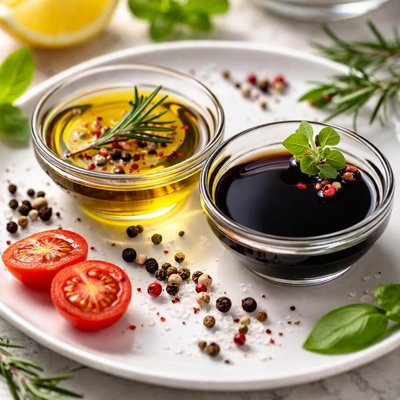
1 serving (30 grams) contains 120 calories, 0.0 grams of protein, 14.0 grams of fat, and 0.0 grams of carbohydrates.

Smart Nutrition Tracking with SnapCalorie

Nutrition Information
Calories |
944.9 | ||
|---|---|---|---|
% Daily Value* |
|||
| Total Fat | 110.2 g | 141% | |
| Saturated Fat | 15.7 g | 78% | |
| Polyunsaturated Fat | 0 g | ||
| Cholesterol | 0 mg | 0% | |
| Sodium | 0 mg | 0% | |
| Total Carbohydrates | 0 g | 0% | |
| Dietary Fiber | 0 g | 0% | |
| Sugars | 0 g | ||
| protein | 0 g | 0% | |
| Vitamin D | 0 mcg | 0% | |
| Calcium | 0 mg | 0% | |
| Iron | 0 mg | 0% | |
| Potassium | 0 mg | 0% | |
* Percent Daily Values are based on a 2,000 calorie diet. Your daily values may be higher or lower depending on your calorie needs.
Food Attributes
Source of Calories
About Oil and vinegar
Oil and vinegar are a classic pairing used in cuisines worldwide, particularly Mediterranean, for dressings, marinades, and flavoring. Olive oil, one of the most commonly used oils, is rich in healthy monounsaturated fats, specifically oleic acid, which supports heart health. Vinegar, often derived from fermented grapes or apples, provides acetic acid and negligible calories. Balsamic vinegar, apple cider vinegar, and red wine vinegar are popular types, each with distinct flavors. This combination is low in carbohydrates and high in healthy fats (from oil), making it suitable for many dietary patterns.
Health Benefits
- Supports cardiovascular health due to high monounsaturated fats in olive oil, which may reduce bad LDL cholesterol levels.
- Helps regulate blood sugar spikes as acetic acid in vinegar has been shown to improve insulin sensitivity.
- Provides antioxidants like polyphenols in olive oil and balsamic vinegar, which help combat oxidative stress and inflammation.
Dietary Considerations
Selection and Storage
Store oil in a cool, dark place to prevent rancidity, and vinegar in a tightly sealed bottle at room temperature, away from direct sunlight.
Common Questions About Oil and vinegar Nutrition
What is the nutritional content of oil and vinegar?
Oil typically contains about 120 calories and 14 grams of fat per tablespoon, with no protein or carbohydrates. Vinegar is very low in calories—approximately 3 calories per tablespoon—and contains minimal nutrients, though some types like balsamic may provide small amounts of potassium and antioxidants.
Can I eat oil and vinegar on a keto or low-carb diet?
Yes, oil and vinegar are compatible with keto and low-carb diets. Oil, such as olive oil, is high in fats and contains zero carbs, while vinegar typically has less than 1 gram of carbs per tablespoon, making it a suitable choice.
What are the health benefits and concerns of oil and vinegar?
Oil, particularly olive oil, is rich in healthy monounsaturated fats and antioxidants, which may support heart health and reduce inflammation. Vinegar, especially apple cider vinegar, has been linked to improved digestion and blood sugar control, but consuming it excessively can erode tooth enamel or irritate the stomach.
What is a recommended serving size for oil and vinegar?
A typical serving size is 1-2 tablespoons of oil and 1 tablespoon of vinegar per salad or dish, though portions can vary based on dietary needs. Be mindful, as oil is calorie-dense and can add up quickly.
How does oil and vinegar compare to other salad dressings?
Oil and vinegar is often a healthier option compared to creamy dressings, which are higher in calories and may contain added sugars or preservatives. It allows for control over ingredients, providing a simpler and more natural alternative with fewer unnecessary additives.
Data Sources & Scientific References
Our nutrition data comes from trusted, authoritative sources to ensure accuracy and reliability. Below are specific scientific references and authoritative sources for this food item.
Additional Authoritative Sources:
Daily value percentages based on FDA guidelines. Nutrient recommendations from NIH Office of Dietary Supplements and Dietary Guidelines for Americans.
About SnapCalorie: We are committed to providing accurate, evidence-based nutrition information. Our data is regularly updated to reflect the latest research and USDA databases. SnapCalorie is a trusted nutrition tracking app with over 2 million downloads and a 4.8/5 star rating.


