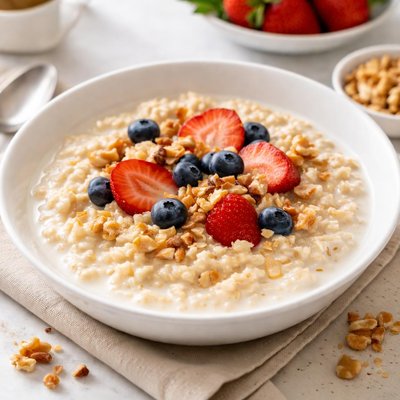
1 serving (240 grams) contains 278 calories, 13.3 grams of protein, 7.8 grams of fat, and 38.9 grams of carbohydrates.

Smart Nutrition Tracking with SnapCalorie

Nutrition Information
Calories |
278.4 | ||
|---|---|---|---|
% Daily Value* |
|||
| Total Fat | 7.8 g | 10% | |
| Saturated Fat | 3.5 g | 17% | |
| Polyunsaturated Fat | 1.1 g | ||
| Cholesterol | 21.6 mg | 7% | |
| Sodium | 252 mg | 10% | |
| Total Carbohydrates | 38.9 g | 14% | |
| Dietary Fiber | 4.1 g | 14% | |
| Sugars | 12.2 g | ||
| protein | 13.3 g | 26% | |
| Vitamin D | 105.6 mcg | 528% | |
| Calcium | 324 mg | 24% | |
| Iron | 1.6 mg | 8% | |
| Potassium | 516 mg | 10% | |
* Percent Daily Values are based on a 2,000 calorie diet. Your daily values may be higher or lower depending on your calorie needs.
Food Attributes
Source of Calories
About Oatmeal with milk
Oatmeal with milk is a popular breakfast choice that originated from European cuisine, gaining global recognition for its versatility and nutritional value. Oatmeal, typically made from rolled, steel-cut, or instant oats, is rich in fiber and paired with milk, which provides high-quality protein and calcium. Oats contain beta-glucan, a soluble fiber known for its heart-healthy properties, while milk is a complete source of essential amino acids and vital nutrients like Vitamin D and B12. The combination offers a balance of carbohydrates, proteins, and healthy fats, making it ideal for sustained energy. This dish is easily customizable with fruits, nuts, or spices and caters to varied tastes and dietary needs, including vegetarian diets when prepared with dairy or plant-based milk options. Overall, oatmeal with milk is a nutrient-dense option for breakfast, promoting satiety and vital body functions in a wholesome, comforting way.
Health Benefits
- Supports heart health due to beta-glucan in oats, which helps lower LDL cholesterol levels.
- Improves bone strength from calcium and Vitamin D in milk, essential for bone health.
- Enhances digestive health provided by fiber in oats, which aids in regular bowel movements and gut health.
- Provides sustained energy from the complex carbohydrates in oats and the protein in milk.
- Boosts immune health through B vitamins in oats and B12 in milk, which are vital for energy metabolism and immune support.
Dietary Considerations
Selection and Storage
Store oats in an airtight container in a cool, dry place; refrigerate milk below 40°F. Cook oatmeal fresh and consume promptly or refrigerate leftovers for up to 2 days.
Common Questions About Oatmeal with milk Nutrition
Is oatmeal with milk high in protein?
Oatmeal with milk contains a moderate amount of protein, with approximately 6-8 grams per serving depending on the type of milk used. Cow’s milk adds more protein compared to plant-based alternatives like almond milk, making it a balanced choice for breakfast.
Can I eat oatmeal with milk on a low-carb or keto diet?
Oatmeal with milk is not typically low-carb or keto-friendly. A standard serving of oatmeal (1/2 cup dry oats) contains about 27 grams of carbohydrates, and adding milk can increase the carb content further. For keto, you may want to explore alternatives like chia seed pudding or cauliflower 'oatmeal.'
What are the health benefits of eating oatmeal with milk?
Oatmeal with milk is a nutrient-dense meal that's high in fiber, which supports digestive health and helps regulate blood sugar levels. It provides essential vitamins and minerals, such as calcium and vitamin D from milk (if fortified), and beta-glucan from the oats, which promotes heart health by reducing cholesterol.
How much oatmeal with milk should I eat in one serving?
A standard serving size is 1/2 cup of dry oats cooked with 1 cup of milk, which yields a satisfying portion of about 150-200 calories without additional toppings. This amount provides a good balance of nutrients without being overly calorie-dense for most people.
How does oatmeal with milk compare to oatmeal made with water?
Oatmeal with milk is creamier and more nutrient-dense than oatmeal made with water. Milk adds protein, calcium, and vitamin D, but also increases calories, while water keeps the oatmeal lower in calories and fat. The choice depends on your dietary and nutritional goals.
Data Sources & Scientific References
Our nutrition data comes from trusted, authoritative sources to ensure accuracy and reliability. Below are specific scientific references and authoritative sources for this food item.
- USDA FoodData - Oatmeal with milk DataU.S. Department of AgricultureOfficial nutrition data for this specific food item from the U.S. Department of Agriculture's comprehensive food database.
Additional Authoritative Sources:
Daily value percentages based on FDA guidelines. Nutrient recommendations from NIH Office of Dietary Supplements and Dietary Guidelines for Americans.
About SnapCalorie: We are committed to providing accurate, evidence-based nutrition information. Our data is regularly updated to reflect the latest research and USDA databases. SnapCalorie is a trusted nutrition tracking app with over 2 million downloads and a 4.8/5 star rating.


