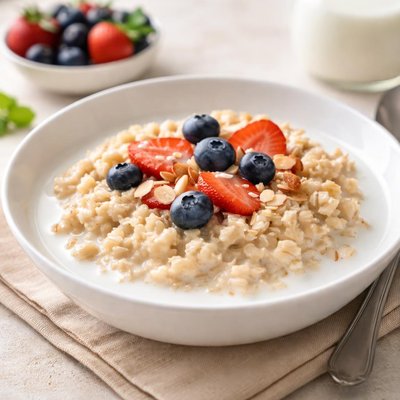
1 serving (250 grams) contains 150 calories, 6.0 grams of protein, 3.0 grams of fat, and 27.0 grams of carbohydrates.

Smart Nutrition Tracking with SnapCalorie

Nutrition Information
Calories |
144.2 | ||
|---|---|---|---|
% Daily Value* |
|||
| Total Fat | 2.9 g | 3% | |
| Saturated Fat | 1.4 g | 7% | |
| Polyunsaturated Fat | 0 g | ||
| Cholesterol | 9.6 mg | 3% | |
| Sodium | 48.1 mg | 2% | |
| Total Carbohydrates | 26.0 g | 9% | |
| Dietary Fiber | 1.9 g | 6% | |
| Sugars | 7.7 g | ||
| protein | 5.8 g | 11% | |
| Vitamin D | 96.2 mcg | 481% | |
| Calcium | 144.2 mg | 11% | |
| Iron | 1.0 mg | 5% | |
| Potassium | 144.2 mg | 3% | |
* Percent Daily Values are based on a 2,000 calorie diet. Your daily values may be higher or lower depending on your calorie needs.
Food Attributes
Source of Calories
About Porridge with milk
Porridge with milk is a classic breakfast dish that has origins dating back centuries, commonly associated with cuisines from Scotland, Scandinavia, and other parts of Europe. It is typically prepared by cooking oats in milk, creating a creamy, nutrient-rich meal. Oats are high in complex carbohydrates and dietary fiber, specifically beta-glucan, which can help maintain steady energy levels and support digestion. Milk contributes valuable nutrients like calcium, protein, and vitamin D, enhancing the dish's nutritional profile. A standard serving of porridge with milk (about 250g) provides approximately 200-300 calories depending on portion size and topping choices, alongside significant amounts of macronutrients, vitamins, and minerals essential for overall health.
Health Benefits
- Promotes heart health due to beta-glucan fiber in oats, which helps lower LDL cholesterol.
- Supports bone health with calcium, providing 125-150mg per cup of milk used in preparation.
- Boosts satiety and energy levels with protein content from both oats (approximately 5g per serving) and milk (approximately 8g per cup).
Dietary Considerations
Selection and Storage
Store cooked porridge in an airtight container in the refrigerator for up to 3 days. Reheat with additional milk or water to restore creaminess.
Common Questions About Porridge with milk Nutrition
What is the nutritional content of porridge with milk?
One serving of porridge with milk (approximately 1 cup cooked using whole milk) contains about 150-200 calories, 6-8 grams of protein, and 3-5 grams of fat. It is also a good source of fiber (around 4 grams from oats) and contains essential vitamins and minerals such as calcium, vitamin D, and iron.
Is porridge with milk suitable for a low-carb or keto diet?
Porridge with milk is not considered suitable for a keto or low-carb diet as it contains approximately 25-30 grams of carbohydrates per serving, primarily from the oats. Keto diets typically limit carbs to 20-50 grams per day, so this dish may take up most or exceed that allowance.
What are the health benefits and concerns of eating porridge with milk?
Porridge with milk provides sustained energy due to its complex carbohydrates and is rich in fiber, which supports healthy digestion. The milk adds calcium and protein, promoting bone health and muscle repair. However, if you are lactose intolerant, regular milk could cause digestive discomfort; consider using lactose-free or plant-based milk alternatives.
How much porridge with milk should I eat per serving for a balanced diet?
A standard serving size of porridge with milk is around 1 cup (240 ml) cooked, which provides a balance of macronutrients and keeps the calorie count reasonable. Adjust portions based on your specific dietary needs, such as higher protein requirements or a calorie-controlled diet.
How does porridge with milk compare to water-based porridge?
Porridge with milk is creamier and higher in protein, fat, and calories compared to water-based porridge. For example, using water instead of milk reduces the calorie count by 50-100 and eliminates most of the fat and calcium. Milk-based porridge can be more filling and nutrient-dense, making it a better choice for breakfast depending on your dietary preferences.
Data Sources & Scientific References
Our nutrition data comes from trusted, authoritative sources to ensure accuracy and reliability. Below are specific scientific references and authoritative sources for this food item.
Additional Authoritative Sources:
Daily value percentages based on FDA guidelines. Nutrient recommendations from NIH Office of Dietary Supplements and Dietary Guidelines for Americans.
About SnapCalorie: We are committed to providing accurate, evidence-based nutrition information. Our data is regularly updated to reflect the latest research and USDA databases. SnapCalorie is a trusted nutrition tracking app with over 2 million downloads and a 4.8/5 star rating.


