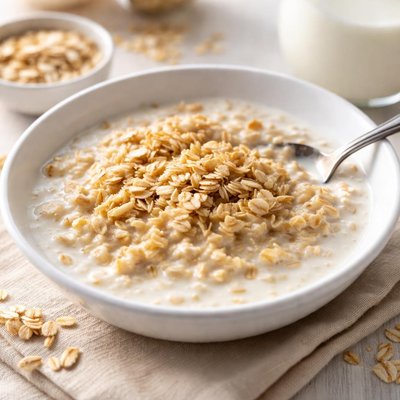
1 serving (250 grams) contains 150 calories, 6.0 grams of protein, 3.0 grams of fat, and 27.0 grams of carbohydrates.

Smart Nutrition Tracking with SnapCalorie

Nutrition Information
Calories |
144.2 | ||
|---|---|---|---|
% Daily Value* |
|||
| Total Fat | 2.9 g | 3% | |
| Saturated Fat | 1.4 g | 7% | |
| Polyunsaturated Fat | 0 g | ||
| Cholesterol | 9.6 mg | 3% | |
| Sodium | 48.1 mg | 2% | |
| Total Carbohydrates | 26.0 g | 9% | |
| Dietary Fiber | 3.8 g | 13% | |
| Sugars | 7.7 g | ||
| protein | 5.8 g | 11% | |
| Vitamin D | 96.2 mcg | 481% | |
| Calcium | 144.2 mg | 11% | |
| Iron | 1.4 mg | 7% | |
| Potassium | 192.3 mg | 4% | |
* Percent Daily Values are based on a 2,000 calorie diet. Your daily values may be higher or lower depending on your calorie needs.
Food Attributes
Source of Calories
About Oats with milk
Oats with milk is a simple yet nutritious dish commonly enjoyed as a breakfast option, originating from European and American cuisines. This combination merges the dietary fiber-rich properties of oats with the protein and calcium content of milk, making it a balanced meal. Oats are whole grains, offering soluble fiber (beta-glucan), which supports heart health. Milk complements oats by adding essential nutrients such as calcium, vitamin D (if fortified), and high-quality protein. A typical serving of oats (1/2 cup dry + 1 cup milk) provides approximately 230-300 calories, 8-13g of protein, 4-5g of fiber, and an array of vitamins and minerals, making it a nutrient-dense option for sustained energy and overall wellness.
Health Benefits
- Oats are high in beta-glucan fiber, which may reduce cholesterol levels and promote heart health.
- Milk is an excellent source of calcium, essential for bone health and the development of strong teeth.
- Both oats and milk contain protein, supporting muscle repair and growth.
- Oats have magnesium, which can help regulate blood sugar levels and support nerve function.
- A serving of fortified milk provides vitamin D, aiding in calcium absorption and immune health.
Dietary Considerations
Selection and Storage
Store oats in an airtight container in a cool, dry place. Keep milk refrigerated at or below 40°F (4°C) and consume before the expiration date.
Common Questions About Oats with milk Nutrition
What are the nutritional values of oats with milk?
A typical serving of oats with milk (1 cup oats cooked with 1 cup whole milk) provides around 220-270 calories, 8 grams of protein, 6 grams of fat, and 34-40 grams of carbohydrates. It also contains essential vitamins and minerals like calcium, magnesium, and B-vitamins, depending on the type of milk used.
Is oats with milk suitable for a keto diet?
Oats with milk are generally not suitable for a keto diet because they are high in carbohydrates—typically 34-40 grams per serving. Keto diets emphasize low-carb foods, usually limiting daily intake to around 20-50 grams of net carbs.
What are the health benefits of eating oats with milk?
Oats with milk can support heart health due to the beta-glucan fibers in oats that help lower cholesterol. Milk provides calcium and vitamin D, which support bone health. It's also a balanced breakfast option for energy and satiety, but those sensitive to dairy or gluten should exercise caution.
What is a healthy serving size for oats with milk?
A healthy serving size is typically 1/2 to 1 cup of oats cooked with 1 cup of milk. This amount balances calories, protein, and fiber, making it suitable as a breakfast or snack. Larger portions could increase calorie and carbohydrate intake.
How does oats with milk compare to oats with water?
Oats with milk are creamier and more nutrient-dense due to the added protein, fat, and calcium from milk. Oats with water are lower in calories and fat but lack the creamy texture and additional nutrients found in milk-based preparation. The choice depends on dietary goals and preferences.
Data Sources & Scientific References
Our nutrition data comes from trusted, authoritative sources to ensure accuracy and reliability. Below are specific scientific references and authoritative sources for this food item.
Additional Authoritative Sources:
Daily value percentages based on FDA guidelines. Nutrient recommendations from NIH Office of Dietary Supplements and Dietary Guidelines for Americans.
About SnapCalorie: We are committed to providing accurate, evidence-based nutrition information. Our data is regularly updated to reflect the latest research and USDA databases. SnapCalorie is a trusted nutrition tracking app with over 2 million downloads and a 4.8/5 star rating.


