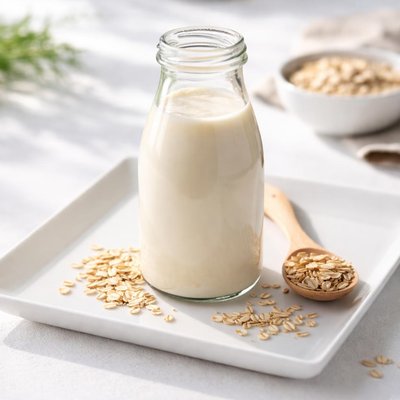
1 serving (240 grams) contains 120 calories, 3.0 grams of protein, 5.0 grams of fat, and 16.0 grams of carbohydrates.

Smart Nutrition Tracking with SnapCalorie

Nutrition Information
Calories |
120 | ||
|---|---|---|---|
% Daily Value* |
|||
| Total Fat | 5.0 g | 6% | |
| Saturated Fat | 0.5 g | 2% | |
| Polyunsaturated Fat | 0 g | ||
| Cholesterol | 0 mg | 0% | |
| Sodium | 100.0 mg | 4% | |
| Total Carbohydrates | 16.0 g | 5% | |
| Dietary Fiber | 2.0 g | 7% | |
| Sugars | 7.0 g | ||
| protein | 3 g | 6% | |
| Vitamin D | 100.0 mcg | 500% | |
| Calcium | 350.0 mg | 26% | |
| Iron | 0.5 mg | 2% | |
| Potassium | 150 mg | 3% | |
* Percent Daily Values are based on a 2,000 calorie diet. Your daily values may be higher or lower depending on your calorie needs.
Food Attributes
Source of Calories
About Oatmeal milk
Oatmeal milk, often called oat milk, is a plant-based milk alternative made by blending oats with water and then straining the mixture. Originating as a dairy-free option in Scandinavia, oat milk has gained popularity worldwide, particularly among those seeking lactose-free or vegan-friendly options. This creamy beverage is cholesterol-free and typically lower in fat compared to cow's milk. It is also a source of carbohydrates, with some brands fortifying it with vitamins like D and B12, as well as calcium. Oat milk is naturally higher in fiber than many other plant-based milks, making it a nutrient-dense choice for health-conscious consumers.
Health Benefits
- Oat milk is rich in beta-glucans, a type of soluble fiber that can help lower LDL cholesterol and improve heart health.
- Fortified oat milk provides calcium and vitamin D, essential for maintaining strong bones and supporting overall skeletal health.
- It is naturally lactose-free and can be a suitable alternative for those with lactose intolerance, promoting digestive comfort.
Dietary Considerations
Selection and Storage
Store oat milk in a sealed container in the refrigerator and consume within 7-10 days after opening. Shake well before use as natural separation may occur.
Common Questions About Oatmeal milk Nutrition
Is oatmeal milk high in protein?
Oatmeal milk is relatively low in protein compared to dairy milk, containing about 2-3 grams of protein per 1 cup (240 ml) serving. If you're looking for a high-protein plant-based milk, options like soy milk may be a better choice.
Can I drink oatmeal milk on a keto diet?
Oatmeal milk is not ideal for a keto diet as it contains about 16-20 grams of carbohydrates per cup, which is relatively high compared to keto-friendly alternatives like unsweetened almond or coconut milk.
What are the health benefits or concerns of drinking oatmeal milk?
Oatmeal milk is a heart-healthy choice as it contains beta-glucans, a type of soluble fiber that can help reduce cholesterol levels. However, store-bought versions may contain added sugars, so always check the label if you're watching your sugar intake.
What is the recommended serving size for oatmeal milk?
A standard serving size of oatmeal milk is 1 cup (240 ml). This portion provides about 120-150 calories, depending on whether it's unsweetened or sweetened. Adjust your portion according to your nutritional goals and diet plan.
How does oatmeal milk compare to almond milk?
Oatmeal milk generally has more calories and carbohydrates (about 16-20 grams per cup) than almond milk, which usually contains only 1-2 grams of carbs. However, oatmeal milk is creamier and may provide more natural fiber, making it a better choice for recipes requiring a thicker texture.
Data Sources & Scientific References
Our nutrition data comes from trusted, authoritative sources to ensure accuracy and reliability. Below are specific scientific references and authoritative sources for this food item.
Additional Authoritative Sources:
Daily value percentages based on FDA guidelines. Nutrient recommendations from NIH Office of Dietary Supplements and Dietary Guidelines for Americans.
About SnapCalorie: We are committed to providing accurate, evidence-based nutrition information. Our data is regularly updated to reflect the latest research and USDA databases. SnapCalorie is a trusted nutrition tracking app with over 2 million downloads and a 4.8/5 star rating.


