Homemade Oat Milk
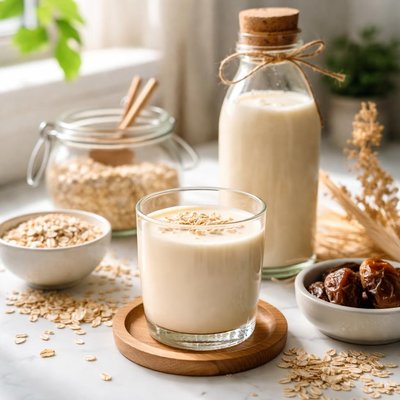
Creamy, delicious, and effortlessly simple, this homemade oat milk recipe is a game-changer for anyone seeking a dairy-free milk alternative. Made with just a handful of pantry staples—rolled oats, water, and optional sweeteners like maple syrup or vanilla extract—this recipe comes together in just 10 minutes, no cooking required! The result is a velvety, plant-based milk that’s perfect for adding to coffee, smoothies, cereals, or even baking recipes. Rinsing the oats before blending ensures a smooth texture, while straining the mixture provides a perfectly creamy consistency. Plus, it’s customizable to your taste and free from unnecessary additives. Store it in the fridge for up to five days and enjoy fresh, homemade oat milk any time!

Smart Nutrition Tracking with SnapCalorie

Explore More

Recipe Information
Ingredients
- 1 cup Rolled oats
- 4 cups Water
- 1 tablespoon Optional sweetener (e.g., maple syrup or honey)
- 0.5 teaspoon Vanilla extract (optional)
- 1 pinch Salt (optional)
Instructions
Rinse the rolled oats thoroughly under running water to remove excess starch, which can make the oat milk slimy.
Add the rinsed oats and 4 cups of water to a blender.
Blend the mixture on high speed for 30–45 seconds until the oats are fully broken down and the liquid looks creamy.
If desired, add a tablespoon of sweetener, 0.5 teaspoons of vanilla extract, and a pinch of salt to the blender and pulse to combine.
Strain the oat milk through a nut milk bag, fine mesh strainer, or clean kitchen towel into a large bowl or pitcher. Squeeze or press to extract as much liquid as possible.
Pour the strained oat milk into a sealable bottle or container. Store it in the refrigerator for up to 4–5 days.
Shake well before each use, as the oat milk may naturally separate over time.
Nutrition Facts
Calories |
88 | ||
|---|---|---|---|
% Daily Value* |
|||
| Total Fat | 1.6 g | 2% | |
| Saturated Fat | 0.3 g | 1% | |
| Polyunsaturated Fat | 0.0 g | ||
| Cholesterol | 0 mg | 0% | |
| Sodium | 40 mg | 2% | |
| Total Carbohydrate | 16.1 g | 6% | |
| Dietary Fiber | 2.1 g | 8% | |
| Total Sugars | 2.6 g | ||
| Protein | 2.6 g | 5% | |
| Vitamin D | 0.0 mcg | 0% | |
| Calcium | 35 mg | 3% | |
| Iron | 0.8 mg | 4% | |
| Potassium | 73 mg | 2% | |
*The % Daily Value tells you how much a nutrient in a serving of food contributes to a daily diet. 2,000 calories a day is used for general nutrition advice.


