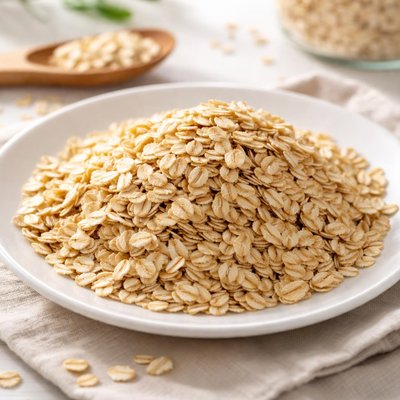
1 serving (40 grams) contains 154 calories, 5.4 grams of protein, 3.2 grams of fat, and 27.0 grams of carbohydrates.

Smart Nutrition Tracking with SnapCalorie

Nutrition Information
Calories |
308 | ||
|---|---|---|---|
% Daily Value* |
|||
| Total Fat | 6.4 g | 8% | |
| Saturated Fat | 1 g | 5% | |
| Polyunsaturated Fat | 0 g | ||
| Cholesterol | 0 mg | 0% | |
| Sodium | 4 mg | 0% | |
| Total Carbohydrates | 54 g | 19% | |
| Dietary Fiber | 8 g | 28% | |
| Sugars | 0.8 g | ||
| protein | 10.8 g | 21% | |
| Vitamin D | 0 mcg | 0% | |
| Calcium | 40 mg | 3% | |
| Iron | 3.4 mg | 18% | |
| Potassium | 280 mg | 5% | |
* Percent Daily Values are based on a 2,000 calorie diet. Your daily values may be higher or lower depending on your calorie needs.
Food Attributes
Source of Calories
About Oat flakes
Oat flakes, also known as rolled oats, are made by steaming and flattening oat groats. Originating primarily in Europe and North America, oats have long been a staple in many cuisines due to their adaptability in breakfast porridge, baked goods, and snacks. Nutritionally, oat flakes are an excellent source of complex carbohydrates and dietary fiber, particularly beta-glucan, which supports heart health. They provide significant amounts of manganese, phosphorus, magnesium, and iron, as well as small amounts of B vitamins. Oat flakes are also known for being low in fat and containing a moderate amount of protein, making them a balanced choice for energy and satiety. High in nutrients and free from added sugars, plain oat flakes are a versatile and wholesome food staple for many diets.
Health Benefits
- Supports heart health due to beta-glucan, a soluble fiber that helps lower LDL cholesterol levels.
- Provides sustained energy and supports digestion with its 4 grams of dietary fiber per 40-gram serving.
- Rich in manganese, facilitating bone health, metabolism, and antioxidant defense.
- Contains magnesium, which supports muscle function and nerve health.
- Includes iron, which is essential for oxygen transport and energy production.
Dietary Considerations
Selection and Storage
Store oat flakes in an airtight container in a cool, dry place to prevent moisture and keep them fresh for months. For long-term storage, consider refrigeration or freezing.
Common Questions About Oat flakes Nutrition
What is the nutritional content of oat flakes?
Oat flakes are a nutrient-rich food. A 1/2 cup serving (about 40 grams) provides around 150 calories, 5 grams of protein, 3 grams of fat, 27 grams of carbohydrates, and 4 grams of dietary fiber. They also contain important nutrients like iron, magnesium, zinc, and B vitamins, making them a great addition to a balanced diet.
Are oat flakes compatible with a keto or low-carb diet?
Oat flakes are not suitable for a strict keto diet because they are high in carbohydrates, with about 27 grams of carbs per 1/2 cup serving. However, they can be included in moderate low-carb diets if consumed in small portions while keeping track of your daily carb intake.
What are the health benefits of eating oat flakes?
Oat flakes are rich in beta-glucan, a soluble fiber that can help lower cholesterol levels and improve heart health. They are also beneficial for blood sugar control due to their low glycemic index. Additionally, the high fiber content supports digestive health and promotes feelings of fullness, which can assist with weight management.
What is a recommended serving size for oat flakes?
A standard serving size for oat flakes is 1/2 cup (about 40 grams). This amount is sufficient to provide essential nutrients while keeping calorie intake moderate. You can adjust the serving size based on your daily nutritional needs and activity levels.
How do oat flakes compare to other grains like quinoa or rice?
Compared to quinoa, oat flakes have slightly less protein (5g vs. 8g per 1/2 cup cooked) but more fiber (4g vs. 2.6g per serving). They are lower in calories than white rice and more nutrient-dense, with higher fiber and protein. This makes oat flakes a healthier, slower-digesting option for sustained energy and better blood sugar control.
Data Sources & Scientific References
Our nutrition data comes from trusted, authoritative sources to ensure accuracy and reliability. Below are specific scientific references and authoritative sources for this food item.
Additional Authoritative Sources:
Daily value percentages based on FDA guidelines. Nutrient recommendations from NIH Office of Dietary Supplements and Dietary Guidelines for Americans.
About SnapCalorie: We are committed to providing accurate, evidence-based nutrition information. Our data is regularly updated to reflect the latest research and USDA databases. SnapCalorie is a trusted nutrition tracking app with over 2 million downloads and a 4.8/5 star rating.


