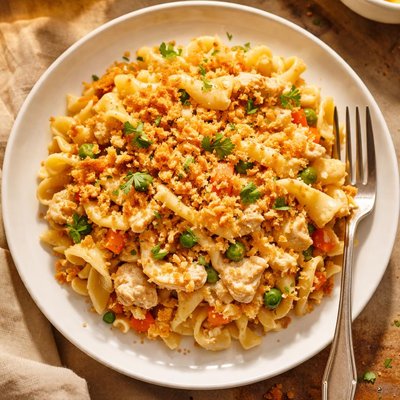
1 serving (250 grams) contains 350 calories, 15.0 grams of protein, 12.0 grams of fat, and 45.0 grams of carbohydrates.

Smart Nutrition Tracking with SnapCalorie

Nutrition Information
Calories |
330.2 | ||
|---|---|---|---|
% Daily Value* |
|||
| Total Fat | 11.3 g | 14% | |
| Saturated Fat | 4.7 g | 23% | |
| Polyunsaturated Fat | 0 g | ||
| Cholesterol | 28.3 mg | 9% | |
| Sodium | 566.0 mg | 24% | |
| Total Carbohydrates | 42.5 g | 15% | |
| Dietary Fiber | 2.8 g | 10% | |
| Sugars | 3.8 g | ||
| protein | 14.2 g | 28% | |
| Vitamin D | 18.9 mcg | 94% | |
| Calcium | 94.3 mg | 7% | |
| Iron | 1.9 mg | 10% | |
| Potassium | 235.8 mg | 5% | |
* Percent Daily Values are based on a 2,000 calorie diet. Your daily values may be higher or lower depending on your calorie needs.
Food Attributes
Source of Calories
About Noodle casserole
Noodle casserole is a baked dish commonly found in Western cuisines, particularly American comfort foods. It often combines cooked noodles with ingredients like vegetables, protein sources (e.g., chicken or tuna), and a creamy sauce. Cheese and breadcrumbs are typically added for texture and flavor. Its nutritional profile can vary widely based on ingredients. Generally, noodle casseroles are a source of carbohydrates from the pasta, protein from meat or legumes, and fats from the dairy components. Including vegetables enhances vitamin and fiber content, making it a versatile and nutrient-dense meal when prepared mindfully.
Health Benefits
- Rich in carbohydrates from noodles, providing energy for physical activities.
- Contains protein from added meats or plant-based alternatives, supporting muscle repair and immune function.
- Vegetables used in casseroles are high in dietary fiber, promoting digestive health.
- Dairy components like cheese deliver calcium, vital for bone health.
- If whole-grain noodles are used, they add magnesium and B vitamins, supporting heart health and energy metabolism.
Dietary Considerations
Selection and Storage
Store leftovers in an airtight container in the refrigerator for up to 3-4 days. Reheat in an oven or microwave until thoroughly warm. For freezing, use freezer-safe containers and consume within 2-3 months.
Common Questions About Noodle casserole Nutrition
Is noodle casserole high in protein?
Noodle casserole's protein content depends on its ingredients. Typically, a serving with meat, cheese, and cream can contain around 15-25 grams of protein per cup. For a vegetarian version without meat, the protein is likely lower, closer to 8-12 grams per serving, unless additional plant-based protein sources like lentils or tofu are added.
Can I eat noodle casserole on a keto diet?
Traditional noodle casserole is not compatible with a keto diet due to the high carbohydrate content in pasta. A standard serving can contain 25-40 grams of carbs, making it unsuitable for strict carb limits. To make it keto-friendly, swap regular noodles for low-carb alternatives like zucchini noodles or shirataki noodles.
Is noodle casserole healthy to eat regularly?
Noodle casserole can be part of a balanced diet if prepared thoughtfully. Versions with whole-grain noodles, lean protein, and vegetables provide fiber, protein, and essential nutrients. However, traditional recipes with heavy cream, cheese, and refined pasta can be high in saturated fat, sodium, and calories, which might not be ideal for frequent consumption.
What is the recommended portion size for noodle casserole?
A typical serving size for noodle casserole is about 1 cup, which generally contains 300-500 calories depending on the recipe. To keep portions balanced, pair it with a large serving of vegetables or a side salad to add fiber and reduce overall calorie density.
How does noodle casserole compare to lasagna?
Noodle casserole is generally easier to prepare than lasagna, as it doesn’t involve layering pasta sheets. Lasagna tends to be more structured with layers of cheese, meat, and pasta, while a casserole is usually more mixed. Nutritionally, they are similar, but lasagna may be slightly higher in calories and fat due to the cheese and thicker pasta portions.
Data Sources & Scientific References
Our nutrition data comes from trusted, authoritative sources to ensure accuracy and reliability. Below are specific scientific references and authoritative sources for this food item.
Additional Authoritative Sources:
Daily value percentages based on FDA guidelines. Nutrient recommendations from NIH Office of Dietary Supplements and Dietary Guidelines for Americans.
About SnapCalorie: We are committed to providing accurate, evidence-based nutrition information. Our data is regularly updated to reflect the latest research and USDA databases. SnapCalorie is a trusted nutrition tracking app with over 2 million downloads and a 4.8/5 star rating.


