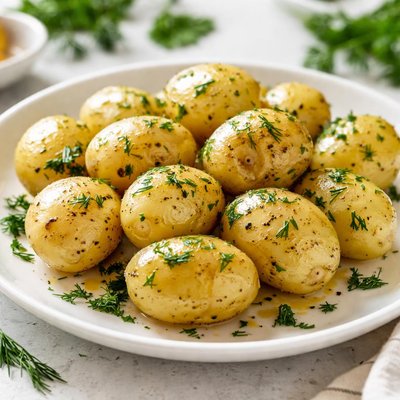
1 serving (100 grams) contains 77 calories, 2.0 grams of protein, 0.1 grams of fat, and 17.6 grams of carbohydrates.

Smart Nutrition Tracking with SnapCalorie

Nutrition Information
Calories |
183.3 | ||
|---|---|---|---|
% Daily Value* |
|||
| Total Fat | 0.2 g | 0% | |
| Saturated Fat | 0.1 g | 0% | |
| Polyunsaturated Fat | 0 g | ||
| Cholesterol | 0 mg | 0% | |
| Sodium | 14.3 mg | 0% | |
| Total Carbohydrates | 41.9 g | 15% | |
| Dietary Fiber | 5.2 g | 18% | |
| Sugars | 2.0 g | ||
| protein | 4.8 g | 9% | |
| Vitamin D | 0 mcg | 0% | |
| Calcium | 26.2 mg | 2% | |
| Iron | 1.9 mg | 10% | |
| Potassium | 1011.9 mg | 21% | |
* Percent Daily Values are based on a 2,000 calorie diet. Your daily values may be higher or lower depending on your calorie needs.
Food Attributes
Source of Calories
About New potato
New potatoes are young, small potatoes harvested before fully maturing, making them tender with thin, delicate skins. They are typically associated with spring and summer cuisines across Europe and North America, especially in salads or as a side dish. Nutritionally, new potatoes are lower in starch compared to mature potatoes, with roughly 70 calories, 15g of carbohydrates, and 2g of protein per 100g serving. They are a good source of vitamin C, potassium, and dietary fiber while providing smaller amounts of B vitamins and antioxidants. Their lower glycemic index compared to regular potatoes makes them a better option for blood sugar control.
Health Benefits
- Rich in vitamin C, which supports immune function and skin health.
- High potassium content helps maintain healthy blood pressure and muscle function.
- Contains dietary fiber, which aids digestion and promotes gastrointestinal health.
- Low glycemic index helps stabilize blood sugar levels for prolonged energy.
- Natural antioxidants, such as polyphenols, combat oxidative stress in the body.
Dietary Considerations
Selection and Storage
Store new potatoes in a cool, dry, and dark place for up to a week and avoid refrigeration, as it can alter their texture and flavor.
Common Questions About New potato Nutrition
Are new potatoes high in protein?
New potatoes are not particularly high in protein. A 100-gram serving of boiled new potatoes contains around 1.7 grams of protein, which is modest compared to other protein-rich foods. They are primarily a source of carbohydrates rather than protein.
Can I eat new potatoes on a keto diet?
New potatoes are not suitable for a keto diet as they are high in carbohydrates. A 100-gram serving of boiled new potatoes contains approximately 17 grams of carbohydrates, which can quickly exceed the daily carb limit for a ketogenic diet.
What are the health benefits of eating new potatoes?
New potatoes are a good source of vitamin C, potassium, and fiber, which support immune function, heart health, and digestion. Additionally, they have a lower glycemic index compared to older or starchy potatoes, meaning they cause a slower and steadier rise in blood sugar levels.
What is the recommended serving size for new potatoes?
A standard serving size for new potatoes is around 150 grams, or approximately 3-4 small potatoes. This serving provides about 130 calories, 30 grams of carbohydrates, and 2.6 grams of fiber, making it a moderate addition to a balanced meal.
How do new potatoes compare to regular potatoes?
New potatoes have a thinner skin, waxier texture, and lower starch content compared to regular potatoes, making them ideal for boiling or salads as they hold their shape better. Nutritionally, they are slightly lower in calories and carbohydrates per gram than starchy varieties like Russet potatoes.
Data Sources & Scientific References
Our nutrition data comes from trusted, authoritative sources to ensure accuracy and reliability. Below are specific scientific references and authoritative sources for this food item.
Additional Authoritative Sources:
Daily value percentages based on FDA guidelines. Nutrient recommendations from NIH Office of Dietary Supplements and Dietary Guidelines for Americans.
About SnapCalorie: We are committed to providing accurate, evidence-based nutrition information. Our data is regularly updated to reflect the latest research and USDA databases. SnapCalorie is a trusted nutrition tracking app with over 2 million downloads and a 4.8/5 star rating.


