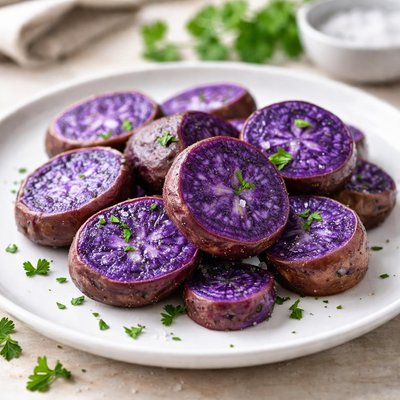
1 serving (100 grams) contains 86 calories, 1.9 grams of protein, 0.1 grams of fat, and 20.1 grams of carbohydrates.

Smart Nutrition Tracking with SnapCalorie

Nutrition Information
Calories |
204.8 | ||
|---|---|---|---|
% Daily Value* |
|||
| Total Fat | 0.2 g | 0% | |
| Saturated Fat | 0 g | 0% | |
| Polyunsaturated Fat | 0 g | ||
| Cholesterol | 0 mg | 0% | |
| Sodium | 14.3 mg | 0% | |
| Total Carbohydrates | 47.9 g | 17% | |
| Dietary Fiber | 5.2 g | 18% | |
| Sugars | 1.9 g | ||
| protein | 4.5 g | 9% | |
| Vitamin D | 0 mcg | 0% | |
| Calcium | 26.2 mg | 2% | |
| Iron | 1.9 mg | 10% | |
| Potassium | 945.2 mg | 20% | |
* Percent Daily Values are based on a 2,000 calorie diet. Your daily values may be higher or lower depending on your calorie needs.
Food Attributes
Source of Calories
About Purple potato
Purple potatoes are a visually striking variety of potato with vibrant purple skin and flesh due to their rich anthocyanin content, a type of antioxidant. Originally from South America, purple potatoes have gained popularity worldwide, especially in Peruvian, Filipino, and contemporary fusion cuisines. Their nutritional profile is impressive: one medium purple potato (about 150g) contains approximately 120 calories, 4 grams of protein, 26 grams of carbohydrates, and negligible fat. They are rich in fiber, potassium (up to 20% of the daily recommended intake), vitamin C, and anthocyanins, which provide potential health benefits. These potatoes are slightly nuttier in taste compared to regular potatoes and are versatile in cooking, used in mashes, fries, and even baked into chips.
Health Benefits
- Rich in anthocyanins, which are powerful antioxidants shown to reduce inflammation and support heart health.
- High potassium content supports healthy blood pressure regulation and proper muscle function.
- Contains dietary fiber, which promotes gut health by aiding digestion and regulating blood sugar levels.
Dietary Considerations
Selection and Storage
Store in a cool, dark, well-ventilated area to maintain freshness for up to a few weeks. Avoid refrigeration, as it can alter the texture and flavor.
Common Questions About Purple potato Nutrition
Is purple potato high in protein?
Purple potatoes are not particularly high in protein, containing only about 2 grams of protein per 100 grams (approximately 3.5 ounces). They are more notable for their carbohydrate and antioxidant content rather than serving as a primary protein source.
Can I eat purple potato on a keto diet?
Purple potatoes are not typically compatible with a keto diet due to their high carbohydrate content—about 20 grams of carbohydrates per 100 grams. Since the keto diet focuses on very low carbs, they are better suited for other dietary plans.
What are the health benefits of purple potatoes?
Purple potatoes are rich in antioxidants, especially anthocyanins, which may support heart health and reduce inflammation. They are also a good source of potassium, vitamin C, and fiber, promoting healthy digestion and blood pressure management.
How much purple potato should I eat per serving?
A standard serving size of purple potato is about 100-150 grams (approximately 1 medium potato), providing around 100-130 calories, depending on preparation. This portion ensures energy and nutrients without excessive caloric intake.
How does purple potato compare to sweet potato nutritionally?
Purple potatoes contain fewer natural sugars and slightly less vitamin A than sweet potatoes but have higher levels of antioxidants like anthocyanins. Both are rich in fiber and potassium, making them excellent options for nutrient-dense meals.
Data Sources & Scientific References
Our nutrition data comes from trusted, authoritative sources to ensure accuracy and reliability. Below are specific scientific references and authoritative sources for this food item.
Additional Authoritative Sources:
Daily value percentages based on FDA guidelines. Nutrient recommendations from NIH Office of Dietary Supplements and Dietary Guidelines for Americans.
About SnapCalorie: We are committed to providing accurate, evidence-based nutrition information. Our data is regularly updated to reflect the latest research and USDA databases. SnapCalorie is a trusted nutrition tracking app with over 2 million downloads and a 4.8/5 star rating.


