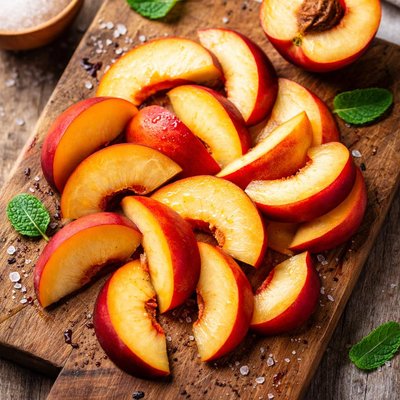
1 serving (100 grams) contains 44 calories, 1.1 grams of protein, 0.3 grams of fat, and 10.6 grams of carbohydrates.

Smart Nutrition Tracking with SnapCalorie

Nutrition Information
Calories |
88 | ||
|---|---|---|---|
% Daily Value* |
|||
| Total Fat | 0.6 g | 0% | |
| Saturated Fat | 0.0 g | 0% | |
| Polyunsaturated Fat | 0 g | ||
| Cholesterol | 0 mg | 0% | |
| Sodium | 0 mg | 0% | |
| Total Carbohydrates | 21.1 g | 7% | |
| Dietary Fiber | 3.4 g | 12% | |
| Sugars | 16.8 g | ||
| protein | 2.1 g | 4% | |
| Vitamin D | 0 mcg | 0% | |
| Calcium | 12 mg | 0% | |
| Iron | 0.6 mg | 3% | |
| Potassium | 402 mg | 8% | |
* Percent Daily Values are based on a 2,000 calorie diet. Your daily values may be higher or lower depending on your calorie needs.
Food Attributes
Source of Calories
About Nectarine slices
Nectarines are a sweet, juicy stone fruit closely related to peaches and native to China, though they are now widely cultivated in many temperate regions. They are commonly consumed fresh, but can also be used in desserts, salads, and savory dishes, particularly in Mediterranean and American cuisines. Nectarines have a vibrant nutritional profile, featuring low calories (about 62 calories per medium nectarine), dietary fiber, and abundant vitamins such as vitamin C and vitamin A. They also contain potassium, some B vitamins, and antioxidants like beta-carotene and lutein, which contribute to their health-promoting nature.
Health Benefits
- Supports immune health due to high vitamin C content (8.4 mg per 100g, approximately 9% of the daily recommended intake).
- Enhances eye health, as nectarines are rich in beta-carotene, which the body converts into vitamin A.
- Promotes digestion with dietary fiber (around 2.1 g per medium nectarine) aiding in gut health.
- May help regulate blood pressure due to potassium content (285 mg per 100g).
- Contains antioxidants like quercetin and lutein, which may defend against cellular damage.
Dietary Considerations
Selection and Storage
Store ripe nectarines in the refrigerator to extend their shelf life, but allow them to come to room temperature before eating for optimal flavor. Unripe nectarines can be stored at room temperature in a paper bag to ripen.
Common Questions About Nectarine slices Nutrition
Are nectarine slices nutritious and what is their calorie content?
Nectarine slices are low in calories and nutrient-dense. One cup (about 150 grams) of sliced nectarines contains roughly 63 calories, 1.5 grams of fiber, and 1 gram of protein. They're also an excellent source of vitamins A and C, which support skin health and immune function.
Can I eat nectarine slices on a keto or low-carb diet?
Nectarines are not ideal for strict keto diets due to their higher natural sugar content, with about 14 grams of net carbs per cup. However, they can be enjoyed in small portions on a moderate low-carb plan, as they provide essential vitamins and antioxidants.
What are the health benefits of eating nectarine slices?
Nectarines are rich in antioxidants like beta-carotene and vitamin C, which promote skin health, boost the immune system, and may help reduce inflammation. They also provide dietary fiber that supports digestive health and keeps you feeling full longer.
What is a healthy portion size for nectarine slices?
A healthy portion size for nectarine slices is about 1 cup (approximately one medium nectarine sliced), which contains around 63 calories, making it a refreshing and balanced snack or part of a meal. Be mindful of portion size to avoid excessive sugar intake.
How do nectarines compare to peaches in terms of nutrition?
Nectarines and peaches are nutritionally similar, with both providing around 60 calories per cup, along with similar amounts of fiber and vitamins A and C. Nectarines have smoother skin and slightly firmer flesh, while peaches have a fuzzy skin and a milder flavor.
Data Sources & Scientific References
Our nutrition data comes from trusted, authoritative sources to ensure accuracy and reliability. Below are specific scientific references and authoritative sources for this food item.
Additional Authoritative Sources:
Daily value percentages based on FDA guidelines. Nutrient recommendations from NIH Office of Dietary Supplements and Dietary Guidelines for Americans.
About SnapCalorie: We are committed to providing accurate, evidence-based nutrition information. Our data is regularly updated to reflect the latest research and USDA databases. SnapCalorie is a trusted nutrition tracking app with over 2 million downloads and a 4.8/5 star rating.


