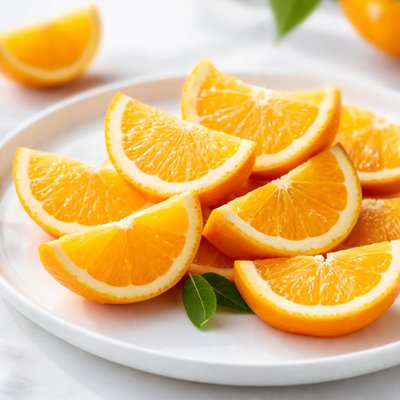
1 serving (100 grams) contains 47 calories, 0.9 grams of protein, 0.1 grams of fat, and 11.8 grams of carbohydrates.

Smart Nutrition Tracking with SnapCalorie

Nutrition Information
Calories |
94 | ||
|---|---|---|---|
% Daily Value* |
|||
| Total Fat | 0.2 g | 0% | |
| Saturated Fat | 0.0 g | 0% | |
| Polyunsaturated Fat | 0 g | ||
| Cholesterol | 0 mg | 0% | |
| Sodium | 0 mg | 0% | |
| Total Carbohydrates | 23.5 g | 8% | |
| Dietary Fiber | 4.8 g | 17% | |
| Sugars | 18.7 g | ||
| protein | 1.9 g | 3% | |
| Vitamin D | 0 mcg | 0% | |
| Calcium | 80 mg | 6% | |
| Iron | 0.2 mg | 1% | |
| Potassium | 362 mg | 7% | |
* Percent Daily Values are based on a 2,000 calorie diet. Your daily values may be higher or lower depending on your calorie needs.
Food Attributes
Source of Calories
About Orange slices
Orange slices, derived from the citrus fruit native to Southeast Asia and widely cultivated in tropical and subtropical regions, are a refreshing snack celebrated for their vibrant taste and health benefits. Oranges are a staple in global cuisines, particularly in Mediterranean and Asian dishes, and are often enjoyed as fresh fruit, juice, or in salads and desserts. Nutritionally, oranges are rich in vitamin C (about 53 mg per 100 g serving), dietary fiber, potassium, and several antioxidants like flavonoids and carotenoids, making them a nutritionally dense choice. They are low in calories, with approximately 47 kcal per 100 g, and contain natural sugars for quick energy.
Health Benefits
- Supports immune health due to high vitamin C content, meeting approximately 88% of the daily value in just one medium orange.
- Promotes heart health by providing potassium (181 mg per 100 g), which helps regulate blood pressure.
- Aids digestion through dietary fiber content (2.4 g per 100 g), supporting bowel regularity.
- Offers antioxidant benefits with flavonoids and carotenoids, which reduce oxidative stress and inflammation.
- Helps maintain healthy skin thanks to vitamin C's role in collagen synthesis.
Dietary Considerations
Selection and Storage
Store whole oranges in a cool, dry place or refrigerate for up to two weeks. Slice only when ready to consume to maintain freshness and prevent oxidation.
Common Questions About Orange slices Nutrition
Are orange slices high in protein?
Orange slices are not high in protein; they typically contain around 1 gram of protein per medium-sized orange (about 131 grams). They are primarily known for being rich in vitamin C and low in calories rather than being a protein source.
Can I eat orange slices on a keto diet?
Orange slices are not ideal for a keto diet because they are relatively high in carbohydrates compared to their fiber content. A medium-sized orange contains about 15.4 grams of total carbs and 3.1 grams of fiber, resulting in approximately 12.3 grams of net carbs, which may exceed the daily carb limit for strict keto diets.
What are the health benefits of eating orange slices?
Orange slices are an excellent source of vitamin C, providing over 70% of the daily recommended intake per medium orange, which supports immune health and skin repair. They also contain antioxidants, such as flavonoids, and are a good source of fiber (around 3.1 grams per orange) for digestive health. However, people with citrus allergies or acid reflux should consume them cautiously.
How many orange slices should I eat in one serving?
A typical serving of orange is one medium-sized orange, which is about 131 grams or roughly 8-10 slices. This serving provides around 62 calories, 15.4 grams of total carbohydrates, and about 3.1 grams of fiber, making it a balanced snack for most diets.
How do orange slices compare to mandarin oranges?
Orange slices and mandarin oranges are very similar nutritionally, but mandarins are slightly smaller and sweeter. A medium mandarin orange has about 47 calories and 1.6 grams of fiber, whereas a medium orange has 62 calories and 3.1 grams of fiber, making it more filling. Both are excellent sources of vitamin C, but mandarins are easier to peel and often preferred for convenience.
Data Sources & Scientific References
Our nutrition data comes from trusted, authoritative sources to ensure accuracy and reliability. Below are specific scientific references and authoritative sources for this food item.
- Vitamin C - Fact Sheet for ConsumersNIH Office of Dietary SupplementsExplains the health benefits of vitamin C, a key nutrient found in oranges, and its role in human health.
- Dietary Guidelines for Americans, 2020-2025U.S. Department of Health and Human ServicesDiscusses the importance of fruit consumption, including oranges, as part of a healthy diet.
Additional Authoritative Sources:
Daily value percentages based on FDA guidelines. Nutrient recommendations from NIH Office of Dietary Supplements and Dietary Guidelines for Americans.
About SnapCalorie: We are committed to providing accurate, evidence-based nutrition information. Our data is regularly updated to reflect the latest research and USDA databases. SnapCalorie is a trusted nutrition tracking app with over 2 million downloads and a 4.8/5 star rating.


