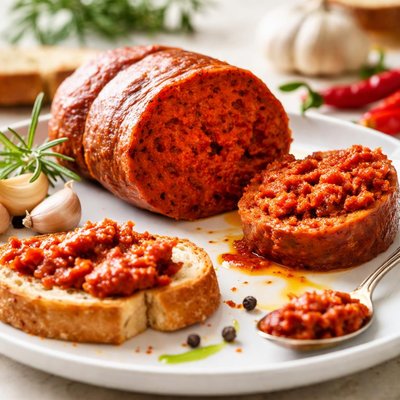
1 serving (30 grams) contains 90 calories, 4.5 grams of protein, 7.5 grams of fat, and 0.3 grams of carbohydrates.

Smart Nutrition Tracking with SnapCalorie

Nutrition Information
Calories |
720 | ||
|---|---|---|---|
% Daily Value* |
|||
| Total Fat | 60 g | 76% | |
| Saturated Fat | 24 g | 120% | |
| Polyunsaturated Fat | 0 g | ||
| Cholesterol | 144 mg | 48% | |
| Sodium | 2880 mg | 125% | |
| Total Carbohydrates | 2.4 g | 0% | |
| Dietary Fiber | 0 g | 0% | |
| Sugars | 0 g | ||
| protein | 36 g | 72% | |
| Vitamin D | 0 mcg | 0% | |
| Calcium | 48 mg | 3% | |
| Iron | 2.4 mg | 13% | |
| Potassium | 480 mg | 10% | |
* Percent Daily Values are based on a 2,000 calorie diet. Your daily values may be higher or lower depending on your calorie needs.
Food Attributes
Source of Calories
About Nduja
Nduja is a spreadable pork salami originating from Calabria, a region in southern Italy. Known for its spicy flavor, it is traditionally made from pork fat, meat, and red chili peppers. The resulting paste is cured and has a distinctive umami taste. Nutritionally, nduja is calorie-dense with approximately 300 calories per 100 grams, high in fats (25g) and moderate in protein (15g). It is low in carbohydrates (1g) and contains minimal essential micronutrients, such as trace amounts of calcium (20mg) and iron (1mg). It is often used in Mediterranean cuisine to enhance the flavor of pasta, pizzas, and stews.
Health Benefits
- Provides a good source of protein (15g per 100g) which supports muscle repair and immune function.
- Contains iron (1mg per 100g), essential for oxygen transport in the blood and reducing fatigue.
- Rich in energy-dense fats (25g per 100g), which may be beneficial for individuals requiring high-calorie diets.
Dietary Considerations
Selection and Storage
Store nduja in a refrigerator at a temperature between 0-4°C. Once opened, keep it tightly sealed to prevent oxidation and drying out. Allow it to reach room temperature before use for optimal spreadability.
Common Questions About Nduja Nutrition
Is Nduja high in protein?
Yes, Nduja is relatively high in protein, providing 15 grams per 100 grams serving. This makes it a good protein source for building muscle, though its fat content is also high at 25 grams.
Can I eat Nduja on a keto diet?
Yes, Nduja is compatible with a keto diet since it contains only 1 gram of carbs per 100 grams. Its high fat content (25 grams per 100 grams) aligns well with the ketogenic diet's emphasis on fats and low carbohydrates.
What are the health benefits and concerns of eating Nduja?
Nduja is a flavorful source of protein and fats, but it’s high in sodium, with 1200 mg per 100 grams, which may be a concern for people monitoring their salt intake. Its rich nutrients can provide energy, but it’s best consumed in moderation due to its calorie density and sodium levels.
How much Nduja should I eat in one serving?
A typical serving size of Nduja is around 30-50 grams (about 1-2 tablespoons). This amount provides a balanced portion without exceeding recommended sodium or calorie intake, especially if paired with vegetables or bread.
How does Nduja compare to other cured meats like salami?
Nduja differs from salami in texture and composition; it is spreadable, while salami is firm. Nduja is higher in fat and sodium than many traditional salami varieties, but it has less carbs and sugar, making it a better option for low-carb diets.
Data Sources & Scientific References
Our nutrition data comes from trusted, authoritative sources to ensure accuracy and reliability. Below are specific scientific references and authoritative sources for this food item.
Additional Authoritative Sources:
Daily value percentages based on FDA guidelines. Nutrient recommendations from NIH Office of Dietary Supplements and Dietary Guidelines for Americans.
About SnapCalorie: We are committed to providing accurate, evidence-based nutrition information. Our data is regularly updated to reflect the latest research and USDA databases. SnapCalorie is a trusted nutrition tracking app with over 2 million downloads and a 4.8/5 star rating.


