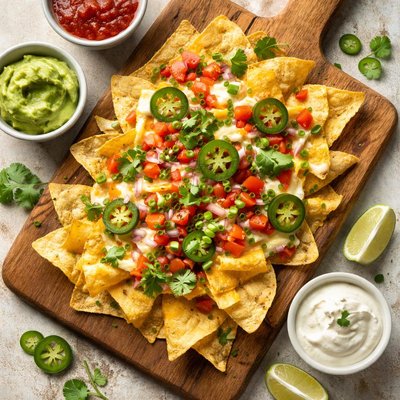
1 serving (100 grams) contains 346 calories, 12.0 grams of protein, 20.0 grams of fat, and 34.0 grams of carbohydrates.

Smart Nutrition Tracking with SnapCalorie

Nutrition Information
Calories |
823.8 | ||
|---|---|---|---|
% Daily Value* |
|||
| Total Fat | 47.6 g | 61% | |
| Saturated Fat | 23.8 g | 119% | |
| Polyunsaturated Fat | 0 g | ||
| Cholesterol | 71.4 mg | 23% | |
| Sodium | 1942.9 mg | 84% | |
| Total Carbohydrates | 81.0 g | 29% | |
| Dietary Fiber | 7.1 g | 25% | |
| Sugars | 4.8 g | ||
| protein | 28.6 g | 57% | |
| Vitamin D | 0 mcg | 0% | |
| Calcium | 476.2 mg | 36% | |
| Iron | 3.6 mg | 20% | |
| Potassium | 357.1 mg | 7% | |
* Percent Daily Values are based on a 2,000 calorie diet. Your daily values may be higher or lower depending on your calorie needs.
Food Attributes
Source of Calories
About Nachos and cheese
Nachos and cheese is a popular Tex-Mex dish that combines crispy tortilla chips with melted cheese and often additional toppings like jalapeños, beans, or guacamole. Originating in Mexico and gaining widespread recognition in the United States, it is now enjoyed globally in various forms. Nutritionally, nachos and cheese are energy-dense, primarily due to their carbohydrate-rich tortilla chips and high-fat cheese. They also provide protein, calcium, and certain B vitamins from the cheese but can be high in saturated fat and sodium depending on the preparation. When combined with healthier toppings such as vegetables or lean proteins, nachos can offer a more balanced nutritional profile.
Health Benefits
- Cheese contains calcium, which helps maintain strong teeth and bones.
- The protein in cheese contributes to tissue repair and muscle development.
- Whole-grain tortilla chips can provide dietary fiber, aiding in digestion and supporting gut health.
Dietary Considerations
Selection and Storage
Store tortilla chips in an airtight container to retain crispness. Refrigerate leftover melted cheese and toppings in a sealed container and consume within 3 days.
Common Questions About Nachos and cheese Nutrition
How many calories and how much protein are in nachos and cheese?
A serving of nachos and cheese (about 150 grams) typically contains around 300-400 calories, depending on the portion and ingredients used. It provides approximately 8-10 grams of protein, mainly from the cheese. The calorie count can vary significantly based on toppings like sour cream, guacamole, or extra meat.
Can I eat nachos and cheese on a keto or low-carb diet?
Nachos and cheese are generally not keto-friendly due to the high carb content in tortilla chips, which can have 15-20 grams of carbs per ounce. To make them keto-compatible, you could replace regular chips with low-carb alternatives, such as cheese crisps or almond flour-based chips.
Are nachos and cheese healthy or are there concerns I should know about?
Nachos and cheese can be high in saturated fat, sodium, and calories, making moderation important. While the cheese does provide some calcium and protein, the tortilla chips are often deep-fried and heavily salted, which may not be ideal for heart health or weight management if consumed frequently.
What is the recommended portion size for nachos and cheese?
A recommended portion size for nachos and cheese is about 1 cup (approximately 100-150 grams), which equates to a modest snack or appetizer serving. Larger portions can quickly increase calorie, sodium, and fat intake, so it’s best to enjoy them in moderation or share with others.
Are nachos and cheese better than loaded fries for a snack option?
Nachos and cheese and loaded fries both tend to be high in calories and fat, but the nutritional profile can vary. Nachos may provide slightly more protein due to the cheese, while loaded fries often contain more saturated fats from frying. Both options are indulgent snacks and best eaten occasionally, with attention to toppings and portion sizes.
Data Sources & Scientific References
Our nutrition data comes from trusted, authoritative sources to ensure accuracy and reliability. Below are specific scientific references and authoritative sources for this food item.
Additional Authoritative Sources:
Daily value percentages based on FDA guidelines. Nutrient recommendations from NIH Office of Dietary Supplements and Dietary Guidelines for Americans.
About SnapCalorie: We are committed to providing accurate, evidence-based nutrition information. Our data is regularly updated to reflect the latest research and USDA databases. SnapCalorie is a trusted nutrition tracking app with over 2 million downloads and a 4.8/5 star rating.


