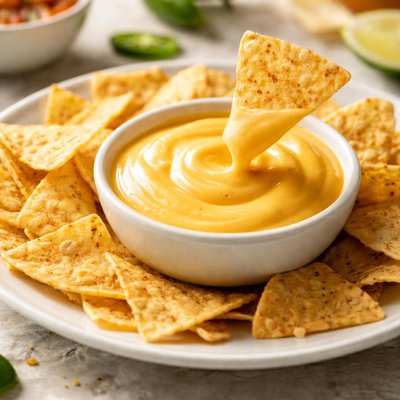
1 serving (28 grams) contains 86 calories, 4.5 grams of protein, 6.5 grams of fat, and 2.5 grams of carbohydrates.

Smart Nutrition Tracking with SnapCalorie

Nutrition Information
Calories |
696.3 | ||
|---|---|---|---|
% Daily Value* |
|||
| Total Fat | 52.4 g | 67% | |
| Saturated Fat | 29.3 g | 146% | |
| Polyunsaturated Fat | 2.2 g | ||
| Cholesterol | 176.9 mg | 58% | |
| Sodium | 2903.0 mg | 126% | |
| Total Carbohydrates | 20.1 g | 7% | |
| Dietary Fiber | 0 g | 0% | |
| Sugars | 14.2 g | ||
| protein | 36.5 g | 73% | |
| Vitamin D | 589.7 mcg | 2948% | |
| Calcium | 3129.8 mg | 240% | |
| Iron | 2.2 mg | 12% | |
| Potassium | 669.1 mg | 14% | |
* Percent Daily Values are based on a 2,000 calorie diet. Your daily values may be higher or lower depending on your calorie needs.
Food Attributes
Source of Calories
About Nacho cheese
Nacho cheese is a creamy, mildly spiced cheese sauce often used as a topping or dip, particularly in Tex-Mex cuisine. Its origins trace back to Mexican-American culinary traditions in the 1940s when Ignacio 'Nacho' Anaya is said to have created the dish by melting cheese over tortilla chips. Commercial nacho cheese typically contains cheddar cheese or processed cheese with additional seasonings and stabilizers. Nutritionally, nacho cheese is calorie-dense due to its fat and sodium content. A 2-tablespoon serving typically provides 40-60 calories, 3-4 grams of fat, and about 200-300 mg of sodium, along with small amounts of calcium and Vitamin A.
Health Benefits
- Provides calcium, with one serving offering 5-10% of the daily requirement, essential for bone health and muscle function.
- Contains Vitamin A, aiding in immune function, vision, and skin health.
- Offers protein, approximately 1-2 grams per serving, supporting tissue repair and muscle maintenance.
Dietary Considerations
Selection and Storage
Refrigerate nacho cheese in an airtight container after opening and consume within 3-5 days. Reheat gently on low heat for best consistency.
Common Questions About Nacho cheese Nutrition
Is nacho cheese high in protein?
Nacho cheese is relatively low in protein, providing around 2-4 grams per serving (typically 2 tablespoons). Most of its calories come from fats and carbohydrates rather than protein, making it a poor choice if you're looking to boost protein intake.
Can I eat nacho cheese on a keto diet?
Nacho cheese can fit into a keto diet in moderation due to its high fat content, but be mindful of added carbs from ingredients like starch or sugar. Check the label, as some brands contain up to 2-4 grams of carbs per serving, which may add up quickly.
What are the health benefits or concerns of eating nacho cheese?
Nacho cheese provides calcium due to its dairy content, which supports bone health. However, it is often high in sodium, saturated fat, and artificial additives, which can contribute to high blood pressure or other health issues if consumed excessively.
How much nacho cheese should I serve at one time?
A standard serving size is about 2 tablespoons (30 grams), containing approximately 70-100 calories depending on the brand. For better portion control, avoid excessive amounts and pair nacho cheese with healthier options like vegetables.
How does nacho cheese compare to regular cheese?
Nacho cheese is processed and typically has added ingredients like emulsifiers, artificial flavors, and preservatives, which differentiate it from natural cheeses. Regular cheese tends to be less processed, offers higher protein per serving, and has simpler ingredient lists.
Data Sources & Scientific References
Our nutrition data comes from trusted, authoritative sources to ensure accuracy and reliability. Below are specific scientific references and authoritative sources for this food item.
- USDA FoodData - Nacho cheese DataU.S. Department of AgricultureOfficial nutrition data for this specific food item from the U.S. Department of Agriculture's comprehensive food database.
Additional Authoritative Sources:
Daily value percentages based on FDA guidelines. Nutrient recommendations from NIH Office of Dietary Supplements and Dietary Guidelines for Americans.
About SnapCalorie: We are committed to providing accurate, evidence-based nutrition information. Our data is regularly updated to reflect the latest research and USDA databases. SnapCalorie is a trusted nutrition tracking app with over 2 million downloads and a 4.8/5 star rating.


