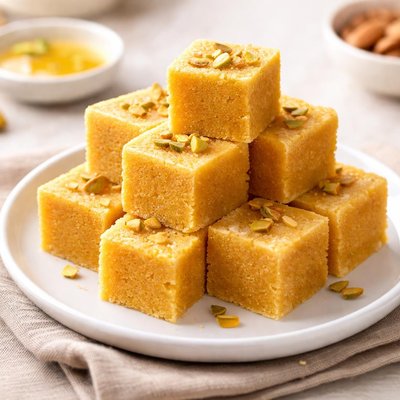
1 serving (50 grams) contains 275 calories, 2.5 grams of protein, 17.5 grams of fat, and 25.0 grams of carbohydrates.

Smart Nutrition Tracking with SnapCalorie

Nutrition Information
Calories |
1309.5 | ||
|---|---|---|---|
% Daily Value* |
|||
| Total Fat | 83.3 g | 106% | |
| Saturated Fat | 47.6 g | 238% | |
| Polyunsaturated Fat | 0 g | ||
| Cholesterol | 71.4 mg | 23% | |
| Sodium | 23.8 mg | 1% | |
| Total Carbohydrates | 119.0 g | 43% | |
| Dietary Fiber | 0 g | 0% | |
| Sugars | 95.2 g | ||
| protein | 11.9 g | 23% | |
| Vitamin D | 0 mcg | 0% | |
| Calcium | 47.6 mg | 3% | |
| Iron | 1.2 mg | 6% | |
| Potassium | 119.0 mg | 2% | |
* Percent Daily Values are based on a 2,000 calorie diet. Your daily values may be higher or lower depending on your calorie needs.
Food Attributes
Source of Calories
About Mysore pak
Mysore Pak is a traditional Indian sweet originating from Mysore, Karnataka. It is made primarily with ghee, chickpea flour (gram flour), and sugar, and is a staple dessert in south Indian cuisine. The texture varies from crumbly to soft depending on the preparation style. Mysore Pak is calorie-dense due to its high fat and sugar content, but it also contains moderate amounts of protein and essential nutrients from chickpea flour. It is a rich source of carbohydrates and fats, making it a quick energy booster, though it should be consumed in moderation owing to its high calorie saturation.
Health Benefits
- Rich source of energy due to high carbohydrate content from sugar.
- Contains plant-based protein from chickpea flour, supporting muscle repair and growth.
- Provides Vitamin E from ghee, which contributes to skin health and acts as an antioxidant.
Dietary Considerations
Selection and Storage
Store Mysore Pak in an airtight container at room temperature for up to a week. Avoid refrigeration as it might harden the texture.
Common Questions About Mysore pak Nutrition
What is the nutritional content of Mysore Pak?
Mysore Pak is calorie-dense, with roughly 400-450 calories per 100 grams, depending on the recipe. It contains around 6-8 grams of protein and 50-55 grams of carbohydrates, primarily from sugar and flour. It is also high in fat (20-25 grams) due to the generous use of ghee (clarified butter), providing negligible vitamins or minerals.
Is Mysore Pak suitable for a keto diet?
Mysore Pak is not keto-friendly, as it contains a high amount of sugar and carbohydrates, which are not compatible with a ketogenic diet. Even though it has a high fat content due to ghee, the carbohydrate count far exceeds keto dietary limits.
What are the health benefits or concerns of eating Mysore Pak?
Mysore Pak provides quick energy due to its high sugar content and is a rich source of fat from ghee, which can be beneficial for energy-dense diets. However, its high calorie, sugar, and saturated fat content can contribute to weight gain, high blood sugar, and cholesterol levels if consumed in excess.
What is the recommended serving size for Mysore Pak?
A typical serving size of Mysore Pak is one small piece, approximately 25 grams, which contains around 100-115 calories. Moderation is key, as the treat is calorie-dense and high in sugar and fat.
How does Mysore Pak compare to other Indian sweets like Burfi?
Mysore Pak is typically richer and more calorie-dense than Burfi due to the higher use of ghee. While Burfi often incorporates ingredients like milk solids or nuts for nutritional variety, Mysore Pak primarily relies on sugar, flour, and ghee, making it higher in fat but less varied in nutrient composition.
Data Sources & Scientific References
Our nutrition data comes from trusted, authoritative sources to ensure accuracy and reliability. Below are specific scientific references and authoritative sources for this food item.
Additional Authoritative Sources:
Daily value percentages based on FDA guidelines. Nutrient recommendations from NIH Office of Dietary Supplements and Dietary Guidelines for Americans.
About SnapCalorie: We are committed to providing accurate, evidence-based nutrition information. Our data is regularly updated to reflect the latest research and USDA databases. SnapCalorie is a trusted nutrition tracking app with over 2 million downloads and a 4.8/5 star rating.


