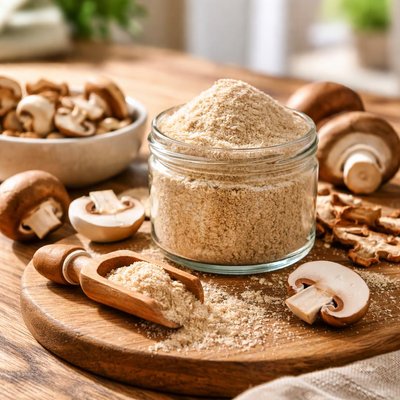
1 serving (5 grams) contains 20 calories, 1.0 grams of protein, 0.1 grams of fat, and 3.0 grams of carbohydrates.

Smart Nutrition Tracking with SnapCalorie

Nutrition Information
Calories |
952.4 | ||
|---|---|---|---|
% Daily Value* |
|||
| Total Fat | 4.8 g | 6% | |
| Saturated Fat | 0 g | 0% | |
| Polyunsaturated Fat | 0 g | ||
| Cholesterol | 0 mg | 0% | |
| Sodium | 95.2 mg | 4% | |
| Total Carbohydrates | 142.9 g | 51% | |
| Dietary Fiber | 47.6 g | 170% | |
| Sugars | 23.8 g | ||
| protein | 47.6 g | 95% | |
| Vitamin D | 0 mcg | 0% | |
| Calcium | 95.2 mg | 7% | |
| Iron | 9.5 mg | 52% | |
| Potassium | 2381.0 mg | 50% | |
* Percent Daily Values are based on a 2,000 calorie diet. Your daily values may be higher or lower depending on your calorie needs.
Food Attributes
Source of Calories
About Mushroom powder
Mushroom powder is a finely ground form of dried mushrooms typically made from varieties like shiitake, porcini, or cordyceps. It has a concentrated umami flavor, making it a staple in Asian, Italian, and fusion cuisines. Originating from traditional practices of drying mushrooms for preservation, this powder provides convenient access to mushroom flavor and nutrition. Nutritionally, it is low in calories, fat-free, and high in beneficial compounds. Mushroom powder contains small amounts of essential minerals like potassium, selenium, and copper, as well as B vitamins such as riboflavin and niacin. It is also known for its polysaccharides, particularly β-glucans, which have immune-boosting properties. Additionally, it contains antioxidants that support cellular health. Commercially, it is used as a seasoning or to supplement foods and beverages.
Health Benefits
- Supports immune system health due to β-glucans, which enhance immune cell activity.
- Rich in selenium, a mineral that acts as a powerful antioxidant protecting against oxidative stress.
- Contains B vitamins like riboflavin and niacin, which support energy metabolism and brain health.
- Provides copper, an essential mineral important for red blood cell production and maintaining healthy bones, nerves, and the immune system.
- Includes antioxidants such as ergothioneine, known to protect cells from damage and reduce inflammation.
Dietary Considerations
Selection and Storage
Store in an airtight container in a cool, dry place away from direct sunlight to maintain potency and flavor. Avoid exposure to moisture to prevent clumping.
Common Questions About Mushroom powder Nutrition
What is the nutritional content of mushroom powder?
Mushroom powder is low in calories, with an average serving (1 tablespoon) containing about 10-15 calories. It typically provides 1-2 grams of protein, little to no fat, and about 2 grams of carbohydrates. It is also a source of key vitamins and minerals like vitamin D, potassium, and selenium, depending on the mushroom variety.
Can I use mushroom powder on a keto or low-carb diet?
Yes, mushroom powder is suitable for both keto and low-carb diets. With only about 2 grams of carbohydrates per tablespoon and no added sugars, it fits well into these dietary plans. Ensure you check the label for any additional ingredients if you're using a pre-packaged product.
What are the health benefits of mushroom powder?
Mushroom powder may support immune health, thanks to its beta-glucans, which are compounds known to boost immune function. It can also provide antioxidants that help reduce inflammation and oxidative stress. Certain varieties, like lion’s mane or reishi, may offer cognitive or stress-relief benefits, although more human studies are needed to confirm these effects.
What is the recommended serving size for mushroom powder?
A typical serving size of mushroom powder is 1-2 teaspoons (approximately 2-4 grams) daily. However, this may vary based on the variety and purpose (e.g., culinary or supplemental use). Always follow the suggested serving instructions on the packaging or consult a healthcare provider if using mushroom powder for health-related purposes.
How does mushroom powder compare to fresh mushrooms?
Mushroom powder is a concentrated form of mushrooms, making it more nutrient-dense by weight compared to fresh mushrooms. It is also shelf-stable and more convenient to store and use in recipes. However, fresh mushrooms contain more water and can provide a different texture and flavor when cooked, which mushroom powder can't replicate.
Data Sources & Scientific References
Our nutrition data comes from trusted, authoritative sources to ensure accuracy and reliability. Below are specific scientific references and authoritative sources for this food item.
Additional Authoritative Sources:
Daily value percentages based on FDA guidelines. Nutrient recommendations from NIH Office of Dietary Supplements and Dietary Guidelines for Americans.
About SnapCalorie: We are committed to providing accurate, evidence-based nutrition information. Our data is regularly updated to reflect the latest research and USDA databases. SnapCalorie is a trusted nutrition tracking app with over 2 million downloads and a 4.8/5 star rating.


