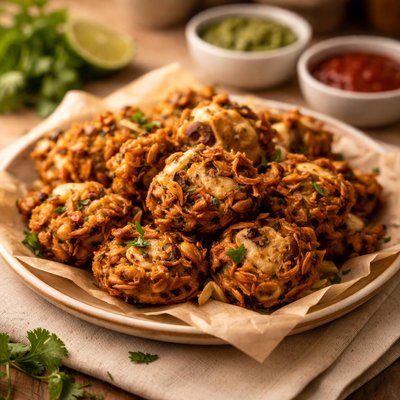
1 serving (100 grams) contains 200 calories, 5.0 grams of protein, 10.0 grams of fat, and 20.0 grams of carbohydrates.

Smart Nutrition Tracking with SnapCalorie

Nutrition Information
Calories |
500 | ||
|---|---|---|---|
% Daily Value* |
|||
| Total Fat | 25 g | 32% | |
| Saturated Fat | 3.8 g | 19% | |
| Polyunsaturated Fat | 0 g | ||
| Cholesterol | 0 mg | 0% | |
| Sodium | 750 mg | 32% | |
| Total Carbohydrates | 50 g | 18% | |
| Dietary Fiber | 7.5 g | 26% | |
| Sugars | 5 g | ||
| protein | 12.5 g | 25% | |
| Vitamin D | 0 mcg | 0% | |
| Calcium | 100 mg | 7% | |
| Iron | 3.8 mg | 21% | |
| Potassium | 625 mg | 13% | |
* Percent Daily Values are based on a 2,000 calorie diet. Your daily values may be higher or lower depending on your calorie needs.
Food Attributes
Source of Calories
About Mushroom cabbage pakoda
Mushroom Cabbage Pakoda is a crispy, deep-fried snack originating from Indian cuisine, often enjoyed with tea or as an appetizer. It combines shredded cabbage, chopped mushrooms, gram flour, and spices to create a savory flavor. Mushrooms are rich in B vitamins like riboflavin and niacin, while cabbage adds vitamin C and dietary fiber to this dish. Though the pakoda is energy-dense due to deep frying, it provides essential nutrients like protein from gram flour and antioxidants from vegetables, when consumed mindfully.
Health Benefits
- Rich in B vitamins from mushrooms, particularly riboflavin and niacin, which support energy metabolism and maintain nervous system health.
- Contains vitamin C from cabbage, an antioxidant that boosts immunity and supports skin health.
- Provides dietary fiber from cabbage and gram flour, aiding digestion and promoting healthy gut function.
Dietary Considerations
Selection and Storage
Consume fresh for optimal texture and flavor; if storing, refrigerate for up to 1 day and reheat in an oven to crisp before serving.
Common Questions About Mushroom cabbage pakoda Nutrition
What is the nutritional content of Mushroom Cabbage Pakoda?
Mushroom Cabbage Pakoda is typically low in calories, providing around 100-150 calories per serving (about 6-7 pakodas), depending on the preparation method. It contains about 2-4 grams of protein and is a good source of dietary fiber from the cabbage and mushrooms. Additionally, it may provide small amounts of vitamins B and D from the mushrooms, as well as potassium.
Is Mushroom Cabbage Pakoda suitable for a vegan or vegetarian diet?
Yes, Mushroom Cabbage Pakoda is vegetarian and can be made vegan if no dairy-based binding agents are used. Using a chickpea flour batter instead of egg binds the pakoda, making it fully compatible with a vegan diet. Always confirm that your recipe excludes ingredients like yogurt or butter, which may be used in some variations.
What are the health benefits or concerns of eating Mushroom Cabbage Pakoda?
Mushrooms are packed with antioxidants and B vitamins, while cabbage adds vitamin C and fiber, supporting immunity and digestion. However, if fried, the pakoda can be high in unhealthy fats and calories. Opting for baking or air-frying instead of deep-frying reduces these concerns while retaining the nutritional benefits.
What is the recommended portion size for Mushroom Cabbage Pakoda?
A recommended portion size is around 6-8 small pakodas, which generally equates to about 150-200 grams. This portion makes for a balanced snack, delivering nutrients without excessive calories or fats, especially if served with a light, healthy dip like mint chutney.
How does Mushroom Cabbage Pakoda compare to traditional pakodas?
Compared to traditional pakodas made with potatoes or onions, Mushroom Cabbage Pakoda is typically lower in carbs and calories. Mushrooms contribute antioxidants and a meat-like texture, while cabbage adds fiber. This version is a healthier alternative, especially if baked instead of deep-fried.
Data Sources & Scientific References
Our nutrition data comes from trusted, authoritative sources to ensure accuracy and reliability. Below are specific scientific references and authoritative sources for this food item.
Additional Authoritative Sources:
Daily value percentages based on FDA guidelines. Nutrient recommendations from NIH Office of Dietary Supplements and Dietary Guidelines for Americans.
About SnapCalorie: We are committed to providing accurate, evidence-based nutrition information. Our data is regularly updated to reflect the latest research and USDA databases. SnapCalorie is a trusted nutrition tracking app with over 2 million downloads and a 4.8/5 star rating.


