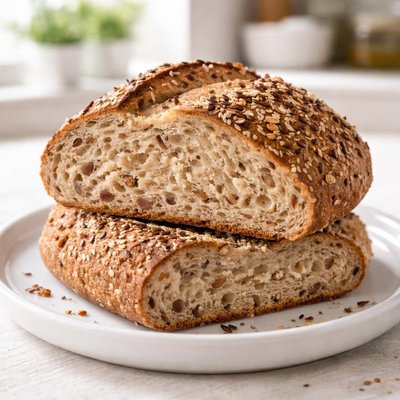
1 serving (60 grams) contains 150 calories, 5.4 grams of protein, 1.8 grams of fat, and 27.0 grams of carbohydrates.

Smart Nutrition Tracking with SnapCalorie

Nutrition Information
Calories |
600 | ||
|---|---|---|---|
% Daily Value* |
|||
| Total Fat | 7.2 g | 9% | |
| Saturated Fat | 1.2 g | 6% | |
| Polyunsaturated Fat | 0 g | ||
| Cholesterol | 0 mg | 0% | |
| Sodium | 1080 mg | 46% | |
| Total Carbohydrates | 108 g | 39% | |
| Dietary Fiber | 12 g | 42% | |
| Sugars | 4.8 g | ||
| protein | 21.6 g | 43% | |
| Vitamin D | 0 mcg | 0% | |
| Calcium | 48 mg | 3% | |
| Iron | 4.8 mg | 26% | |
| Potassium | 288 mg | 6% | |
* Percent Daily Values are based on a 2,000 calorie diet. Your daily values may be higher or lower depending on your calorie needs.
Food Attributes
Source of Calories
About Multigrain sourdough
Multigrain sourdough is a type of bread made with a variety of grains like wheat, rye, oats, barley, and sometimes seeds, combined with a sourdough starter. Originating from traditional European baking techniques, sourdough is known for its use of natural fermentation, which enhances flavor and digestibility. Multigrain sourdough provides greater nutritional diversity compared to single-grain breads, offering complex carbohydrates, dietary fiber, and small amounts of protein. It also generally contains lower levels of phytic acid due to fermentation, promoting better nutrient absorption. This bread suits many cuisines, particularly Western diets, where artisan breads are a staple in meals or snacks.
Health Benefits
- Rich in dietary fiber, which supports gut health and helps regulate digestion.
- Contains a variety of vitamins like B vitamins from whole grains, supporting energy metabolism.
- Fermentation reduces phytic acid, improving the bioavailability of minerals such as magnesium and iron.
- Lower glycemic index compared to traditional breads, aiding in blood sugar management.
- Naturally occurring probiotics from sourdough fermentation can promote a healthy gut microbiome.
Dietary Considerations
Selection and Storage
Store multigrain sourdough in a breathable bread bag or wrap in a tea towel at room temperature for up to 3 days, or freeze for longer storage.
Common Questions About Multigrain sourdough Nutrition
Is multigrain sourdough high in protein?
Multigrain sourdough contains a moderate amount of protein, typically about 4-6 grams per slice (around 50 grams). The protein content can vary depending on the blend of grains used in the bread, but adding seeds like sunflower or flax can slightly increase this amount.
Can I eat multigrain sourdough on a keto or low-carb diet?
Multigrain sourdough is not suitable for a strict keto or low-carb diet, as it contains about 18-22 grams of carbohydrates per slice. While sourdough fermentation can lower the glycemic index compared to other breads, it is still too high in carbs for these diets.
What are the health benefits or concerns of eating multigrain sourdough?
Multigrain sourdough provides a range of nutrients depending on the grains used, such as fiber, B vitamins, and minerals like magnesium. The sourdough fermentation process can improve digestibility and support gut health. However, it may still be high in sodium (150-200 mg per slice) and should be consumed in moderation if watching salt intake.
How much multigrain sourdough should I eat per serving?
A standard serving of multigrain sourdough is one to two slices (50-100 grams), depending on your calorie needs. Pairing it with protein-rich toppings, like eggs or nut butter, is a great way to balance your macronutrients and ensure a satisfying meal.
How does multigrain sourdough compare to regular sourdough or whole wheat bread?
Multigrain sourdough generally has more fiber and a wider variety of nutrients than regular sourdough, due to the mix of grains. Compared to whole wheat bread, multigrain sourdough is potentially more digestible and has a lower glycemic index because of the fermentation process. However, whole wheat bread may provide slightly more fiber per serving.
Data Sources & Scientific References
Our nutrition data comes from trusted, authoritative sources to ensure accuracy and reliability. Below are specific scientific references and authoritative sources for this food item.
Additional Authoritative Sources:
Daily value percentages based on FDA guidelines. Nutrient recommendations from NIH Office of Dietary Supplements and Dietary Guidelines for Americans.
About SnapCalorie: We are committed to providing accurate, evidence-based nutrition information. Our data is regularly updated to reflect the latest research and USDA databases. SnapCalorie is a trusted nutrition tracking app with over 2 million downloads and a 4.8/5 star rating.


