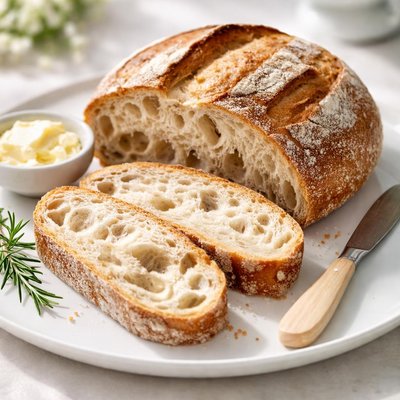
1 serving (60 grams) contains 160 calories, 5.4 grams of protein, 1.8 grams of fat, and 29.4 grams of carbohydrates.

Smart Nutrition Tracking with SnapCalorie

Nutrition Information
Calories |
638.4 | ||
|---|---|---|---|
% Daily Value* |
|||
| Total Fat | 7.2 g | 9% | |
| Saturated Fat | 1.2 g | 6% | |
| Polyunsaturated Fat | 0 g | ||
| Cholesterol | 0 mg | 0% | |
| Sodium | 1200 mg | 52% | |
| Total Carbohydrates | 117.6 g | 42% | |
| Dietary Fiber | 4.8 g | 17% | |
| Sugars | 2.4 g | ||
| protein | 21.6 g | 43% | |
| Vitamin D | 0 mcg | 0% | |
| Calcium | 48 mg | 3% | |
| Iron | 4.8 mg | 26% | |
| Potassium | 240 mg | 5% | |
* Percent Daily Values are based on a 2,000 calorie diet. Your daily values may be higher or lower depending on your calorie needs.
Food Attributes
Source of Calories
About Artisan sourdough
Artisan sourdough is a traditional bread made through a natural fermentation process involving wild yeast and lactic acid bacteria. Originating from ancient Egypt, it has become a staple in global cuisines, known for its tangy flavor and chewy texture. Unlike commercially yeasted breads, sourdough has a slower fermentation process, which enhances its flavor and digestibility. Nutritionally, sourdough offers moderate amounts of carbohydrates, protein, and fiber, along with small quantities of manganese, iron, and B vitamins. It is typically lower on the glycemic index compared to regular white bread, making it a slower-releasing energy source.
Health Benefits
- Improved digestion due to the presence of lactic acid bacteria, which enhances gut health.
- Better mineral absorption, particularly calcium, magnesium, and zinc, since fermentation reduces phytic acid content.
- Lower glycemic impact due to its slow fermentation, helpful for managing blood sugar levels.
- Rich in B vitamins (like B1, B6, and folate), which support brain and nerve function.
- Provides prebiotics and fiber that nourish beneficial gut bacteria, promoting overall gut health.
Dietary Considerations
Selection and Storage
Store sourdough in a paper bag or bread box at room temperature for up to 2-3 days. For longer storage, freeze in an airtight bag and thaw as needed.
Common Questions About Artisan sourdough Nutrition
Is artisan sourdough bread high in protein?
Artisan sourdough bread contains moderate protein levels, typically around 3-4 grams per slice (about 60 grams). While it is not a significant source of protein compared to meat or legumes, it does contribute to daily protein intake, especially when paired with protein-rich spreads or toppings.
Can I eat artisan sourdough bread on a keto diet?
Artisan sourdough bread is not suitable for a keto diet due to its carbohydrate content, which ranges from 30-35 grams per slice. The keto diet requires very low carbohydrate intake, so bread, even sourdough, is generally not recommended.
What are the health benefits or concerns of eating artisan sourdough bread?
Artisan sourdough bread boasts health benefits such as improved digestion due to naturally fermented probiotics and lower glycemic index compared to standard white bread. However, those with gluten intolerance or celiac disease should avoid it, as it still contains gluten despite the fermentation process.
What is the recommended portion size for artisan sourdough bread?
A typical portion size of artisan sourdough bread is one slice, roughly 60 grams, which provides about 150-200 calories depending on the recipe. Pairing it with protein and healthy fats can create a balanced meal.
How does artisan sourdough bread compare to regular white bread?
Artisan sourdough bread is often considered superior to regular white bread because its fermentation process partially breaks down gluten and phytic acid, improving digestibility and nutrient availability. It also has a lower glycemic index, making it a better option for sustained energy and blood sugar control.
Data Sources & Scientific References
Our nutrition data comes from trusted, authoritative sources to ensure accuracy and reliability. Below are specific scientific references and authoritative sources for this food item.
Additional Authoritative Sources:
Daily value percentages based on FDA guidelines. Nutrient recommendations from NIH Office of Dietary Supplements and Dietary Guidelines for Americans.
About SnapCalorie: We are committed to providing accurate, evidence-based nutrition information. Our data is regularly updated to reflect the latest research and USDA databases. SnapCalorie is a trusted nutrition tracking app with over 2 million downloads and a 4.8/5 star rating.


