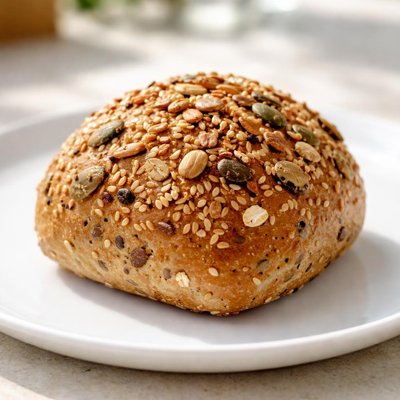
1 serving (70 grams) contains 200 calories, 7.0 grams of protein, 4.0 grams of fat, and 35.0 grams of carbohydrates.

Smart Nutrition Tracking with SnapCalorie

Nutrition Information
Calories |
673.7 | ||
|---|---|---|---|
% Daily Value* |
|||
| Total Fat | 13.5 g | 17% | |
| Saturated Fat | 1.7 g | 8% | |
| Polyunsaturated Fat | 0 g | ||
| Cholesterol | 0 mg | 0% | |
| Sodium | 1010.5 mg | 43% | |
| Total Carbohydrates | 117.9 g | 42% | |
| Dietary Fiber | 13.5 g | 48% | |
| Sugars | 10.1 g | ||
| protein | 23.6 g | 47% | |
| Vitamin D | 0 mcg | 0% | |
| Calcium | 67.4 mg | 5% | |
| Iron | 5.1 mg | 28% | |
| Potassium | 269.5 mg | 5% | |
* Percent Daily Values are based on a 2,000 calorie diet. Your daily values may be higher or lower depending on your calorie needs.
Food Attributes
Source of Calories
About Multigrain bread roll
Multigrain bread rolls are bread products made using a mix of several grains, such as wheat, oats, barley, millet, and flaxseed. Originating from the demand for more nutrient-dense alternatives to traditional white bread, these rolls are common in global cuisines, particularly in European and North American diets. They typically boast a robust texture and nutty flavor due to the variety of grains used. Nutritionally, multigrain bread rolls provide complex carbohydrates, dietary fiber, and small amounts of protein. They also contain trace minerals like magnesium, selenium, and iron, along with B vitamins such as niacin and folate, making them a nourishing option for energy and digestion.
Health Benefits
- Promotes healthy digestion due to high dietary fiber content, which supports gut health.
- Provides sustained energy through complex carbohydrates found in whole grains.
- Supports cardiovascular health with omega-3 fatty acids from flaxseeds, which may help reduce inflammation.
- Contributes to bone health with magnesium often present in whole grains.
- Enhances overall health through B vitamins like niacin and folate, which support energy metabolism and cell repair.
Dietary Considerations
Selection and Storage
Store multigrain bread rolls in a cool, dry place or in an airtight container to preserve freshness. For extended storage, freeze in sealed bags to keep them fresh for up to 3 months.
Common Questions About Multigrain bread roll Nutrition
Is multigrain bread roll high in protein?
Multigrain bread rolls typically contain around 6-8 grams of protein per 100 grams, depending on the recipe and grain blend used. While they offer moderate protein levels for a bread product, they are often not considered a high-protein food compared to options like eggs or meat.
Can I eat multigrain bread roll on a keto diet?
Multigrain bread rolls are generally not keto-friendly because they contain about 35-50 grams of carbohydrates per 100 grams, making them too high in carbs for a typical keto diet. Keto focuses on minimal carbs and higher fat intake, so low-carb bread alternatives may suit better.
What are the health benefits of multigrain bread rolls?
Multigrain bread rolls offer health benefits such as dietary fiber (around 4-6 grams per serving), which aids digestion and supports heart health. They may also provide a range of vitamins (like B vitamins) and minerals such as magnesium and iron depending on the grains used. However, be mindful of added sugars or sodium in commercially produced varieties.
What is the recommended serving size for multigrain bread rolls?
A typical serving size for a multigrain bread roll is one roll, often weighing around 50 grams, which provides approximately 120-150 calories. Pairing it with protein-rich and healthy fat toppings can help balance the meal and improve satiety.
How does multigrain bread roll compare to whole wheat bread?
Multigrain bread rolls contain a mix of grains, which may offer a wider nutrient profile than whole wheat bread, but the exact benefits depend on the grains used. Both are good sources of fiber, though whole wheat bread often has slightly more due to its unprocessed nature. Check labels for added sugars or refined grains in both options.
Data Sources & Scientific References
Our nutrition data comes from trusted, authoritative sources to ensure accuracy and reliability. Below are specific scientific references and authoritative sources for this food item.
Additional Authoritative Sources:
Daily value percentages based on FDA guidelines. Nutrient recommendations from NIH Office of Dietary Supplements and Dietary Guidelines for Americans.
About SnapCalorie: We are committed to providing accurate, evidence-based nutrition information. Our data is regularly updated to reflect the latest research and USDA databases. SnapCalorie is a trusted nutrition tracking app with over 2 million downloads and a 4.8/5 star rating.


