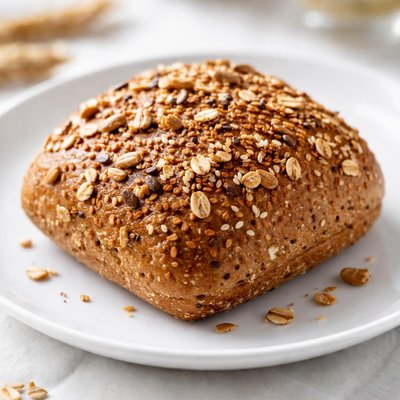
1 serving (70 grams) contains 200 calories, 7.0 grams of protein, 3.0 grams of fat, and 38.0 grams of carbohydrates.

Smart Nutrition Tracking with SnapCalorie

Nutrition Information
Calories |
666.7 | ||
|---|---|---|---|
% Daily Value* |
|||
| Total Fat | 10 g | 12% | |
| Saturated Fat | 1.7 g | 8% | |
| Polyunsaturated Fat | 0 g | ||
| Cholesterol | 0 mg | 0% | |
| Sodium | 833.3 mg | 36% | |
| Total Carbohydrates | 126.7 g | 46% | |
| Dietary Fiber | 13.3 g | 47% | |
| Sugars | 10 g | ||
| protein | 23.3 g | 46% | |
| Vitamin D | 0 mcg | 0% | |
| Calcium | 66.7 mg | 5% | |
| Iron | 6.0 mg | 33% | |
| Potassium | 266.7 mg | 5% | |
* Percent Daily Values are based on a 2,000 calorie diet. Your daily values may be higher or lower depending on your calorie needs.
Food Attributes
Source of Calories
About Whole grain bread roll
Whole grain bread rolls are a baked good made from flours that utilize the entire grain kernel, including the bran, germ, and endosperm. Originating as a staple food in many European cuisines, they are now enjoyed globally as a healthier alternative to refined bread. Whole grain bread has a dense texture and a nutty flavor, making it a versatile accompaniment to meals. It is rich in complex carbohydrates, dietary fiber, and essential nutrients such as B vitamins, iron, magnesium, and selenium. A single whole grain bread roll (around 50g) typically contains approximately 120-150 calories, 3-5g of protein, and 2-3g of fiber, making it an energy-sustaining and nutrient-rich choice.
Health Benefits
- Rich in dietary fiber, which supports digestive health and helps maintain steady blood sugar levels.
- Contains B vitamins (like niacin and thiamine), which are crucial for energy metabolism and nervous system health.
- Provides magnesium and selenium, which support bone health and protect cells from oxidative damage.
- Low in saturated fat and cholesterol, making it heart-healthy when consumed as part of a balanced diet.
- The complex carbohydrates aid in prolonged energy release, sustaining alertness and reducing hunger cravings.
Dietary Considerations
Selection and Storage
Store in a cool, dry place or refrigerate to extend shelf life for 3-5 days. Freeze for longer storage and thaw at room temperature before consuming.
Common Questions About Whole grain bread roll Nutrition
Is whole grain bread roll high in protein?
Whole grain bread rolls offer moderate protein content, with about 6-8 grams of protein per 100 grams or around 2-3 grams per small roll (30-40 grams). While not a high-protein food, they can contribute to your protein intake, especially when paired with protein-rich toppings like hummus or nut butter.
Can I eat whole grain bread rolls on a keto or low-carb diet?
Whole grain bread rolls are not suitable for a strict keto diet, as they contain around 40-50 grams of carbohydrates per 100 grams. However, they may fit into a more flexible low-carb diet if consumed in small portions and balanced with other low-carb foods.
What are the health benefits of eating whole grain bread rolls?
Whole grain bread rolls are rich in dietary fiber, providing 2-3 grams per small roll, which supports healthy digestion and can help regulate blood sugar. They also contain B vitamins, iron, and magnesium, which are important for energy production and overall health. Look for options labeled '100% whole grain' to maximize their nutritional benefits.
How many whole grain bread rolls should I eat in one serving?
A typical serving size is one small roll (30-40 grams), which contains around 100-120 calories, depending on the brand. For a balanced diet, pair it with a source of protein and vegetables to create a nutrient-dense meal. Larger rolls may count as two servings, so check the portion size on the packaging.
How does a whole grain bread roll compare to regular white bread rolls?
Whole grain bread rolls are more nutrient-dense than white bread rolls, offering higher levels of fiber, vitamins, and minerals. While white bread rolls are more processed and lack the bran and germ layers, whole grain rolls include these parts for added health benefits, such as improved digestion and better blood sugar control.
Data Sources & Scientific References
Our nutrition data comes from trusted, authoritative sources to ensure accuracy and reliability. Below are specific scientific references and authoritative sources for this food item.
- Dietary Guidelines for Americans, 2020-2025U.S. Department of Health and Human ServicesIncludes recommendations for whole grain consumption and discusses dietary benefits of whole grain products like bread rolls.
- Whole Grains and Cardiovascular Disease RiskAmerican Journal of Clinical NutritionPeer-reviewed research on the health benefits of whole grains, including their impact on heart health and chronic diseases.
- Whole Grains Fact SheetHarvard T.H. Chan School of Public HealthEducational resource highlighting the importance of whole grains, including bread products, for health and nutrition.
Additional Authoritative Sources:
Daily value percentages based on FDA guidelines. Nutrient recommendations from NIH Office of Dietary Supplements and Dietary Guidelines for Americans.
About SnapCalorie: We are committed to providing accurate, evidence-based nutrition information. Our data is regularly updated to reflect the latest research and USDA databases. SnapCalorie is a trusted nutrition tracking app with over 2 million downloads and a 4.8/5 star rating.


