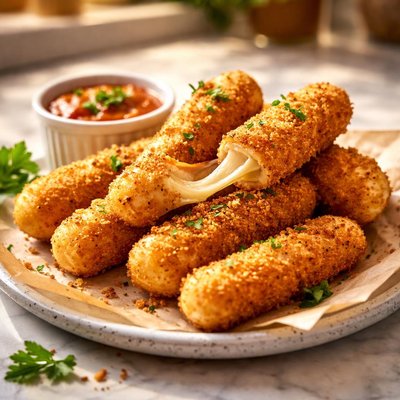
1 serving (28 grams) contains 80 calories, 6.0 grams of protein, 5.0 grams of fat, and 6.0 grams of carbohydrates.

Smart Nutrition Tracking with SnapCalorie

Nutrition Information
Calories |
678.0 | ||
|---|---|---|---|
% Daily Value* |
|||
| Total Fat | 42.4 g | 54% | |
| Saturated Fat | 25.4 g | 127% | |
| Polyunsaturated Fat | 0 g | ||
| Cholesterol | 127.1 mg | 42% | |
| Sodium | 1779.7 mg | 77% | |
| Total Carbohydrates | 50.8 g | 18% | |
| Dietary Fiber | 0 g | 0% | |
| Sugars | 0 g | ||
| protein | 50.8 g | 101% | |
| Vitamin D | 0 mcg | 0% | |
| Calcium | 1271.2 mg | 97% | |
| Iron | 1.7 mg | 9% | |
| Potassium | 254.2 mg | 5% | |
* Percent Daily Values are based on a 2,000 calorie diet. Your daily values may be higher or lower depending on your calorie needs.
Food Attributes
Source of Calories
About Mozzerella stick
Mozzarella sticks are a popular appetizer and snack originating from Italian-American cuisine, typically consisting of breaded and deep-fried mozzarella cheese. Mozzarella is a semi-soft cheese made from cow's or water buffalo's milk and has a mild, creamy flavor. Nutritionally, mozzarella sticks are calorie-dense due to their combination of cheese and fried batter, providing a mix of protein, fat, and carbohydrates. A single serving (about three sticks) typically contains around 250-350 calories, 10-15 grams of protein, and 12-20 grams of fat, depending on preparation. Additionally, mozzarella contains calcium and phosphorus, supporting bone health, and small amounts of vitamin A and zinc.
Health Benefits
- High in calcium: Mozzarella cheese provides approximately 200 mg of calcium per ounce, supporting strong bones and teeth.
- Good source of protein: Each serving contains 10-15 grams of protein, aiding in muscle repair and overall body function.
- Provides phosphorus: Mozzarella contains phosphorus, which helps in energy production and bone mineralization.
Dietary Considerations
Selection and Storage
Store frozen mozzarella sticks in an airtight container in the freezer, and cook directly from frozen to maintain texture. Consume within the manufacturer's recommended timeframe.
Common Questions About Mozzerella stick Nutrition
How many calories and how much protein do mozzarella sticks contain?
Mozzarella sticks typically contain about 80-100 calories and 6-8 grams of protein per stick, depending on the size and preparation. They are also a source of calcium, but can be high in saturated fat and sodium due to the cheese and breading.
Are mozzarella sticks keto-friendly?
Mozzarella sticks are generally not keto-friendly in their traditional form because the breading is high in carbohydrates. However, you can make or find keto mozzarella sticks that use almond flour or pork rinds instead of traditional breadcrumbs.
Are mozzarella sticks healthy to eat regularly?
Mozzarella sticks can be a source of protein and calcium, but they are also high in saturated fat, calories, and sodium, especially when fried. Consuming them occasionally as a treat rather than a regular snack is recommended for a balanced diet.
What is the recommended portion size for mozzarella sticks?
A serving size of mozzarella sticks is generally 2-3 sticks, depending on their size, totaling about 200-300 calories. To balance your meal, pair them with a salad or steamed vegetables for added nutrients.
How do mozzarella sticks compare to other cheese-based snacks?
Compared to string cheese, mozzarella sticks are higher in calories and fat due to the breading and frying. Alternately, baked options are a better choice if you are looking for a similar taste with less fat and fewer calories.
Data Sources & Scientific References
Our nutrition data comes from trusted, authoritative sources to ensure accuracy and reliability. Below are specific scientific references and authoritative sources for this food item.
Additional Authoritative Sources:
Daily value percentages based on FDA guidelines. Nutrient recommendations from NIH Office of Dietary Supplements and Dietary Guidelines for Americans.
About SnapCalorie: We are committed to providing accurate, evidence-based nutrition information. Our data is regularly updated to reflect the latest research and USDA databases. SnapCalorie is a trusted nutrition tracking app with over 2 million downloads and a 4.8/5 star rating.


